



How to Get into Competitive Shooting: A Beginner's Complete Guide for 2026
Competitive shooting combines precision marksmanship, physical fitness, mental discipline, and community in ways few other sports can match. Whether you are drawn to the speed of action pistol, the precision of long-range rifle, or the Old West charm of cowboy action shooting, there is a discipline out there for you.
This guide walks you through every major competitive shooting discipline, explains how to find and register for your first match, covers the equipment you need, and gives you a realistic cost breakdown so you can plan accordingly.
Types of Competitive Shooting Disciplines
Before you sign up for your first match, it helps to understand the landscape. Competitive shooting is not a single sport. It is a collection of disciplines, each with its own rules, equipment requirements, and culture. Here is a breakdown of the most popular ones you will encounter in 2026.
USPSA (United States Practical Shooting Association)
USPSA is the gold standard for action pistol competition in America. You will move through complex courses of fire, engaging paper and steel targets from multiple positions, around barriers, and through doorways. Stages are scored using a hit factor system that rewards both speed and accuracy.
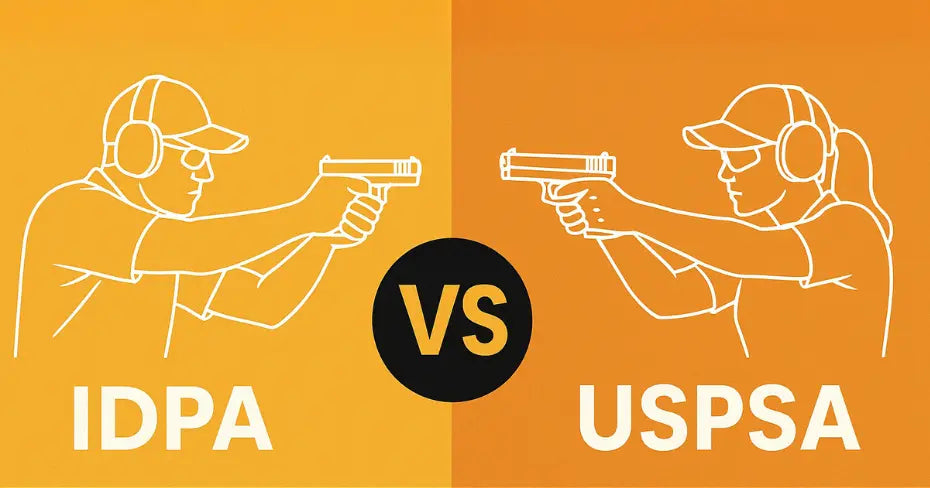
For beginners, Production or Carry Optics divisions are the most accessible starting points, since you can compete with a standard duty-style pistol. Our guide on IDPA vs. USPSA key differences breaks down the distinctions between the two largest action pistol organizations.
IDPA (International Defensive Pistol Association)
IDPA emphasizes real-world defensive shooting scenarios. Courses of fire simulate situations you might encounter in daily life, with rules designed to keep equipment closer to what you would actually carry for self-defense. Cover garments are required, and there are limits on magazine capacity and modifications.
IDPA tends to be more beginner-friendly than USPSA because the equipment requirements are less specialized. If you own a reliable semi-automatic pistol and a quality holster, you likely have enough to get started.
3-Gun
Competitors use three firearms throughout a match: a rifle (typically an AR-15 platform), a shotgun, and a pistol. Stages may require all three or any combination, and transitions between firearms add a dynamic tactical element that pure pistol sports lack.
3-Gun has a higher barrier to entry because you need three functioning firearms and the gear to run them. However, many local clubs run introductory or "outlaw" 3-Gun matches with relaxed equipment rules that let newcomers participate with whatever they have.
Steel Challenge
Steel Challenge is arguably the most beginner-friendly discipline available. The concept is simple: engage five steel plates in the fastest time possible across eight standardized stages. You shoot each stage five times, and your slowest run is dropped.
There is no movement, no complex stage planning, and no scoring nuance. You draw, shoot steel, and try to go fast. Most Steel Challenge matches also allow rimfire (.22 LR) pistols and rifles, making it extremely affordable. Check out our overview of competitive shooting events for more on Steel Challenge and other formats.
PRS (Precision Rifle Series)
PRS is the premier long-range precision rifle series in the country. Competitors engage steel targets at 200 to over 1,000 yards from a variety of field positions and improvised rests. Stages are timed, demanding both accuracy and efficiency.
PRS has a higher financial barrier to entry, as a competitive bolt-action rifle, quality optic, and match-grade ammunition represent a significant investment. However, many regional matches offer "gas gun" divisions where you can compete with an AR-10 or similar semi-automatic platform.
NRL22 (National Rifle League .22)
NRL22 was created specifically to make precision rifle competition accessible and affordable. Matches follow a similar format to PRS but use .22 LR rimfire rifles at shorter distances, typically 25 to 100 yards. Targets are small, and stages require shooting from barricades, tripods, and unconventional positions.
With .22 LR ammunition costing roughly $0.05 to $0.10 per round compared to $1.50 or more for match-grade centerfire rifle ammunition, NRL22 lets you practice the core skills of precision rifle competition at a fraction of the cost. Many PRS competitors credit NRL22 with sharpening their positional shooting fundamentals. If budget is a concern, NRL22 is one of the best entry points into competitive shooting.
Cowboy Action Shooting (SASS)
Cowboy Action Shooting, sanctioned by the Single Action Shooting Society (SASS), is unlike anything else in the competitive shooting world. Competitors use firearms typical of the American Old West: single-action revolvers, lever-action rifles, and shotguns. Period-appropriate costumes are required, and every shooter adopts an alias.
Stages are themed around Old West scenarios, with steel targets positioned at close range (typically 5 to 20 yards). A standard stage requires approximately ten revolver rounds, nine or ten rifle rounds, and two to eight shotgun rounds. The community is famously welcoming, and experienced shooters routinely lend firearms and gear to newcomers trying the sport for the first time.
How to Find Your First Match
Finding a match near you is easier than ever, thanks to digital platforms and a thriving network of local shooting clubs across the country.
PractiScore
PractiScore is the central hub for competitive shooting matches in the United States. Nearly every USPSA, IDPA, Steel Challenge, 3-Gun, and multigun match is listed and managed through the platform. To get started, create a free account at practiscore.com, then use the match search feature to filter by sport type, location, and date.
Once you find a match, click into the event page to view details including round count, gear requirements, squad availability, and match fees. Most matches allow you to register and pay online. When you register, you will select a squad, which is the group of competitors you will rotate through stages with throughout the day.
Local Clubs and Ranges
Many local gun clubs host weekly or monthly matches that never make it onto PractiScore. Call your local ranges and ask if they host any competitive shooting events. Clubs affiliated with USPSA, IDPA, SASS, or the Civilian Marksmanship Program (CMP) are excellent starting points.
Social media is another valuable tool. Facebook groups dedicated to competitive shooting in your state or region often post match schedules, gear swap deals, and carpool opportunities. Reddit communities like r/CompetitionShooting are also active and helpful for newcomers.
National Organization Websites
Each governing body maintains a club locator on its website. USPSA, IDPA, SASS, and the Steel Challenge Shooting Association all have searchable directories where you can find affiliated clubs in your area. PRS and NRL22 publish match calendars that include both national and regional events.
What to Expect at Your First Match
Your first competitive shooting match will likely be one of the most exciting and nerve-wracking experiences you have had at a range. Here is what a typical match day looks like so you can arrive prepared and confident.
Arrival and Registration
Plan to arrive 30 to 45 minutes before the scheduled start time. Check in at the registration table, confirm your squad assignment, and pay any remaining fees if you did not pay online. Most matches charge between $20 and $40 for entry.
Safety Briefing
Every match begins with a mandatory safety briefing. The Match Director will review range commands, safety rules, and any match-specific procedures. Pay close attention. The four fundamental rules of gun safety are enforced strictly in competition, and violations can result in disqualification. For a refresher, our article on gun range etiquette covers the foundational safety practices that carry over directly into competition.
Walking the Stages
Before shooting begins, your squad will walk through each stage together. Stage descriptions are posted at each bay, detailing the start position, round count, scoring method, and any specific procedures. This is your opportunity to plan your stage strategy: where to move, when to reload, and in what order to engage targets.
Shooting the Stages
When it is your turn, the Range Officer (RO) will give you a series of standardized commands. You will load and make ready, assume the start position, and wait for the buzzer. Once the timer beeps, execute your plan. The RO will follow you through the stage, timing your run and watching for safety infractions.
After you finish, the RO will issue commands to unload and show clear, and you will holster your empty firearm. Then it is time to tape and reset targets for the next shooter.
Pasting and Resetting
Competitive shooting is a participatory sport. Every squad member is expected to help paste targets (covering bullet holes with tape) and reset steel targets between shooters. This is not optional. It is part of the culture, and pitching in enthusiastically will earn you respect from experienced competitors.
Minimum Equipment Needed
One of the most common questions from beginners is about gear. The good news is that most disciplines require less specialized equipment than you might think to get started.
Firearm
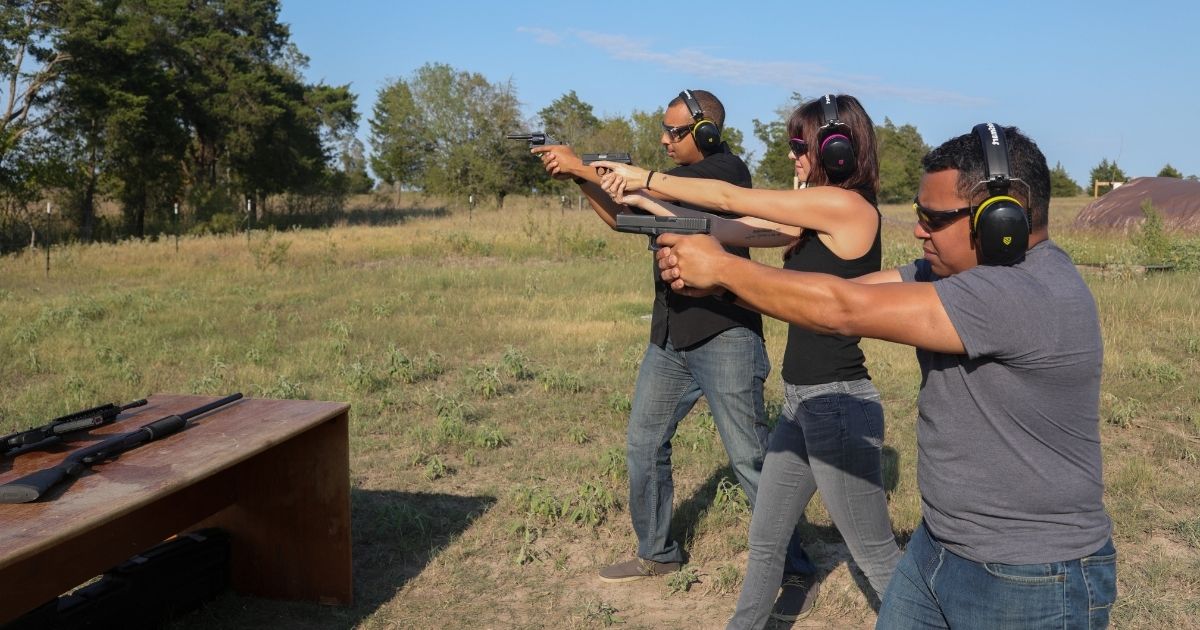
For action pistol sports (USPSA, IDPA, Steel Challenge), a reliable, full-size or compact semi-automatic pistol in 9mm is the standard recommendation. Popular choices include the Glock 17 or 19, Smith and Wesson M&P, CZ 75 variants, and the Sig Sauer P320. You do not need a custom race gun to be competitive at the local level.
For NRL22 and rimfire Steel Challenge, a quality .22 LR rifle or pistol is all you need. Ruger 10/22 rifles and Ruger Mark IV pistols are extremely popular entry-level options.
Holster and Magazine Carriers
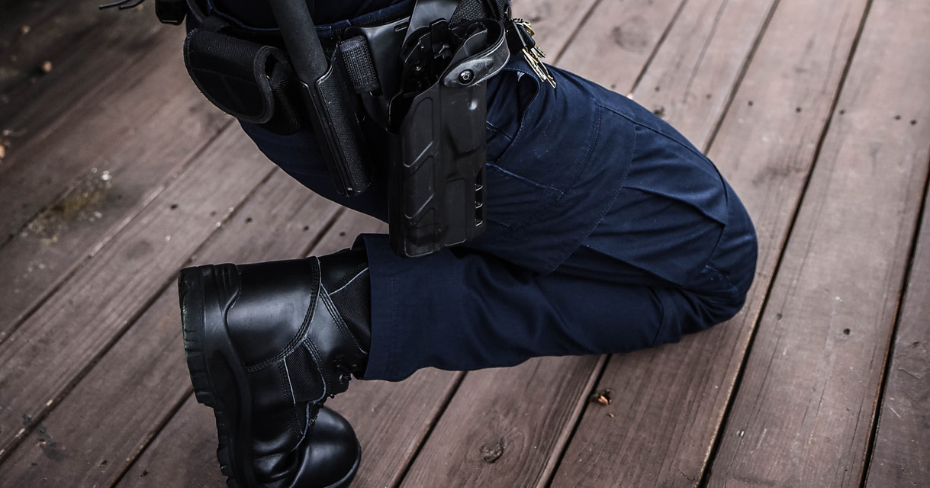
You will need a sturdy belt-mounted holster that covers the trigger guard and retains the pistol securely. Kydex holsters from companies like Safariland, Blade-Tech, and CompTac are widely used. You will also need at least three to four magazines and belt-mounted magazine pouches.
Eye and Ear Protection
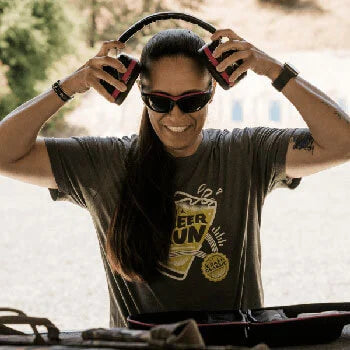
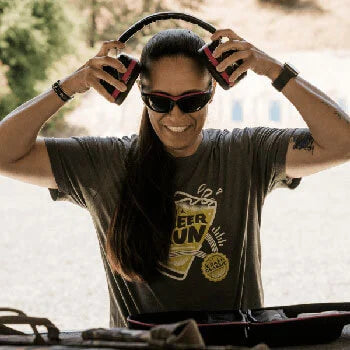
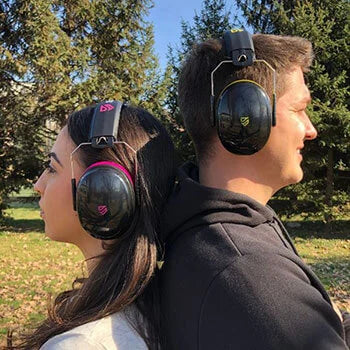
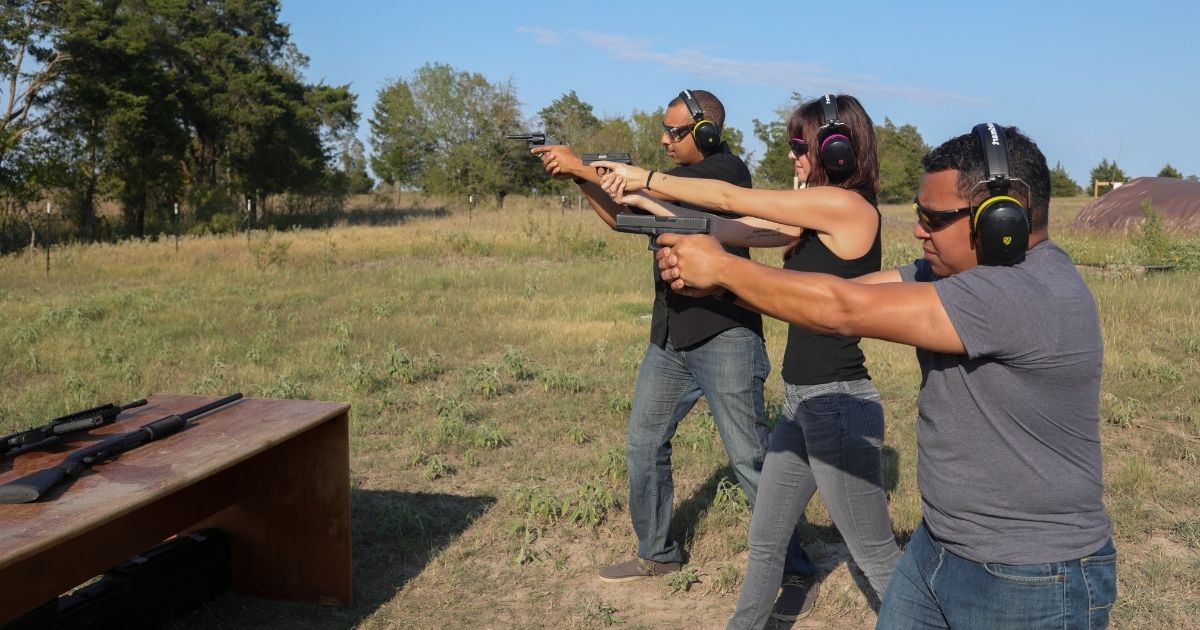
Eye and ear protection are mandatory at every competitive shooting event, no exceptions. According to the National Institute for Occupational Safety and Health (NIOSH), hearing protection is required for any noise exposure above 85 dB, and gunshots typically produce 140 to 175 dB depending on caliber. A single gunshot above 140 dB can cause immediate, permanent hearing damage.
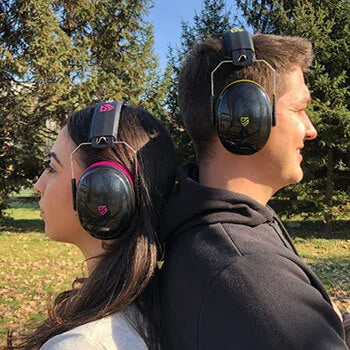
For competition, you need hearing protection rated with a Noise Reduction Rating (NRR) appropriate for sustained fire. Over-ear earmuffs with an NRR of 28 or higher provide solid protection, and doubling up with NRR 33 foam earplugs underneath gives you maximum defense against cumulative noise exposure across a full match day. Your safety glasses must be ANSI Z87.1+ rated to protect against ejected brass, bullet fragments, and debris. Standard sunglasses are not sufficient and most matches will not allow them.
TradeSmart Safety's shooting range kits include both NRR 28 earmuffs and ANSI Z87.1+ impact-resistant safety glasses, giving you competition-ready protection in a single package. Every kit also comes with a free Range Confidence Course that covers firearms fundamentals, which is invaluable if you are still building your shooting foundation. For a deeper dive into choosing the right hearing protection for match environments, read our guide on the best ear protection for shooting.
Ammunition
Bring more ammunition than you think you need. A typical USPSA or IDPA match requires 125 to 200 rounds, and 3-Gun matches can require 250 or more across all three firearms. Factory-loaded brass-cased ammunition is accepted at virtually every match. Some shooters reload their own ammunition to save money, but that is an investment in equipment and time that can wait until you are more committed to the sport.
Belt and Accessories
A rigid inner/outer belt system is the standard for action pistol sports. The inner belt threads through your pant loops, and the outer belt (with holster and magazine pouches attached) secures over it with Velcro. You do not need the most expensive belt on the market, but it does need to be stiff enough to support your gear without sagging. Having a well-organized range bag will keep your match day running smoothly.
Etiquette and Sportsmanship
The competitive shooting community is overwhelmingly welcoming to new shooters, but there are unwritten rules and expectations that will help you make a strong first impression.
Safety Above Everything
The 180-degree rule (never allowing your muzzle to break the 180-degree plane relative to the firing line) is the most critical safety rule in action shooting sports. A violation results in immediate disqualification, commonly called a "DQ." Negligent discharges, regardless of where the round goes, also result in a DQ. Take safety seriously, move deliberately, and keep your finger off the trigger until your sights are on target.
Be Helpful and Humble
Paste targets between shooters without being asked. Help reset steel. Offer to keep score or run the timer. The shooters who earn the most respect in competition are not always the fastest, but they are always the most helpful. If you are new, say so openly. Experienced competitors love helping newcomers, and most will offer tips, loan equipment, and walk you through stage planning if you ask.
Respect the Range Officers
Range Officers volunteer their time to keep matches safe and fair. Follow their commands promptly, accept their calls without argument, and thank them at the end of the day. If you believe a scoring call was incorrect, there is a formal arbitration process. Arguing on the stage is not part of that process.
Know Your Skill Level
Do not feel pressured to shoot fast or take risky shots beyond your ability. Accuracy and safety always trump speed, especially when you are starting out. Shoot at your pace, focus on clean runs without procedural penalties, and let the speed come naturally over time.
The Progression Path: Local to National
Competitive shooting offers a clear pathway for growth, from casual local matches all the way to national championships.
Level 1: Local Club Matches
This is where everyone starts. Local matches are held weekly or monthly at clubs across the country. They are informal, low-pressure, and designed to be fun. Match fees are typically $20 to $35, and you will shoot alongside a mix of beginners and experienced competitors. Expect to shoot 4 to 6 stages over 3 to 4 hours.
Level 2: Regional and Sectional Matches
Once you have several local matches under your belt and feel comfortable with the rules and flow, regional matches are the next step. These are larger events, often spanning two days, with more complex stage designs and higher round counts. Entry fees range from $75 to $150, and you may need to travel. Regional matches are where you start to see what truly competitive shooting looks like.
Level 3: Area and National Championships
USPSA, IDPA, and other organizations host area and national championships annually. These are multi-day events with hundreds of competitors, professionally designed stages, and a festival-like atmosphere. Qualifying for nationals typically requires a minimum classification or a certain number of matches shot. Entry fees can run $200 to $400 or more, plus travel and lodging expenses.
Classification Systems
Most disciplines use classification systems to rank shooters by skill level. USPSA uses classifications from D (beginner) through Grand Master. IDPA uses Novice through Distinguished Master. These classifications are based on your scores relative to established benchmarks, and they allow you to compete against shooters of similar skill.
Progression through classifications is one of the most rewarding aspects of competitive shooting. Tracking your improvement over months and years gives you concrete goals to work toward.
Cost Breakdown: What to Budget
Understanding the financial commitment helps you plan realistically. Here is what competitive shooting costs at different levels and across different disciplines.
Action Pistol (USPSA, IDPA, Steel Challenge)
- Firearm: $400 to $700 for a quality 9mm pistol (Glock 17, M&P 2.0, CZ P-10)
- Holster and magazine pouches: $80 to $200
- Competition belt: $50 to $100
- Magazines (4 to 5 total): $80 to $150
- Eye and ear protection: $30 to $80 for quality rated gear
- Ammunition per match (150 rounds of 9mm): $30 to $50
- Match entry fee: $20 to $40
- Estimated startup cost: $700 to $1,300 (assuming you already own a pistol, $300 to $600)
NRL22 / Rimfire
- Rifle: $250 to $500 for a Ruger 10/22 or similar platform
- Optic: $150 to $400
- Bipod and rear bag: $50 to $150
- Ammunition per match (100 to 150 rounds of .22 LR): $5 to $15
- Match entry fee: $15 to $30
- Estimated startup cost: $500 to $1,100
3-Gun
- Rifle (AR-15 platform): $600 to $1,200
- Shotgun: $300 to $800
- Pistol: $400 to $700
- Gear (holsters, mag pouches, shell caddies, belt): $200 to $500
- Ammunition per match (mixed calibers): $75 to $150
- Match entry fee: $40 to $80
- Estimated startup cost: $1,600 to $3,400
Cowboy Action Shooting
- Two single-action revolvers: $800 to $1,500 (used)
- Lever-action rifle: $400 to $800
- Shotgun (side-by-side or pump): $300 to $600
- Leather gear and costume: $200 to $500
- Ammunition per match: $30 to $60
- Match entry fee: $20 to $35
- Estimated startup cost: $1,800 to $3,500
PRS (Precision Rifle)
- Bolt-action rifle: $1,500 to $3,500
- Optic: $1,000 to $3,000
- Bipod, rear bag, and accessories: $200 to $500
- Match-grade ammunition (100 rounds): $150 to $250
- Match entry fee: $100 to $250
- Estimated startup cost: $3,000 to $7,500
The most budget-friendly entry points are Steel Challenge with a .22 LR pistol and NRL22 with a rimfire rifle. Both allow you to experience competitive shooting for well under $1,000 in total startup costs.
Physical Fitness for Competitive Shooting
Competitive shooting is more physically demanding than most people realize. While you do not need to be an elite athlete, a baseline level of fitness directly impacts your performance and enjoyment.
Cardiovascular Endurance
Action shooting sports like USPSA and 3-Gun require you to move quickly between shooting positions, often sprinting 10 to 20 yards while managing a loaded firearm. A full match day can last 4 to 6 hours under the sun, and fatigue degrades accuracy and decision-making. According to the NRA's Shooting Sports Journal, regular aerobic exercise such as walking, running, or cycling for at least 30 minutes a day significantly improves match performance and sustained accuracy throughout a competition day.
Upper Body and Core Strength
Holding a pistol steady through an extended string of fire or supporting a rifle in an unsupported position requires muscular endurance in your shoulders, arms, and core. Grip strength is particularly important for pistol sports, as it directly affects recoil management and split times. Core strength improves stability in every shooting position, from standing to kneeling to prone.
Flexibility and Mobility
PRS and NRL22 competitors regularly shoot from awkward positions: through barricade ports, over and under obstacles, and from improvised rests that demand flexibility. Even in action pistol, the ability to crouch behind cover, lean around barriers, and transition quickly between positions requires a functional range of motion. Regular stretching and mobility work pays dividends on match day.
Practical Recommendations
- Cardio: 30 minutes of moderate aerobic activity, 3 to 5 days per week
- Strength: Focus on grip, shoulders, core, and legs; 2 to 3 sessions per week
- Flexibility: 10 to 15 minutes of stretching or yoga daily
- Hydration and nutrition: Bring water and snacks to every match; dehydration impairs focus and fine motor control
You do not need a gym membership to start. Bodyweight exercises, walking, and basic stretching will give you a meaningful advantage over shooters who neglect fitness entirely.
TradeSmart Gear for Competition
Competitive shooting puts your safety gear through sustained, repeated use. A match day means hours of exposure to gunfire, not just your own but from every shooter in your squad. Over the course of a full match, you may be exposed to hundreds of shots at close range. Your hearing and eye protection need to perform consistently from the first stage to the last.
TradeSmart Safety builds gear specifically for this kind of sustained use. Our NRR 28 earmuffs are designed for all-day comfort with padded headbands that will not create pressure points during a 5-hour match. Pair them with our NRR 33 foam earplugs for dual protection that brings your effective noise reduction significantly higher, which is critical when you are standing next to a competitor firing a .44 magnum that produces 164 dB at the muzzle.
Every TradeSmart kit includes ANSI Z87.1+ impact-resistant polycarbonate safety glasses with anti-fog coating, so your eye protection remains clear through temperature changes and physical exertion. Fogging glasses during a timed stage is more than an inconvenience; it is a safety concern and a performance killer.
For competitors who want to maintain situational awareness while staying protected, the TacticalEdge electronic earmuffs offer NRR 24 protection with directional microphones that amplify range commands and conversation while instantly compressing harmful gunshot noise. Hearing the Range Officer's commands clearly is not optional in competition, and electronic earmuffs make that possible without sacrificing protection.
Our tactical range backpack is purpose-built for match days, with compartments for ammunition, magazines, tools, and safety gear. And every TradeSmart product ships free, is backed by a 10-year warranty, and includes the Range Confidence Course, a free online course covering firearms fundamentals that will help you build the skills you need before your first competition.
Explore our full lineup of shooting protection kits to find the right setup for your discipline.
Frequently Asked Questions
Do I need to be an experienced shooter to enter my first competition?
No. Most local matches welcome complete beginners. You need to know how to safely operate your firearm, load and unload it, and follow basic range commands. Many clubs offer new shooter orientations before the match, and experienced competitors are almost always willing to walk you through the process. What matters most is that you handle your firearm safely. Speed and accuracy will develop with practice.
What is the cheapest way to get started in competitive shooting?
Steel Challenge with a .22 LR pistol or NRL22 with a rimfire rifle are the most affordable entry points. Ammunition costs are minimal (roughly $0.05 to $0.10 per round for .22 LR), match fees are typically $15 to $30, and the firearms themselves are relatively inexpensive. You can realistically start competing in either discipline for under $600 in total equipment costs, including eye and ear protection.
How many rounds of ammunition should I bring to a match?
It depends on the discipline and the specific match, but a general rule is to bring at least 50 percent more ammunition than the posted round count. For a USPSA match with a 125-round minimum, bring 175 to 200 rounds. For 3-Gun, bring at least 250 rounds of rifle, 100 rounds of pistol, and 50 rounds of shotgun. Running out of ammunition mid-match is frustrating and easily avoided with a little extra preparation.
Can I use my concealed carry pistol for competition?
In most cases, yes. IDPA was specifically designed for practical defensive firearms, and many USPSA divisions accommodate stock pistols. Your concealed carry gun may not be the most competitive option, but it will be legal for most local matches. The most important thing is that your holster is safe and your firearm is reliable. You can upgrade to more specialized equipment later as your interest and skill level grow.
What safety gear is required at competitive shooting matches?
Eye and ear protection are universally required at every sanctioned match. Safety glasses must meet ANSI Z87.1+ impact standards, as standard sunglasses or prescription glasses alone are not sufficient. Hearing protection should provide adequate noise reduction for sustained exposure to gunfire. According to NIOSH, recreational shooters are four times more likely to develop noise-induced hearing loss, so investing in quality rated protection like NRR 28+ earmuffs is essential for anyone shooting regularly. Many competitors double up with earmuffs over earplugs for maximum protection during long match days.
How long does a typical match take?
A local club match with 4 to 6 stages typically takes 3 to 4 hours from the safety briefing to the last shot. Larger regional matches with 8 to 12 stages may take a full day, and major matches or nationals can span 2 to 3 days. Plan to block out at least half a day for any local match, and a full day for anything larger. Arrive early, stay for the awards, and use the downtime between stages to watch other shooters and learn.
Start Competing Today
Competitive shooting is one of the most rewarding pursuits available to firearms enthusiasts. It will sharpen your skills faster than any amount of casual range time, introduce you to a community of passionate and helpful people, and give you concrete goals to work toward as you progress through classifications and disciplines.
The path from your first local match to national-level competition is well-established and achievable. All it takes is a reliable firearm, the right safety gear, and the willingness to show up and learn.
Get competition-ready with TradeSmart Safety's Premium shooting protection kits, built for all-day match performance with NRR 28 earmuffs, ANSI Z87.1+ safety glasses, protective case, and NRR 33 earplugs. Every kit includes free shipping, a 10-year warranty, and access to our free Range Confidence Course. Shop TradeSmart Safety today and show up to your first match fully protected and fully prepared.





Ray
March 15, 2024
Believe me, I wish I could find it enjoyable. I know that it is not 1984 and President Reagan is no longer in the White House. I know things change. IPSC, USPSA, and IDPA are not the same now as when they were first formed. I am glad that some folks can still enjoy it.