



Your Complete Guide to Competitive Shooting Events for .22LR Pistols and Rifles in 2026
The .22 Long Rifle cartridge is the single most popular round in America, and for good reason. With ammunition running roughly five to eight cents per round compared to 30 to 50 cents for 9mm and well over a dollar for most rifle calibers, the .22LR lets you shoot more, practice more, and compete more without draining your bank account. But the financial advantage is only part of the story. The .22LR's minimal recoil, low noise levels (approximately 140 dB compared to 165 dB for a 12-gauge shotgun), and wide availability of purpose-built competition platforms have made it the foundation of some of the fastest-growing shooting sports in the country.
Whether you are a brand-new shooter looking for a low-pressure entry into competition or an experienced centerfire competitor wanting to sharpen fundamentals without the cost, there is a .22LR competition format built for you. This guide covers every major .22LR competition discipline available in 2026, the gear you need to get started, and how to find matches near you.
Why .22LR Is the Ideal Competition Cartridge
Before diving into specific disciplines, it is worth understanding why the .22LR dominates the entry-level and training-focused competition space.
Cost Efficiency
A 500-round brick of quality .22LR ammunition costs between $25 and $40 in 2026. That same money buys roughly one box of premium 9mm hollow points. For competition shooters who burn through hundreds of rounds per practice session and match, the savings compound rapidly. A dedicated competitor shooting 500 rounds per week spends roughly $2,000 to $3,000 per year on .22LR ammunition versus $8,000 to $15,000 for an equivalent centerfire practice schedule.
Low Recoil and Noise
The .22LR generates minimal felt recoil, which means new shooters can focus on fundamentals like sight alignment, trigger control, and follow-through without developing a flinch. According to NIOSH, any noise exposure above 140 dB can cause immediate hearing damage, and while .22LR rifles still produce approximately 140 dB (well above the safe threshold), this is substantially less punishing than the 160-plus dB generated by centerfire rifles and shotguns. Proper ear protection remains essential even with rimfire cartridges.
Skill Development That Transfers
Every fundamental skill you build with a .22LR transfers directly to centerfire shooting. Trigger control, natural point of aim, positional shooting, stage planning, and target transitions all work identically regardless of caliber. Many top-level precision rifle and action pistol competitors maintain active .22LR competition schedules specifically because the low cost lets them get more repetitions per dollar spent.
Steel Challenge: The Fastest Entry Point
If you want the simplest, most beginner-friendly introduction to competitive shooting, Steel Challenge is where to start. Sanctioned by the Steel Challenge Shooting Association (SCSA), a division of USPSA, this discipline is pure speed shooting against steel targets.
How It Works
Each stage consists of five steel plates arranged in a specific pattern. You shoot five strings (runs) per stage, and your slowest string is dropped, with the best four times totaled for your stage score. The maximum time allowed per string is 30 seconds. There are eight standardized stage designs used across every match in the country, so you can practice the same stages at home with dry fire and know exactly what you will face at any match.
Rimfire Divisions
Steel Challenge offers four dedicated rimfire divisions:
- Rimfire Pistol Iron Sights (RFPI): Any iron-sighted .22LR pistol. Fiber-optic sight inserts are permitted.
- Rimfire Pistol Optics (RFPO): Any .22LR pistol with optics and compensators allowed. This is the rimfire pistol speed division.
- Rimfire Rifle Iron Sights (RFRI): Any iron-sighted .22LR rifle.
- Rimfire Rifle Optics (RFRO): Any .22LR rifle with optics and compensators allowed. This is the rimfire rifle speed division.
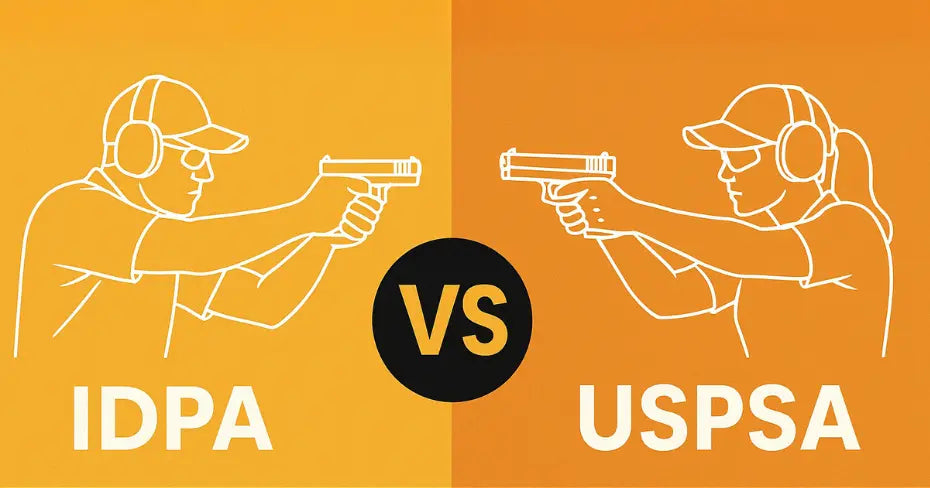
Rimfire divisions start at low ready with the muzzle pointed at a start mark on the ground, making the draw stroke unnecessary for new competitors. Match fees typically run $15 to $25, and you will shoot approximately 125 to 175 rounds per match. If you are curious about how Steel Challenge fits into the broader competitive shooting landscape, our guide on IDPA vs. USPSA key differences provides helpful context.
NRL22: Precision Rifle Competition Made Accessible
The National Rifle League 22 (NRL22) is one of the fastest-growing shooting sports in America. Founded in 2017, NRL22 brings the challenge of precision rifle competition to local ranges by using .22LR rifles on steel targets at distances from 25 to 100 yards (with an option for stages out to 200 yards).
How It Works
Every NRL22 match across the country shoots the same five stages each month, designed and released by the national organization. Stages involve engaging varying-size steel targets from unconventional positions using barricades, barrels, ladders, sawhorses, and other props. This is not bench rest shooting. You will shoot from standing, kneeling, sitting, prone, and improvised positions that test your ability to build stable shooting platforms under time pressure.
Competition Divisions
NRL22 currently offers seven divisions to accommodate shooters of all backgrounds:
- Open: No restrictions on rifle or scope. The most competitive division and where the majority of shooters compete.
- Base: Combined rifle and scope MSRP must be $1,500 or less, with additional restrictions on modifications.
- Ladies: Dedicated division for female competitors.
- Young Guns: For shooters ages 11 to 18.
- Old Gun: For shooters 60 and older.
- Air Rifle: For air rifle competitors.
- Adaptive: For competitors with physical disabilities.
All rifles must be chambered in .22 Long Rifle with magnified optics (scopes). NRL22 matches typically cost $20 to $30 and require approximately 100 to 150 rounds of ammunition. With over 600 affiliated clubs nationwide, there is likely a match within driving distance of your location.
Rimfire Challenge: The Two-Gun Format
The Rimfire Challenge Shooting Association (RCSA), formerly known as the NSSF Rimfire Challenge, offers a unique two-gun format that requires competitors to use both a .22LR pistol and a .22LR rifle during each match.
How It Works
Stages consist of five to seven steel plates set at distances between 7 and 25 yards for pistol and up to 35 yards for rifle, all shot from the standing position. Each stage is designed so that even inexperienced shooters can complete it using a single 10-round magazine without needing to reload on the clock. You shoot five strings per stage, with the slowest string dropped and the four fastest totaled for your score.
Why It Stands Out
Rimfire Challenge is specifically designed as a family-friendly introduction to competitive shooting. The equipment requirement of a semi-automatic, magazine-fed .22LR rifle and pistol keeps the barrier to entry low, and the stage design ensures new shooters are never overwhelmed. Matches are scored electronically and posted on PractiScore, so you can track your improvement over time. This is an excellent format for families, youth shooters, and anyone who wants to develop proficiency with both pistol and rifle platforms.
Project Appleseed: Marksmanship Fundamentals and American Heritage
Project Appleseed is not a competition in the traditional sense, but it deserves a place on this list because it is one of the best structured marksmanship programs available for .22LR shooters and serves as a direct pipeline into competitive shooting.
How It Works
Run by the Revolutionary War Veterans Association (RWVA), a 501(c)(3) non-profit, Appleseed events are typically two-day weekend clinics that teach traditional rifle marksmanship from standing, sitting or kneeling, and prone positions. Although the program originally focused on the M1 Garand and M14/M1A, the vast majority of today's participants use semi-automatic .22LR rifles.
The Rifleman's Qualification
The centerpiece of every Appleseed event is the Army Qualification Test (AQT), a timed course of fire that tests your ability to engage targets at simulated distances from 100 to 400 yards (shot on reduced-size targets at 25 meters). Scoring 210 out of 250 earns you the coveted Rifleman patch, a distinction that only about 10 percent of attendees achieve on their first weekend.
Rimfire Known Distance
For shooters ready to push further, Appleseed offers a Rimfire Known Distance (KD) program where students engage targets at actual distances out to 200 yards using .22LR rifles. This bridges the gap between reduced-distance fundamentals training and real-world long-range rimfire shooting. Events are held at ranges across the country throughout the year, with registration available through the Project Appleseed website.
CMP Rimfire Sporter: Traditional Marksmanship Competition
The Civilian Marksmanship Program (CMP) has been promoting marksmanship in America since 1903, and their Rimfire Sporter competition is one of the most accessible entry points into formal, sanctioned competition shooting.
How It Works
The CMP Rimfire Sporter match uses .22LR rifles at 50 and 25 yards, requiring only 60 rounds to complete the course of fire (plus any sighters). Competitors fire from three positions: prone, standing, and sitting or kneeling. The 2025 National Rimfire Sporter Match at Camp Perry introduced electronic targets (eTargets) for the first time, with shot placement displayed automatically on LED tablets beside each competitor, a major modernization of the scoring process.
Rifle Classes
The CMP Rimfire Sporter program offers multiple rifle classes to keep competition fair:
- Open Sight (O): Iron-sighted rifles only.
- Telescope Sight (T): Scoped rifles.
- Tactical Unlimited (TU): Tactical-style rimfire rifles with fewer restrictions.
- M-Class: Military trainer rifles, added in 2025 to recognize the historical connection between .22LR trainers and military marksmanship programs.
CMP matches are held at local clubs, state championships, and the annual National Matches at Camp Perry, Ohio. The National Rimfire Sporter Match is one of the most popular events during the month-long National Matches, attracting both adults and juniors of all experience levels.
Local Club Matches: Where Most Competitors Start
Beyond the nationally sanctioned disciplines, thousands of local gun clubs across the country run informal rimfire matches that are often the easiest and most welcoming entry point into competition. These "outlaw" or club-level matches may borrow rules from Steel Challenge, NRL22, or Rimfire Challenge, or they may use entirely custom formats designed by the match director.
Finding Local Matches
The best resources for finding local rimfire competitions include:
- PractiScore.com: The most widely used match registration and scoring platform. Search by location and discipline.
- NRL22.org: The official NRL22 club finder lists all affiliated match locations.
- SCSA.org: The Steel Challenge club finder for sanctioned matches.
- Local gun club websites and social media: Many clubs advertise matches through Facebook groups and their own websites.
- Word of mouth at your local range: Ask the range staff or regular shooters about upcoming competitions.
If you are new to competitive shooting entirely, our guide on how to get into competitive shooting walks through the entire process from finding your first match to understanding range commands and etiquette.
Recommended .22LR Platforms for Competition
Choosing the right firearm depends on which discipline interests you most. Here are the top platforms across pistol and rifle categories that consistently perform well in competition.
Competition Pistols
Ruger Mark IV: The industry standard for .22LR target pistols. The Mark IV features a cold hammer-forged barrel for excellent accuracy and a single-button takedown system that makes cleaning remarkably simple compared to earlier generations. Available in multiple configurations from the basic Standard model to the competition-ready Mark IV Target and Hunter variants with adjustable sights and longer barrels. Extensive aftermarket support for triggers, grips, and compensators. Street price ranges from $450 to $700 depending on configuration.
Smith & Wesson SW22 Victory: The Victory's 5.5-inch match-grade interchangeable barrel, adjustable trigger stop, and Picatinny rail make it the most modular option out of the box. The stainless steel construction and fiber-optic sights deliver excellent accuracy without modification. Many competitive shooters consider this the best value in .22LR target pistols. Street price runs approximately $350 to $450.
Browning Buck Mark: Often overlooked but consistently accurate, the Buck Mark features a crisp factory trigger and excellent ergonomics. The Micro Bull and Plus UDX variants are popular competition choices. Street price ranges from $400 to $600.
Competition Rifles
Ruger 10/22: The most popular .22LR rifle ever made and the default choice for Steel Challenge, Rimfire Challenge, and Appleseed events. The 10/22's strength lies in its massive aftermarket: match barrels, precision triggers, chassis systems, and extended magazines are available from dozens of manufacturers. A factory 10/22 can be progressively upgraded as your skills and competitive ambitions grow. Street price starts at approximately $250 for the base model.
CZ 457: For precision competition like NRL22, the CZ 457 Varmint MTR is the current benchmark. Its heavy 20.5-inch barrel and match chamber consistently produce groups under half an inch at 50 yards with quality ammunition, and sub-MOA groups at 100 yards are achievable with premium loads. The 457 platform offers multiple stock configurations and excellent aftermarket chassis options. Street price ranges from $500 to $900 depending on variant.
Tikka T1x MTR: Built on a scaled-down version of Tikka's renowned T3x action, the T1x delivers outstanding accuracy and the smoothest bolt throw in its class. It won the NRL22 Championship for the 2023 season and remains a top choice for precision rimfire competition. The crossover compatibility with T3x accessories and stocks is a significant advantage. Street price runs approximately $400 to $500.
Ruger Precision Rimfire: Purpose-built for NRL22 and precision rimfire competition, this rifle features a fully adjustable stock, AR-style grip, free-floated barrel, and Picatinny rail. It accepts Ruger AI-style magazines and offers excellent value as a competition-ready platform out of the box. Street price ranges from $450 to $550.
Essential Equipment for .22LR Competition
Beyond the firearm itself, competitive shooting requires specific gear. Here is what you need to show up prepared for your first match.
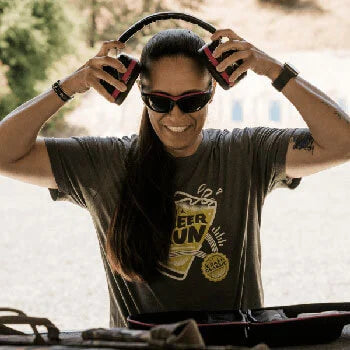
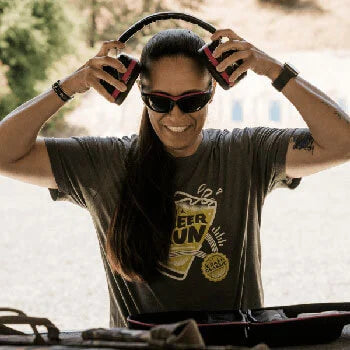
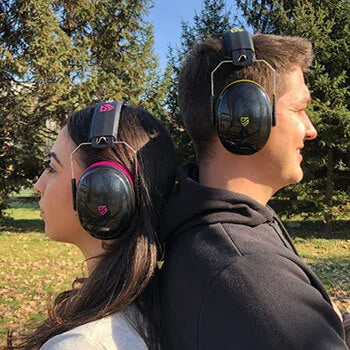
Hearing Protection
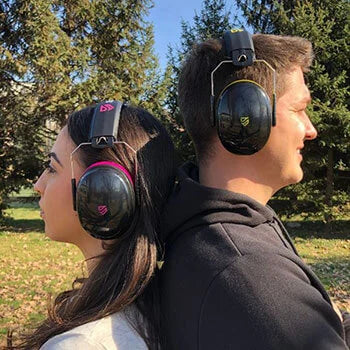
Even though .22LR is quieter than centerfire cartridges, it still generates approximately 140 dB, which is at the threshold where a single exposure can cause permanent hearing damage according to NIOSH guidelines. Proper hearing protection is non-negotiable at any shooting competition. TradeSmart Safety's NRR 28 earmuffs paired with NRR 33 foam earplugs provide dual-layer protection that can achieve an effective NRR of approximately 36, the gold standard approach for any shooting environment. For competition shooters who need to hear range commands clearly, TradeSmart's TacticalEdge electronic earmuffs with NRR 24 offer sound amplification through directional microphones while still blocking harmful impulse noise.
Eye Protection
ANSI Z87.1-rated safety glasses are required at virtually every organized shooting event. Rimfire cartridges can still produce lead splatter, ricocheting jacket fragments, and hot gas, all of which pose serious risk to unprotected eyes. TradeSmart Safety glasses meet the ANSI Z87.1+ standard with impact-resistant polycarbonate lenses and anti-fog coating, which is critical during active competition when you are moving between stages. A complete ear and eye protection kit ensures you arrive at every match with everything you need.
Ammunition
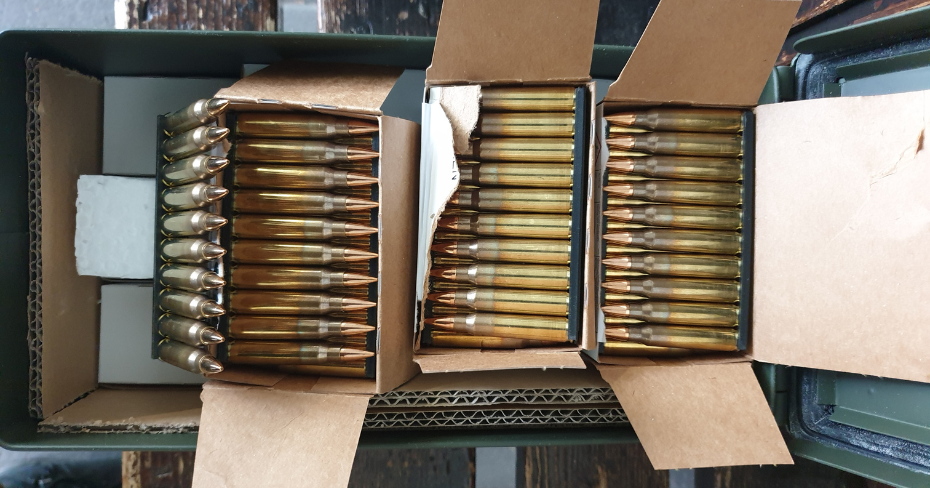
For speed-based competitions like Steel Challenge and Rimfire Challenge, standard-velocity bulk ammunition works perfectly well. For precision disciplines like NRL22 and CMP Rimfire Sporter, investing in match-grade ammunition from manufacturers like CCI, Eley, SK, or Lapua makes a measurable difference in group size. Many precision competitors test multiple ammunition brands in their specific rifle to find the load that produces the best accuracy, as individual rimfire rifles can be surprisingly particular about ammunition preferences. Our article on whether expensive ammunition means better performance explores this topic in detail.
Additional Gear
- Magazines: Bring at least five loaded magazines to any match. Speed reloads matter in timed competitions.
- Magazine loader: A quality loader saves your thumbs during long match days. The McFadden Lightning Loader is the standard for Ruger 10/22 magazines.
- Range bag: A dedicated bag keeps your gear organized and accessible. TradeSmart's tactical range backpack is designed for exactly this purpose.
- Bore snake or cleaning kit: Rimfire ammunition is inherently dirty. A quick bore snake pass between stages can maintain reliability during long matches.
- Optics (if applicable): For NRL22, a quality variable-power scope in the 4-16x or 6-24x range is standard. For Steel Challenge RFPO/RFRO, a red dot sight is the typical choice.
- Shot timer (optional): Useful for practice sessions at home or the range to track your improvement.
Why Start With .22LR Before Moving to Centerfire Competition
Many top competitive shooters in USPSA, IDPA, and PRS (Precision Rifle Series) actively encourage new shooters to start with .22LR competition before transitioning to centerfire. You develop clean fundamentals without the distraction of recoil management, and a flinch developed from jumping straight into magnum-caliber competition can take months to correct. The low ammunition cost lets you practice three to five times more frequently for the same budget. And you learn match procedures, stage planning, and competitive mental game in a low-pressure environment where a bad stage costs five cents worth of ammunition rather than five dollars.
According to the National Institute on Deafness and Other Communication Disorders (NIDCD), approximately 40 million Americans aged 20 to 69 have noise-induced hearing loss, and recreational shooters are four times more likely to develop hearing loss than non-shooters. Starting with .22LR does not eliminate the need for hearing protection, but the lower noise levels are less punishing over thousands of rounds of practice. Combined with quality ear protection like TradeSmart Safety's range kits, you can build a long competitive career without sacrificing your hearing health.
Frequently Asked Questions
What is the best .22LR competition for beginners?
Steel Challenge is widely considered the most beginner-friendly competition format. The rules are simple (shoot steel plates as fast as you can), no movement is required, and rimfire divisions start from a low-ready position rather than a holster draw. Match fees are low, round counts are modest, and the stages are standardized across the country so you can practice the exact courses of fire before attending a match. Rimfire Challenge is another excellent option, especially for shooters who want to use both a pistol and rifle.
How much does it cost to get started in .22LR competition?
A functional competition setup can be assembled for $400 to $700 total. A Ruger 10/22 rifle ($250 to $300), a basic .22LR pistol ($300 to $400), quality ear and eye protection ($40 to $80), and a few boxes of ammunition ($25 to $40 for 500 rounds) cover the essentials for most rimfire disciplines. Match entry fees typically range from $15 to $30. For precision rifle competition like NRL22, budget an additional $200 to $500 for a suitable scope.
Do I need special ammunition for .22LR competition?
For speed-based competitions like Steel Challenge and Rimfire Challenge, standard bulk ammunition from manufacturers like CCI, Federal, or Winchester performs well. For precision disciplines like NRL22 and CMP Rimfire Sporter, match-grade ammunition such as CCI Standard Velocity, Eley Match, SK Rifle Match, or Lapua Center-X can improve your scores measurably. The key is reliability: choose ammunition that cycles your specific firearm consistently, as malfunctions cost more time than any accuracy advantage.
Can I use a .22LR conversion kit on my centerfire pistol for competition?
In most Steel Challenge and club-level matches, .22LR conversion kits (such as the CMMG .22LR conversion for AR-15 rifles or the Advantage Arms kit for Glock pistols) are legal in rimfire divisions. However, check the specific rules for your match, as some sanctioned events may have restrictions. Conversion kits offer the advantage of training on the same grip angle and controls as your centerfire competition firearm.
What hearing protection is best for competitive shooting?
Electronic earmuffs are the preferred choice for competition because they allow you to hear range commands, timer beeps, and conversations while still blocking harmful impulse noise from gunfire. For maximum protection, many competitors use a dual-protection approach: electronic earmuffs over foam earplugs. TradeSmart Safety's electronic ear and eye protection kit provides this combination with NRR-rated components and ANSI Z87.1+ certified safety glasses. Every TradeSmart kit also includes access to the free Range Confidence Course, which covers firearms safety fundamentals that complement your competition training.
How do I find .22LR competitions near me?
Start with PractiScore.com, which is the primary match registration and results platform used by the competitive shooting community. Search by your zip code and filter for rimfire disciplines. The NRL22 club finder at NRL22.org and the Steel Challenge club finder at SCSA.org list all affiliated match locations. You can also contact your local gun club or range directly, as many host informal rimfire matches that may not appear on national platforms. Social media groups focused on competitive shooting in your state or region are another valuable resource.
Gear Up and Get to the Line
The .22LR competition world in 2026 offers more options, more accessibility, and more community than at any point in the sport's history. Whether you are drawn to the raw speed of Steel Challenge, the cerebral challenge of NRL22 precision shooting, the family-friendly format of Rimfire Challenge, the tradition of CMP marksmanship, or the foundational training of Project Appleseed, there is a discipline that matches your interests and skill level.
The only equipment requirement that applies to every single discipline is proper hearing and eye protection. TradeSmart Safety's Premium ear and eye protection kits are built for exactly this purpose: NRR 28 earmuffs, ANSI Z87.1+ certified safety glasses with anti-fog coating, NRR 33 foam earplugs, a hard-shell protective case, and free access to the Range Confidence Course. All backed by a 10-year warranty and free shipping, so you can focus on what matters: getting to the firing line and pulling the trigger.
Find a match. Register. Show up. The competitive shooting community is waiting to welcome you.



Leave a comment (all fields required)