






Do Noise Canceling Earmuffs Exist? The Critical Difference Every Shooter Needs to Understand
If you've ever searched for "noise canceling earmuffs" hoping to find the perfect hearing protection for the range, you've likely encountered a confusing mix of results. Consumer headphones from Bose and Sony sit alongside NRR-rated shooting earmuffs, and the marketing language makes them sound interchangeable.
They are not.
The difference between consumer noise canceling technology and actual hearing protection is not just a matter of branding. It is a matter of safety. Understanding this distinction could be the difference between preserving your hearing for decades and suffering irreversible damage from a single range session.
This guide breaks down exactly how each technology works, what shooters actually need, and why the term "noise canceling" can be dangerously misleading when applied to firearms use.
What Are Noise Canceling Earmuffs?
When most people say "noise canceling earmuffs," they are referring to consumer headphones that use Active Noise Cancellation (ANC) technology. Products like the Bose QuietComfort Ultra and Sony WH-1000XM5 have made ANC a household term. But what these devices actually do is very different from what hearing protection does.
How Active Noise Cancellation (ANC) Works
ANC headphones contain tiny microphones on the outside of each ear cup. These microphones pick up incoming sound waves and feed that information to an onboard processor. The processor then generates an "anti-noise" signal, which is an inverted sound wave that is 180 degrees out of phase with the incoming noise. When the anti-noise wave meets the original sound wave, they cancel each other out through a process called destructive interference.
Here is the critical detail: ANC technology is most effective against low-frequency, continuous sounds below roughly 1,000 Hz. Think airplane cabin drone, air conditioning hum, or the rumble of a train. Consumer ANC headphones typically reduce ambient noise by 15 to 25 decibels, and the bulk of that reduction happens in these lower frequency ranges.
What ANC does not do well is block sudden, high-frequency impulse sounds, which is precisely the kind of noise a gunshot produces.
Why ANC Headphones Cannot Protect Your Hearing at the Range
A gunshot is the polar opposite of the sounds ANC was designed to cancel. Firearms produce impulse noise, which is an extremely loud, extremely brief burst of sound that peaks and decays in milliseconds. According to the CDC, gunshots produce between 140 and 175 decibels depending on caliber. A .22 rifle generates roughly 140 dB, while a 12-gauge shotgun can reach 165 dB and a .44 Magnum approximately 164 dB.
ANC processors simply cannot react fast enough to generate an anti-noise wave for a sound that arrives and peaks in under a millisecond. By the time the processor identifies the sound, creates the inverted wave, and sends it to the speakers, the gunshot has already reached your eardrum at full intensity.
More importantly, ANC headphones do not carry an NRR (Noise Reduction Rating) because they are not tested or certified as hearing protection devices. They cannot legally be marketed as hearing protection, and they do not meet OSHA or NIOSH standards for occupational noise exposure.

What Is the Noise Reduction Rating (NRR)?
The Noise Reduction Rating (NRR) is the standardized measurement that tells you how much sound a hearing protection device can actually block. Developed by the Environmental Protection Agency (EPA) and tested according to ANSI S3.19 standards, the NRR provides a consistent, lab-verified decibel reduction number printed on the packaging of every certified hearing protector sold in the United States.
How NRR Works in Practice
The NRR number represents the maximum noise reduction under laboratory conditions. In real-world use, OSHA recommends a derating formula to estimate actual protection:
- Earmuffs: Subtract 25% from the NRR, then subtract 7 dB. An NRR 28 earmuff provides an estimated real-world reduction of roughly 15.75 dB.
- Earplugs: Subtract 50% from the NRR, then subtract 7 dB. An NRR 33 earplug provides an estimated real-world reduction of roughly 13 dB.
- Combined (earmuffs + earplugs): Take the higher NRR, add 5 dB. This dual-protection approach can yield an effective NRR of approximately 33 to 36 dB.
For context, NIOSH recommends hearing protection for any exposure above 85 dB over an 8-hour period. A single gunshot above 140 dB can cause immediate, permanent hearing damage. This is why NRR-rated protection is not optional at the range. It is essential.
Typical NRR Ranges by Protection Type
- Foam earplugs: NRR 25-33
- Over-ear earmuffs (passive): NRR 20-30
- Electronic earmuffs: NRR 20-26
- Combined earmuffs + earplugs: Effective NRR up to 36
Noise Canceling vs. Noise Reducing: A Side-by-Side Comparison
The confusion between these two categories is understandable. Both claim to reduce noise. Both cover your ears. But the underlying technology, intended use, and level of protection could not be more different.
| Feature | Consumer ANC Headphones | NRR-Rated Hearing Protection |
|---|---|---|
| Technology | Electronic anti-phase sound waves | Physical sound dampening (passive) or compression circuits (electronic) |
| Best against | Low-frequency, continuous noise | All frequencies, including impulse noise |
| Typical reduction | 15-25 dB (low frequencies only) | 20-33 dB (across all frequencies) |
| NRR certified | No | Yes |
| OSHA/NIOSH compliant | No | Yes |
| Effective against gunshots | No | Yes |
| Battery dependent for protection | Yes | No (passive protection works without batteries) |
| Primary purpose | Audio enjoyment, travel comfort | Hearing damage prevention |
The bottom line: consumer ANC headphones are designed to make your commute more pleasant. NRR-rated hearing protection is designed to prevent permanent hearing loss. These are fundamentally different goals, and the products are not interchangeable.
Electronic Earmuffs: The Best of Both Worlds for Shooters
So if ANC headphones cannot protect your hearing, and passive earmuffs block all sound indiscriminately, what do shooters actually need? The answer is electronic earmuffs, sometimes called "active hearing protection." These purpose-built devices combine NRR-rated physical noise reduction with intelligent sound management.
How Electronic Earmuffs Work
Electronic earmuffs use a three-part system that addresses the unique demands of shooting environments:
1. Passive NRR Protection (Always Active)
The ear cups themselves provide physical sound dampening, just like traditional passive earmuffs. This protection works whether the electronics are powered on or not. The dense foam, acoustic barriers, and sealed ear cup design physically block sound waves from reaching your ear canal. This is the foundation of your hearing protection and does not depend on batteries or circuits.
2. Sound Amplification (When Powered On)
External directional microphones pick up ambient sounds, including conversation, range commands, and environmental awareness cues, and amplify them through internal speakers at a safe volume level (typically capped at 82 dB). This means you can hear your range safety officer clearly, communicate with shooting partners, and maintain full situational awareness while wearing protection. For hunters, this amplification can actually enhance the ability to detect game movement and other subtle sounds.
3. Noise Compression (Automatic Response to Loud Sounds)
When sound exceeds a safe threshold, the electronic circuit responds in one of two ways:
- Clipping: Shuts off amplification entirely when sound exceeds the threshold. Fast but creates a momentary "blackout" in audio.
- Compression: Reduces loud sounds to a safe volume in real time without cutting audio entirely. Higher-end electronic earmuffs use digital compression circuitry with an attack time as fast as 0.5 milliseconds, fast enough to compress a gunshot to a safe sub-82 dB level before it can cause damage.
Compression-based electronic earmuffs are the preferred choice for serious shooters because they allow continuous situational awareness even during rapid fire. You never lose audio contact with your environment.
If you are trying to decide between passive and electronic protection, our guide on passive vs. electronic earmuffs covers the trade-offs in detail.

Why "Noise Canceling" Marketing Is Dangerously Misleading for Shooters
The popularity of ANC technology has created a dangerous misunderstanding. When someone searches for "noise canceling earmuffs for shooting," they may genuinely believe that Bose or Sony headphones can protect them at the range. Some product listings and affiliate articles blur the line further by categorizing ANC headphones alongside actual hearing protection.
Here is what the data tells us about why this matters:
- According to the National Institute on Deafness and Other Communication Disorders (NIDCD), approximately 40 million Americans aged 20-69 have noise-induced hearing loss.
- The American Tinnitus Association (ATA) reports that roughly 25 million Americans experience tinnitus, a persistent ringing or buzzing in the ears that is often caused by noise exposure.
- Research shows that recreational shooters are 4 times more likely to develop hearing loss than non-shooters.
Noise-induced hearing loss is cumulative and irreversible. There is no surgery, medication, or therapy that can restore hearing cells once they are destroyed. Every unprotected exposure adds permanent damage.
Using consumer ANC headphones at the range gives a false sense of security. The passive physical isolation from the ear cups may reduce the perceived volume slightly, but it falls far short of what NRR-rated protection delivers. And if the battery dies or the ANC circuit glitches, you have essentially no meaningful protection at all.
For a deeper look at the consequences of inadequate hearing protection, read our article on how long hearing loss lasts after shooting a gun.
What Shooters Actually Need: A Practical Guide
Choosing the right hearing protection depends on your shooting environment, frequency of use, and whether situational awareness matters for your activity. Here is a straightforward breakdown.
Indoor Range Shooting
Indoor ranges are the loudest shooting environments because sound reflects off walls, ceiling, and floor with nowhere to dissipate. You are also exposed to muzzle blast from other shooters in adjacent lanes.
Recommended protection: Dual protection with NRR-rated earmuffs and earplugs underneath. This combination can provide an effective NRR of up to 36 dB, which is the highest level of protection available. Consider a complete kit like the TradeSmart Safety Premium Shooting Kit, which includes NRR 28 earmuffs, NRR 33 foam earplugs, ANSI Z87.1+ safety glasses, and a hard-shell carrying case.
Outdoor Range Shooting
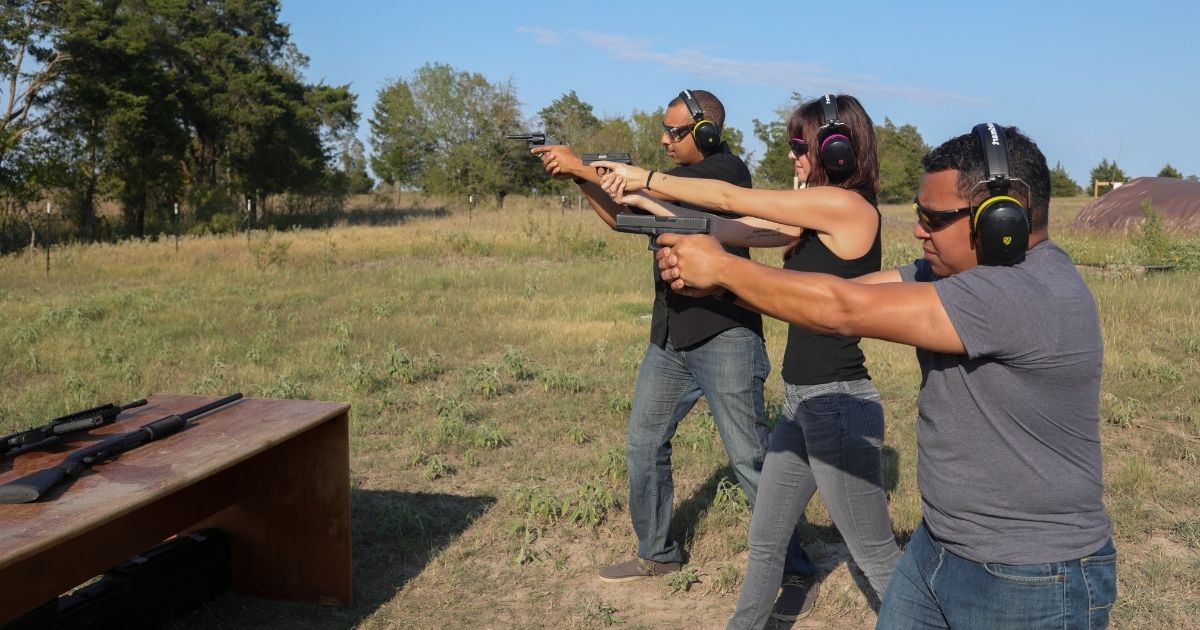
Outdoor ranges are somewhat less intense because sound dissipates into open air, but gunshots still far exceed safe levels. Situational awareness is important for hearing range commands and communicating with others.
Recommended protection: Electronic earmuffs with an NRR of 22 or higher. For added protection during high-caliber shooting, combine electronic earmuffs with foam earplugs underneath. See our roundup of the best ear protection for shooting for specific recommendations.
Hunting
Hunters need maximum situational awareness to track game, communicate with partners, and stay alert to their surroundings. Passive earmuffs block too much ambient sound for effective hunting, which is why many hunters historically shot without protection, leading to significant hearing damage over time.
Recommended protection: Electronic earmuffs with sound amplification. The amplification feature actually enhances hearing beyond normal levels while providing instant compression when a shot is fired. This is the one scenario where electronic earmuffs are not just preferable but practically necessary.
Competition Shooting
Competitive shooters need to hear range commands, timer beeps, and scoring announcements while maintaining consistent protection through extended shooting sessions. Comfort matters as much as protection here.
Recommended protection: Electronic earmuffs with compression (not clipping) circuitry, combined with low-profile earplugs for added protection. Compression circuitry ensures you never lose audio contact with the match environment. Our guide to the best electronic ear protection covers top options for competitive use.
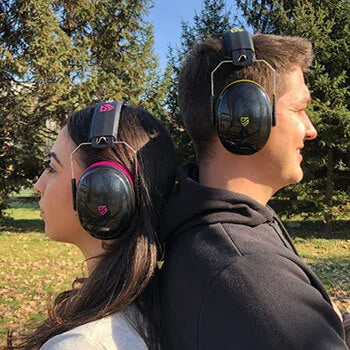
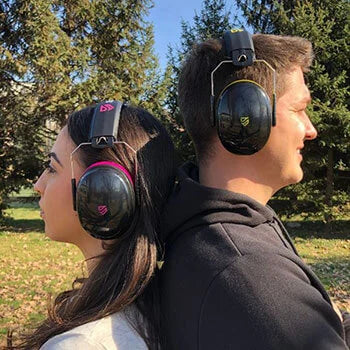
TradeSmart TacticalEdge Electronic Earmuffs
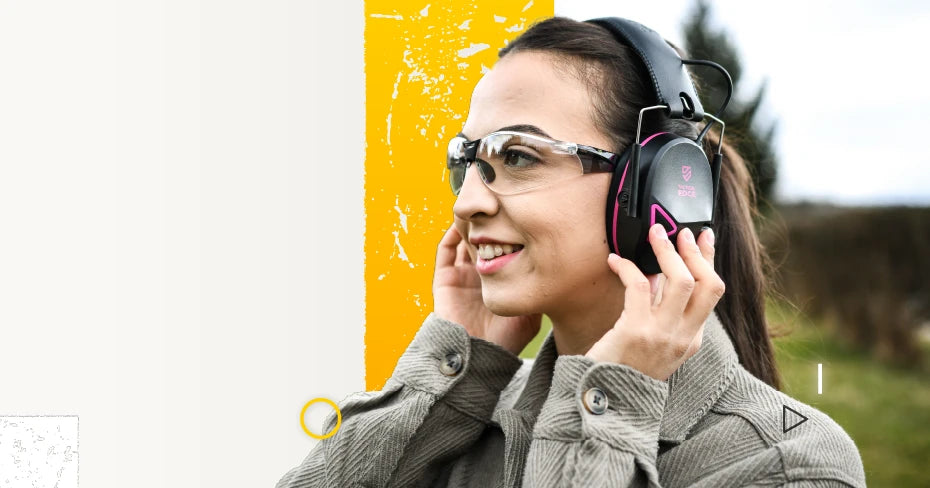
The TradeSmart TacticalEdge Electronic Earmuffs are designed specifically for shooters who want the combination of certified hearing protection and full situational awareness.
Key Specifications
- NRR 24: Certified noise reduction that provides meaningful protection against firearms noise, with or without the electronics powered on.
- Sound amplification: Directional microphones amplify ambient sounds, range commands, and conversation to a safe listening level so you stay connected to your environment.
- Noise compression: Millisecond-fast circuitry compresses gunshot-level impulse noise to a safe volume, keeping you protected without cutting off all sound.
- 10-year warranty: Every TradeSmart Safety product is backed by a 10-year warranty, which reflects the build quality and durability of the product.
- Free shipping: All TradeSmart Safety orders ship free.
For shooters who want a complete setup, the TradeSmart Electronic Ear and Eye Protection Kit pairs the TacticalEdge earmuffs with ANSI Z87.1+ safety glasses and includes access to the free Range Confidence Course, an online firearms fundamentals course included with every TradeSmart Safety kit.
How to Maximize Your Hearing Protection
Regardless of which hearing protection you choose, proper use makes a significant difference in actual protection levels.
Fit Matters More Than You Think
An NRR 30 earmuff that does not seal properly around your ears may deliver less protection than an NRR 24 earmuff with a perfect seal. Make sure:
- Ear cups fully enclose your ears with no gaps
- The headband provides firm but comfortable pressure
- Eyewear temples do not break the ear cup seal (slim-profile glasses help here)
- Long hair is pulled back or tucked so it does not interfere with the seal
Double Up for Maximum Protection
For indoor ranges or high-caliber shooting, wearing NRR-rated earplugs underneath earmuffs is the gold standard. This dual approach provides the highest available level of protection and is recommended by NIOSH for any environment where noise exceeds 105 dB. Since gunshots routinely exceed 140 dB, doubling up is a sensible default for range shooting.
Need guidance on proper earplug insertion? Our step-by-step guide on how to put in earplugs covers the technique that ensures a proper seal and maximum NRR performance.
Inspect and Replace
Hearing protection degrades over time. Check your earmuffs regularly for cracked cushions, weakened headband tension, or damaged ear cup seals. Foam earplugs are single-use and should be replaced after each session. Electronic earmuffs should have their batteries checked before each range visit.
Frequently Asked Questions
Can I use Bose or Sony noise canceling headphones for shooting?
No. Consumer ANC headphones from Bose, Sony, Apple, and similar brands are not designed or certified for hearing protection. They typically reduce noise by 15-25 dB, primarily in low frequencies, and cannot adequately block the 140-175 dB impulse noise produced by firearms. They do not carry an NRR and are not OSHA or NIOSH compliant. Using them at the range puts your hearing at serious risk.
What is the difference between noise canceling and noise reducing earmuffs?
"Noise canceling" refers to Active Noise Cancellation (ANC), a consumer electronics technology that generates anti-phase sound waves to reduce low-frequency ambient noise. "Noise reducing" refers to NRR-rated hearing protection that physically blocks sound across all frequencies using acoustic barriers and dense foam materials. Only noise-reducing earmuffs with an NRR are certified to protect your hearing against loud sounds like gunfire.
Are electronic earmuffs the same as noise canceling headphones?
No. Although both use microphones and electronics, they serve opposite purposes. Electronic earmuffs amplify safe sounds while compressing dangerous sounds, all while providing passive NRR-rated physical protection. ANC headphones generate anti-phase waves to reduce perceived ambient noise for listening comfort. Electronic earmuffs are certified hearing protection. ANC headphones are consumer audio products.
What NRR rating do I need for shooting?
For shooting, an NRR of at least 22 dB is considered the minimum, with NRR 28 or higher recommended for frequent range use. For indoor ranges or high-caliber firearms, combine earmuffs with foam earplugs (NRR 33) for maximum protection. The combined effective NRR can reach approximately 36 dB, which is the highest level of hearing protection achievable.
Do electronic earmuffs still protect my hearing if the batteries die?
Yes. Electronic earmuffs provide passive NRR-rated protection regardless of battery status. The electronics control sound amplification and compression features, but the physical ear cups, acoustic foam, and sealed design block sound mechanically. If your batteries die, you lose the amplification and compression features but retain the full NRR protection rating.
Can noise-induced hearing loss from shooting be reversed?
No. Noise-induced hearing loss is permanent because the hair cells in the inner ear (cochlea) that convert sound vibrations into nerve signals do not regenerate once damaged. According to the NIDCD, approximately 40 million Americans aged 20-69 have some degree of noise-induced hearing loss. Prevention through proper NRR-rated hearing protection is the only reliable strategy. For more on this topic, read our detailed article on how long hearing loss lasts after shooting.
The Bottom Line: Protect Your Hearing With the Right Gear
Do noise canceling earmuffs exist? Yes, as consumer audio products designed to make airplane cabins quieter and office noise less distracting. But they are not hearing protection, and they have no place at the shooting range.
What shooters need is NRR-rated protection, either passive earmuffs, electronic earmuffs, earplugs, or ideally a combination. Electronic earmuffs offer the best balance of certified protection and situational awareness, making them the top choice for range shooting, hunting, and competition.
The TradeSmart TacticalEdge Electronic Earmuffs deliver NRR 24 protection with sound amplification and noise compression, all backed by a 10-year warranty and free shipping. For a complete range setup, explore the Electronic Ear and Eye Protection Kit or browse the full line of TradeSmart Safety shooting kits.
Your hearing is irreplaceable. Protect it with gear that is actually designed for the job.



Leave a comment (all fields required)