



Best Tactical Flashlight: Top 7 Picks for 2026
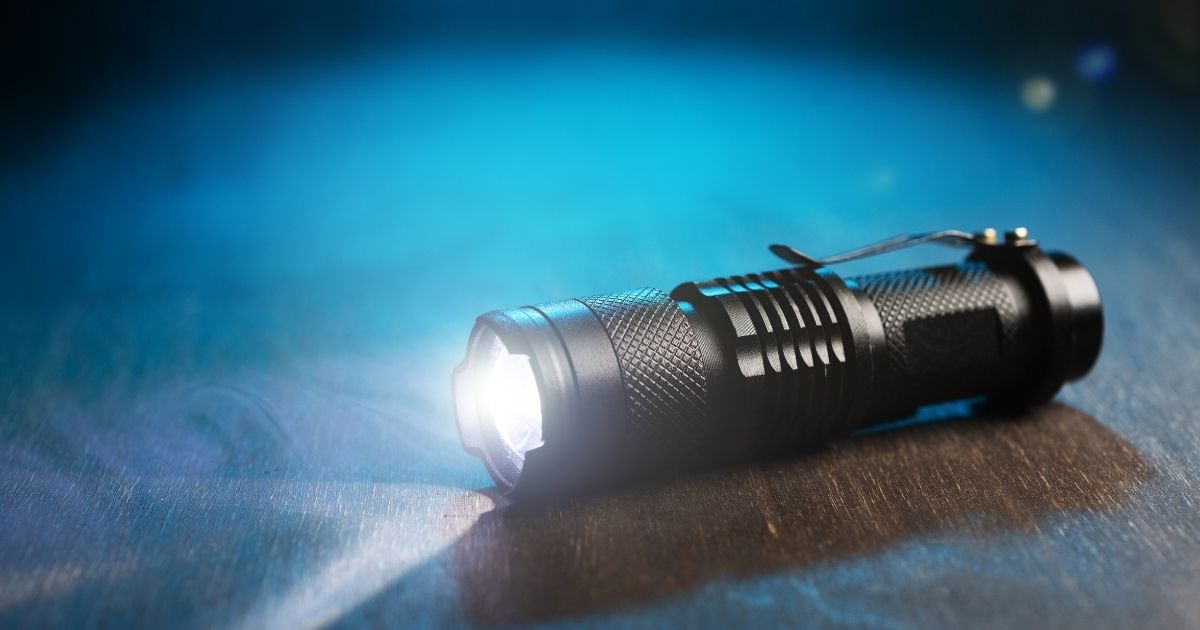
A reliable tactical flashlight is one of the most critical tools in any shooter's kit. Whether you need a weapon-mounted light for home defense, a compact EDC for your pocket, or a high-output handheld for search and rescue, choosing the right one comes down to understanding a few key specifications that most buyers overlook.
We spent months testing and comparing tactical flashlights across categories — EDC, weapon-mounted, search, and hunting — to bring you the seven best picks for 2026. But before we get to the list, let's break down what actually matters when evaluating a tactical light.
Lumens vs. Candela: What Actually Matters
If you've shopped for a flashlight in the last five years, you've been bombarded with lumen counts. Manufacturers race to put the biggest number on the box. But here's what most buyers don't realize: lumens measure total light output, while candela measures beam intensity in a single direction — and candela is what determines how far your light reaches and how effectively it identifies targets at distance.
Think of it this way. Lumens are the total volume of water coming from a garden hose. Candela is the pressure. A flashlight with 1,000 lumens and low candela floods a room with unfocused light. A flashlight with 1,000 lumens and high candela punches a concentrated beam 300+ meters into the darkness.
The relationship is mathematical: 4x the candela doubles the beam distance in meters. That's why the Cloud Defensive REIN 3.0 at 1,250 lumens with 100,000 candela dramatically outthrows many 2,000+ lumen lights with lower candela ratings.
When Lumens Matter More
- Indoor use and home defense: You need wide flood to illuminate hallways, doorways, and rooms quickly
- Close-range target identification: Within 25 yards, raw output dominates
- Disorientation and strobe: Higher lumens create a more intense strobe effect for defensive use
When Candela Matters More
- Outdoor use and long-range identification: Beyond 50 yards, candela determines whether you can see what you're looking at
- Weapon-mounted rifle lights: You need to positively identify targets at distance before engaging
- Hunting and search applications: Penetrating fog, smoke, and vegetation requires beam intensity, not just brightness
Bottom line: Don't buy a tactical flashlight based on lumen count alone. Look at the candela rating and beam distance. A 1,300-lumen light with 54,000 candela will serve you far better at distance than a 3,000-lumen light with 15,000 candela.
Battery Types: 18650 vs. CR123A vs. Rechargeable
Battery selection is the second most important decision after choosing your light, and it directly affects runtime, reliability, and long-term cost. Here's what you need to know about each type.
CR123A Lithium Primary Batteries
Best for: Weapon-mounted lights, emergency kits, glove box lights, infrequent use
- Shelf life: Up to 10 years — making them the gold standard for lights you may not touch for months
- Cold weather: Lithium primaries outperform rechargeables in extreme cold, maintaining voltage where lithium-ion cells sag
- Reliability: No charging required. Grab and go. Law enforcement and military favor CR123A for this reason
- Downsides: Non-rechargeable (cost adds up with frequent use), lower capacity than 18650 cells, lower sustained output capability
18650 Rechargeable Lithium-Ion Batteries
Best for: Regular use, high-output lights, EDC, training, range work
- Capacity: Typically 2,600–3,500 mAh — roughly double the energy of two CR123A cells in a single battery
- Cost savings: 500+ recharge cycles means one 18650 replaces hundreds of disposable batteries
- Performance: Higher sustained output. Most modern 1,000+ lumen lights are designed around 18650 or 21700 cells
- Downsides: Requires charging discipline, 2–5 year lifespan depending on use, slightly larger than CR123A
21700 Rechargeable Batteries
Best for: Maximum runtime and output in handheld tactical lights
- Capacity: 4,000–5,000 mAh — the largest common tactical flashlight battery
- Trend: Increasingly adopted by Fenix, Olight, and other manufacturers for flagship models
- Downsides: Larger size means bulkier lights. Not compatible with CR123A-sized bodies
Dual-Fuel Capability
Many top-tier tactical lights now offer dual-fuel capability, running on either rechargeable 18650 cells or disposable CR123A batteries. This gives you the best of both worlds: daily convenience with rechargeables, emergency reliability with primaries. The Cloud Defensive REIN 3.0 and Streamlight ProTac HL-X Pro both offer this flexibility.
Beam Patterns: Flood vs. Throw
Beam pattern is determined by the reflector or optic design, and it dictates how your light distributes its output. Understanding the difference between flood and throw helps you match a light to its intended use.
- Floody beam (wide hotspot, lots of spill): Ideal for indoor use, room clearing, and close-quarters work. Illuminates a wide area quickly. Common in home defense handgun lights
- Throwy beam (tight hotspot, minimal spill): Projects a concentrated beam to maximum distance. Preferred for outdoor use, hunting, and rifle-mounted lights where target identification at range is critical
- Balanced beam: A usable hotspot with moderate spill. The most versatile option for general-purpose tactical use. The Modlite PLHv2 and Streamlight ProTac HL-X are examples of balanced beam lights
Reflector type matters. Smooth reflectors produce tighter, throwier beams. Orange peel (textured) reflectors soften the hotspot and increase spill. TIR (Total Internal Reflection) optics produce very clean, artifact-free beams and are increasingly common in EDC lights like the Olight Warrior 3S.
Weapon-Mounted vs. Handheld: Choosing the Right Format
This decision should be driven by your primary use case, not preference alone.
Weapon-Mounted Lights
- Attached directly to your firearm's Picatinny rail or M-LOK interface
- Activated via tail cap switch or remote pressure pad while maintaining a firing grip
- Must withstand recoil — this is where cheap lights fail
- Essential for home defense firearms. You must identify what you're pointing at before pulling the trigger
- Not a substitute for a handheld light (you can't investigate a noise in your yard by pointing a loaded weapon at it)
Handheld Tactical Lights
- More versatile — usable without a firearm
- Better ergonomics for search, navigation, and everyday tasks
- Can be paired with a handgun using various technique positions (Harries, FBI, etc.)
- Every range bag should include a quality handheld light alongside your tactical knife and other essentials
The best setup is both. A weapon-mounted light on your home defense firearm, plus a handheld tactical light for everything else. If you're building a complete tactical loadout, pair your light with a quality tactical backpack to keep everything organized.
Durability Ratings: IPX and ANSI FL1 Explained
Don't buy a tactical flashlight without checking its durability ratings. The two standards you need to understand are IPX (water resistance) and the ANSI FL1 standard.
IPX Water Resistance Ratings
- IPX4: Splash resistant from any direction. Minimum acceptable for outdoor carry. Handles rain but not submersion
- IPX7: Submersible to 1 meter for 30 minutes. The standard for most quality tactical lights. Drop it in a puddle or creek and it survives
- IPX8: Submersible beyond 1 meter for extended periods. Premium rating found on high-end lights like the Cloud Defensive REIN 3.0 (rated to 100 feet for 24 hours) and the Fenix PD36R Pro (IP68 rated)
ANSI FL1 Standard
The ANSI FL1 standard, approved by the American National Standards Institute and developed by NEMA (National Electrical Manufacturers Association), establishes six standardized performance categories for flashlights:
- Light Output (lumens): Measured at 30 seconds after activation to account for thermal step-down
- Runtime: Time until output drops to 10% of initial rating
- Beam Distance (meters): Distance at which the beam produces 0.25 lux (equivalent to a full moon on a clear night)
- Peak Beam Intensity (candela): Maximum luminous intensity at the center of the beam
- Impact Resistance: Drop tested 6 times from the rated height onto concrete, hitting a different side each time
- Water Resistance: Rated per IPX standards described above
Key point: ANSI FL1 does not evaluate build quality, materials, heat management, or long-term reliability. A flashlight can meet ANSI FL1 standards and still be poorly built. That's why brand reputation and warranty matter — and why our top picks all come from manufacturers with proven track records.
Strobe and SOS Modes: Do You Actually Need Them?
Nearly every tactical flashlight includes a strobe mode. Some include SOS. Here's when each is genuinely useful and when it's marketing fluff.
Strobe Mode
A high-frequency strobe at 1,000+ lumens is genuinely disorienting. Law enforcement and military operators use strobe to disorient and temporarily blind threats in low-light confrontations. For civilian self-defense, strobe can buy you seconds to create distance or find cover. The key is activation speed — if you can't deploy strobe instantly (ideally with a dedicated button or single press), it's useless in an emergency.
SOS Mode
SOS (three short, three long, three short flashes) is a legitimate signaling tool for wilderness emergencies. If your tactical light doubles as a hiking or hunting light, SOS is a worthwhile feature. For a dedicated weapon light or EDC, it's unnecessary.
What to avoid: Lights that cycle through strobe and SOS as part of the standard mode rotation. In a defensive situation, accidentally landing on SOS instead of high or strobe could cost critical seconds. The best tactical lights isolate strobe behind a dedicated activation method — usually a double-tap or a separate switch.
Top 7 Tactical Flashlights for 2026
We evaluated each light across real-world criteria: output, throw, runtime, durability, ergonomics, recoil resistance (for weapon lights), and value. Here are our seven picks, organized by use case.
1. Cloud Defensive REIN 3.0 — Best Weapon-Mounted Light (Overall)
- Output: 1,250 lumens / 100,000 candela (full-size); 1,000 lumens / 95,000 candela (micro)
- Beam Distance: 300+ yards
- Runtime: 95 minutes (ANSI FL1 rated)
- Battery: Dual-fuel — 18650 or 2x CR123A
- Water Resistance: IPX8 (submersible to 100 feet for 24 hours)
- Impact: 3mm thick glass lens rated to withstand 5.56 Simunition at close range
- Price: ~$400
The REIN 3.0 is the weapon light that professionals measure everything else against. Its 100,000 candela throws a devastating beam that identifies targets at distances other lights simply can't reach, while the patented Battery Jack system eliminates the flickering under recoil that plagues lesser lights. Made in the USA with a lifetime warranty. Available in full-size and micro configurations. If you're equipping a home defense rifle or shotgun, this is the standard.
2. Modlite PLHv2 — Best Weapon-Mounted Light (Balanced Beam)
- Output: 1,350 lumens / 54,000 candela
- Beam Distance: 465 meters
- Runtime: ~75 minutes (18650); ~35 minutes (18350)
- Battery: 18650 or 18350 (depending on body)
- Construction: 6061 aluminum, mil-spec hard coat anodizing, BOROFLOAT lens (98–99% light transmittance)
- Price: ~$300–$370 (complete package)
Where the REIN 3.0 prioritizes maximum throw, the Modlite PLHv2 delivers the best balance of throw and spill on the market. Its beam profile provides a usable hotspot for target identification at distance while maintaining enough peripheral illumination for situational awareness. The BOROFLOAT lens transmits 98–99% of light output — nearly zero loss. Outthrows the SureFire M600DF by nearly 3x. The go-to choice for duty rifles and carbines where you need to see both the target and its surroundings.
3. Streamlight ProTac Rail Mount HL-X Pro — Best Weapon Light (Value)
- Output: 1,000 lumens / 50,000 candela (high); 60 lumens / 3,100 candela (low)
- Beam Distance: 447 meters
- Runtime: 1.25 hours (CR123A); 1.75 hours (rechargeable SL-B26)
- Battery: Dual-fuel — CR123A or Streamlight SL-B26 rechargeable
- Mount: MIL-STD-1913 Picatinny rail and M-LOK compatible
- Features: TEN-TAP programmable with three operating modes
- Price: ~$120–$150
The HL-X Pro punches far above its price point. At 50,000 candela it matches lights costing twice as much in raw throw, and its 447-meter beam distance is genuinely impressive. Dual-fuel capability means you can run rechargeables at the range and keep CR123A primaries loaded for home defense. TEN-TAP programming lets you customize the mode sequence to your preference. The low-profile design and integrated M-LOK mount make installation clean. If your budget doesn't stretch to Cloud Defensive or Modlite, the HL-X Pro is a rock-solid alternative.
4. Fenix PD36R Pro — Best Handheld Tactical Light
- Output: 2,800 lumens (turbo); 1,000 lumens (high); five output modes total
- Beam Distance: 380 meters (1,247 feet)
- Runtime: 3.5 hours (turbo step-down); up to 42 hours (eco mode at 30 lumens)
- Battery: 5,000 mAh 21700 rechargeable (included), USB-C charging
- LED: Luminus SFT70 with 50,000-hour lifespan
- Durability: IP68 dustproof/waterproof, 1.5-meter impact resistance, aircraft-grade aluminum with HAIII hard anodizing
- Strobe: 2,500-lumen strobe mode
- Size/Weight: 5.7 inches / 169g (with battery)
- Price: ~$100–$120
The PD36R Pro is the handheld tactical light we keep coming back to. 2,800 lumens through three Luminus SFT70 emitters gives you staggering output on demand, while five selectable modes let you dial it down for extended runtime when you need it. The dual tail switches deliver tactile, positive engagement — critical when you're operating in the dark. USB-C charging is a welcome modern convenience. IP68 means this light laughs at dust and water alike. Outstanding versatility for range use, vehicle carry, and home defense.
5. SureFire G2X Tactical — Best Budget Tactical Flashlight
- Output: 600 lumens (single output)
- Beam Distance: ~200 meters
- Battery: 2x CR123A (included)
- Water Resistance: IPX7 (submersible to 1 meter for 30 minutes)
- Construction: Nitrolon polymer body with hard-anodized aluminum bezel
- Switch: Tailcap click — momentary and constant-on
- Size/Weight: 5.2 inches / 4.4 oz
- Price: ~$65–$80
SureFire's reputation was built on bombproof reliability, and the G2X Tactical carries that legacy at a price point that makes premium quality accessible. 600 lumens through a single output level eliminates mode cycling — press the button, get full power, every time. That simplicity is a tactical advantage. The Nitrolon polymer body is lightweight, corrosion-proof, and functionally indestructible in normal use. If you want a proven, no-nonsense tactical light and you don't need rechargeable batteries or multiple modes, the G2X is the one. An excellent choice for keeping in a nightstand, glove box, or range bag.
6. Olight Warrior 3S — Best EDC Tactical Light
- Output: 2,300 lumens (turbo); five output modes including moonlight (1 lumen)
- Beam Distance: 300 meters
- Runtime: 2.5 minutes (turbo, stepping down to 800 lumens); up to 55 days (moonlight mode)
- Battery: 5,000 mAh 21700 rechargeable with magnetic charging
- LED: High-performance cool white LED with TIR optic lens
- Features: Proximity sensor, dual-switch operation, strobe mode
- Size: 5.5 inches
- Price: ~$100–$120
The Warrior 3S bridges the gap between dedicated tactical and everyday carry better than anything else on the market. Its dual-switch design lets you operate it underhand for normal tasks (side switch) or overhand in a tactical grip (rear switch), and the TIR optic produces a clean, artifact-free beam. The proximity sensor automatically reduces output when the lens is blocked — a smart safety feature that prevents accidental pocket activation from burning through your clothes. Magnetic charging means no fumbling with cables. If you want one light that handles everything from finding your keys to clearing your home, this is it.
7. Streamlight ProTac HL-X — Best Handheld for Search and Rescue
- Output: 1,000 lumens (high); 65 lumens (low)
- Beam Distance: 330 meters
- Runtime: 1.75 hours (high, rechargeable); up to 22.5 hours (low)
- Battery: Dual-fuel — 18650 rechargeable or 2x CR123A
- Durability: IPX7, 2-meter impact resistance, anodized aluminum
- Features: TEN-TAP programmable, strobe, USB rechargeable system
- Price: ~$75–$100
The handheld version of Streamlight's proven ProTac HL-X platform delivers 1,000 lumens with a beam that reaches 330 meters — enough to sweep open terrain, wooded areas, and building perimeters effectively. TEN-TAP programming lets you set it to high-only for tactical simplicity or add strobe and low modes for versatility. Dual-fuel capability gives you options: rechargeables for regular patrol or training, CR123A primaries for emergency preparedness. At under $100, it's the best value in high-output handheld lights by a wide margin. A natural companion to your tactical knife and tactical pack.
Quick Comparison Table
| Flashlight | Lumens | Candela | Battery | Best For | Price |
|---|---|---|---|---|---|
| Cloud Defensive REIN 3.0 | 1,250 | 100,000 | 18650 / CR123A | Weapon-mounted (overall) | ~$400 |
| Modlite PLHv2 | 1,350 | 54,000 | 18650 / 18350 | Weapon-mounted (balanced) | ~$300–$370 |
| Streamlight ProTac HL-X Pro | 1,000 | 50,000 | CR123A / SL-B26 | Weapon-mounted (value) | ~$120–$150 |
| Fenix PD36R Pro | 2,800 | — | 21700 (USB-C) | Handheld tactical | ~$100–$120 |
| SureFire G2X Tactical | 600 | — | 2x CR123A | Budget tactical | ~$65–$80 |
| Olight Warrior 3S | 2,300 | — | 21700 (magnetic) | EDC tactical | ~$100–$120 |
| Streamlight ProTac HL-X | 1,000 | — | 18650 / CR123A | Search and rescue | ~$75–$100 |
How to Choose: Matching a Light to Your Use Case
Home Defense
Your home defense firearm should have a weapon-mounted light. You must positively identify what you're aiming at before pressing the trigger, and a flashlight in your support hand compromises your grip and accuracy. The Streamlight ProTac HL-X Pro offers the best value, while the Cloud Defensive REIN 3.0 is the premium choice. Pair either with a separate handheld light on your nightstand for investigating before you go to your firearm.
EDC and Range Use
For daily carry, the Olight Warrior 3S is hard to beat with its dual-switch design and pocket-friendly form factor. For range and low-light training, the Fenix PD36R Pro's output modes and extended runtime make it the top pick. Don't forget proper ear and eye protection — gunshots produce 140–175 dB depending on caliber, and a single shot above 140 dB can cause permanent hearing damage according to NIOSH research.
Hunting and Search
These applications demand maximum throw and extended runtime. The Fenix PD36R Pro's 42-hour eco mode and 380-meter throw make it the strongest handheld option. For rifle-mounted predator hunting, the Modlite PLHv2 or Cloud Defensive REIN 3.0 provide the candela you need. For search and security patrols, the Streamlight ProTac HL-X's dual-fuel capability lets you carry backup CR123A cells for extended operations.
Maintenance Tips for Tactical Flashlights
Even the best tactical flashlight fails without proper maintenance. Keep your light performing reliably with these practices:
- Lubricate O-rings annually with silicone grease to maintain the water seal and keep threads smooth
- Clean battery contacts with a pencil eraser or isopropyl alcohol every few months to prevent intermittent failures from oxidation
- Remove batteries for long-term storage (3+ months) — but keep your home defense and EDC lights loaded and ready
- Rotate CR123A batteries annually in defensive lights, even with their 10-year shelf life
- Test weekly. Verify the switch, output, and all modes function correctly. Discovering a dead light during an emergency is not acceptable
Protecting Your Hearing and Eyes at the Range
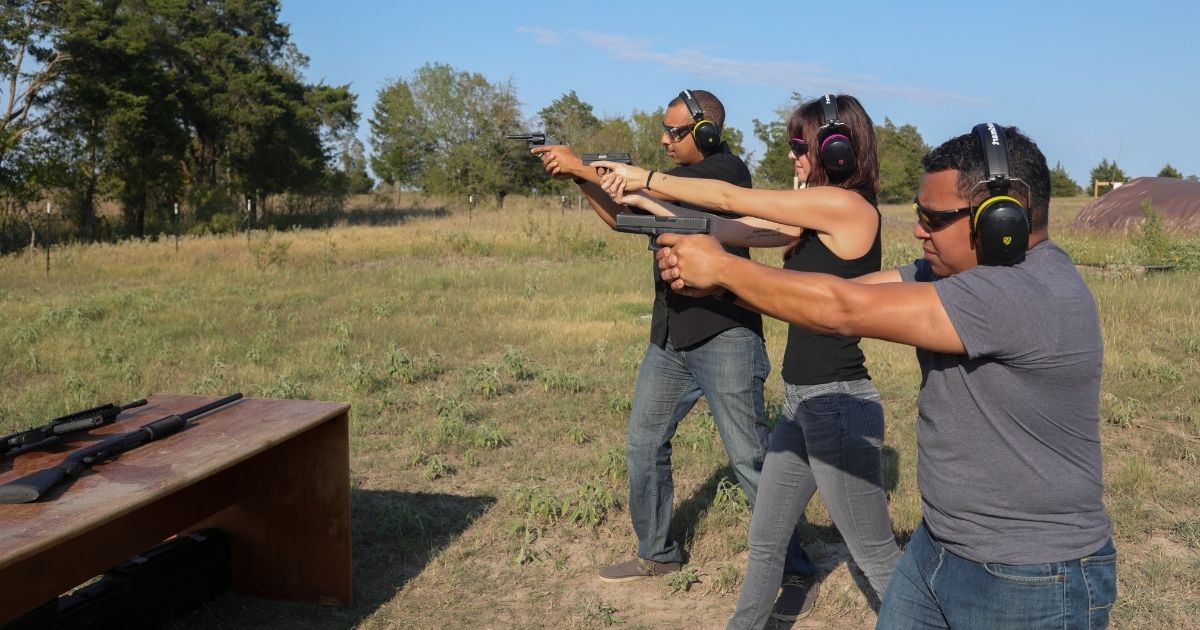
A tactical flashlight is one piece of a complete range and safety setup. According to the CDC, about 40 million Americans aged 20–69 have noise-induced hearing loss, and recreational shooters are 4x more likely to develop hearing loss than non-shooters. Pairing your flashlight with proper protection is just as important as choosing the right light.
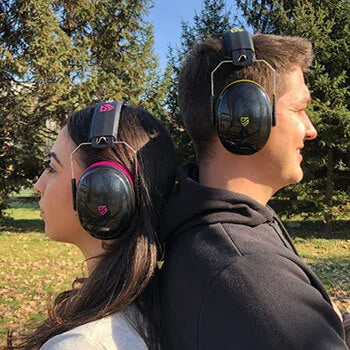
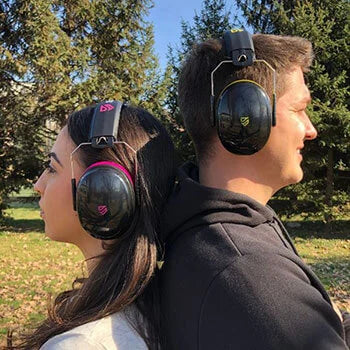
TradeSmart Safety's shooting range kits combine NRR 28 earmuffs with ANSI Z87.1+ certified safety glasses — everything you need in one package, backed by a 10-year warranty and free shipping. For shooters who want amplified hearing protection with their tactical setup, the TacticalEdge Electronic Earmuffs provide NRR 24 protection while amplifying ambient sound and range commands through directional microphones.
Every TradeSmart kit includes free access to the Range Confidence Course — an online firearms fundamentals program that covers safe gun handling, stance, grip, sight alignment, and more. Whether you're a new shooter setting up your first tactical kit or an experienced operator building a low-light training program, proper eye protection and ear protection should be at the top of your list.
Frequently Asked Questions
How many lumens do I need for a tactical flashlight?
For defensive use, 500 lumens is the practical minimum for indoor target identification and disorientation. For outdoor tactical use, 1,000+ lumens with high candela is recommended for positive target identification at distance. However, lumens alone don't tell the full story — a 600-lumen light with a focused reflector (high candela) can outthrow a 2,000-lumen light with a floody beam. Prioritize candela and beam distance alongside lumen output.
What is the difference between lumens and candela?
Lumens measure the total amount of visible light a flashlight produces in all directions. Candela measures the peak intensity of the beam at its brightest point — essentially how concentrated the light is. A flashlight with high lumens and low candela produces a wide, diffuse beam. A flashlight with high candela produces a focused, long-reaching beam. For tactical use at distance, candela is the more important specification. As a rule of thumb, 4x the candela doubles the beam throw distance in meters.
Are weapon-mounted lights necessary for home defense?
Yes. Every major firearms training organization recommends a weapon-mounted light on home defense firearms. You must positively identify your target before engaging — and in a dark house at 3 AM, that means illumination. A weapon light allows you to maintain a two-handed shooting grip while identifying threats. However, a weapon-mounted light is not a substitute for a handheld light. You should have both: a handheld for investigation and navigation, and the weapon light for positive target identification when a genuine threat has been confirmed.
How long do tactical flashlight batteries last?
Runtime varies dramatically by output level and battery type. On high output (1,000+ lumens), most tactical lights run 1–2 hours. On medium or low modes, runtime extends to 10–40+ hours. CR123A lithium primary batteries have a 10-year shelf life but are single-use. 18650 rechargeable cells last 2–5 years with 500+ charge cycles. For maximum reliability, keep fresh CR123A batteries in your defensive lights and rechargeable cells in your training and EDC lights.
What IPX rating should a tactical flashlight have?
IPX7 is the minimum standard for a serious tactical flashlight — it means the light survives submersion to 1 meter for 30 minutes. Most quality tactical lights meet IPX7 or IPX8 (submersion beyond 1 meter for extended periods). IPX4 (splash resistant) is acceptable for budget EDC lights but insufficient for duty, defensive, or outdoor tactical use. Always verify the manufacturer's IPX rating is tested to ANSI FL1 standards, not self-reported.
Can I use a tactical flashlight for self-defense without a firearm?
A high-output tactical flashlight is one of the most effective non-lethal defensive tools available. A 1,000+ lumen strobe directed at an attacker's eyes causes temporary disorientation, loss of night-adapted vision, and a flinch response — giving you critical seconds to create distance and escape. Additionally, many tactical flashlights feature crenelated bezels (toothed strike bezels) that can be used as an impact tool as a last resort. Unlike firearms and knives, tactical flashlights have no legal restrictions on carry in any U.S. jurisdiction.
Final Thoughts
Choosing the right tactical flashlight means understanding what you actually need it to do. A weapon-mounted light for your home defense rifle is a different tool than an EDC light for your pocket, and the specifications that matter — candela vs. lumens, throw vs. flood, CR123A vs. rechargeable — shift depending on the application.
Our top pick for weapon-mounted use is the Cloud Defensive REIN 3.0 for its unmatched candela and bomb-proof construction. For the best handheld tactical light, the Fenix PD36R Pro delivers the strongest combination of output, runtime, and features. And for value, the Streamlight ProTac HL-X Pro proves you don't need to spend $400 to get serious weapon-light performance.
Whatever light you choose, make sure the rest of your gear matches. Pair it with proper hearing and eye protection from TradeSmart Safety — NRR 28 earmuffs, ANSI Z87.1+ safety glasses, and free access to the Range Confidence Course with every kit. Free shipping, 10-year warranty, and 4.6 stars on Trustpilot. Shop shooting range kits here.



Leave a comment (all fields required)