



Why Eye Protection Is Non-Negotiable at the Range
Every experienced shooter knows: you never step onto the firing line without eye protection. Yet many new shooters underestimate just how dangerous an unprotected range session can be for their vision.
The threats are real and immediate. Hot brass casings ejected from semi-automatic firearms can arc unpredictably, striking your face or landing near your eyes. Ricochets send metal fragments in directions no one can predict. Unburned powder residue blows back toward the shooter with every round fired. And if you shoot outdoors, prolonged UV exposure adds cumulative damage that compounds over years.
According to data reviewed by JAMA Ophthalmology, there are roughly 30,000 firearms-related eye injuries treated in U.S. emergency departments each year. Many of these injuries are entirely preventable with proper eye protection.
This is not optional gear. Virtually every shooting range in America, whether indoor or outdoor, requires eye protection as a condition of entry. It is one of the foundational rules of gun safety, and for good reason: unlike hearing damage, which develops over time, a single piece of flying debris can cause instant, irreversible vision loss.
The question is not whether you need shooting glasses. The question is which ones give you the best protection, comfort, and optical clarity for the way you shoot.
Understanding the ANSI Z87.1+ Standard: What It Means and Why It Matters
When shopping for shooting glasses, one marking matters more than any other: ANSI Z87.1+.
ANSI stands for the American National Standards Institute. The Z87.1 standard defines the minimum performance, testing, and marking requirements for personal eye and face protection devices. It is the benchmark that OSHA references under 29 CFR 1910.133, and it is the standard every serious shooter should look for.
Basic Z87.1 vs. Z87.1+ (High Impact)
There is a critical distinction between basic and high-impact ratings:
- Z87.1 (basic impact): Lenses must survive the Drop Ball Test, where a 1-inch steel ball weighing approximately 2.4 ounces is dropped from 50 inches onto the lens. This proves the lens can handle moderate, low-velocity impacts.
- Z87.1+ (high impact): Lenses undergo significantly more aggressive testing, including high-velocity impact tests where a 1/4-inch steel ball is fired at the lens at 150 feet per second. This is the standard you want for shooting, where fast-moving debris is a genuine hazard.
The "+" symbol is what separates safety glasses suitable for a workshop from those suitable for a firing line. For shooting, always choose Z87.1+ rated eye protection.
How to Verify the Rating
Legitimate ANSI-rated glasses will have the Z87+ marking permanently etched or printed on the lens itself and on the frame. If you cannot find this marking, the glasses have not been independently tested to the standard, regardless of what the packaging claims. Check both the lens and the temple arms for the marking before trusting any pair with your vision.
It is also worth noting that the ANSI/ISEA Z87.1 standard was updated in 2025 with clearer product markings and improved performance language for impact testing. When purchasing new shooting glasses, look for products tested to the most current standard.
Types of Shooting Glasses: Finding the Right Pair for Your Needs
Not all shooting glasses are created equal. The right choice depends on where you shoot, how often you shoot, and what conditions you typically face. Here is a breakdown of the main categories.
Clear Lens Shooting Glasses
Clear lenses are the most versatile option and an absolute essential for any trip to the gun range. They allow maximum light transmission, providing an unobstructed view of your target without altering color perception.
Best for: Indoor ranges, low-light conditions, nighttime shooting, and as a default all-purpose lens.
If you only own one pair of shooting glasses, clear lenses are the smart choice. They work in every environment and never reduce your ability to see what is downrange.
Tinted and Colored Lens Shooting Glasses
Tinted lenses serve specific purposes depending on light conditions and shooting environment:
- Smoke/Gray lenses: Reduce overall brightness without distorting colors. Ideal for bright, sunny outdoor ranges where glare is a factor. They keep your eyes relaxed under intense sunlight.
- Yellow/Amber lenses: Filter blue light and enhance contrast, making targets stand out more sharply against backgrounds. Excellent for overcast days, dawn and dusk shooting, and clay pigeon sports where orange targets need to pop against dull skies.
- Copper/Bronze lenses: Improve depth perception and enhance contrast in moderate-light conditions. A strong all-around outdoor choice.
- Purple/Vermilion lenses: Enhance contrast and sharpen target visibility against green or blue backgrounds. Popular with competitive shooters and those shooting in wooded environments.
Anti-Fog Shooting Glasses
Fogging is one of the most common and most frustrating problems shooters face, especially at indoor ranges where temperature differentials between the air-conditioned lobby and the firing line cause instant condensation. Shooting in humid climates or during physical exertion compounds the issue.
Anti-fog coatings create a hydrophilic layer on the lens surface that prevents moisture from beading into vision-obscuring droplets. Quality anti-fog shooting glasses maintain clarity even when temperatures shift rapidly.
If fogging has been a persistent issue for you, read our detailed guide on how to keep safety glasses from fogging up for practical solutions that work.
Ballistic-Rated Shooting Glasses
For shooters who want protection beyond the ANSI Z87.1+ standard, ballistic-rated glasses are tested to military specifications. The most common military standard is MIL-PRF-32432, which requires lenses to resist fragmentation from projectile impacts that exceed what ANSI testing demands.
Ballistic-rated eyewear is built for combat and tactical applications. For most recreational and competitive shooters, ANSI Z87.1+ provides more than adequate protection. However, if you participate in tactical training courses or shoot high-caliber rifles at close-range steel targets, ballistic-rated options offer an extra margin of safety.
Prescription-Compatible Shooting Glasses
If you wear corrective lenses, you have several options:
- OTG (Over-The-Glasses) models: Designed to fit over your existing prescription eyeglasses. These are the most affordable solution but can feel bulky.
- Prescription safety glasses: Custom-ground lenses in ANSI Z87.1+ rated frames. More expensive but far more comfortable for extended sessions.
- Insert-style systems: A prescription lens insert clips behind the safety lens. This gives you full ballistic protection with your exact prescription.
Never rely on standard prescription eyeglasses as your only eye protection at the range. Unless they are specifically rated to ANSI Z87.1+, they will not withstand the impact forces present in a shooting environment.
Key Factors When Choosing Shooting Eye Protection
Beyond lens tint and type, several technical factors determine whether a pair of shooting glasses will actually protect you and perform well session after session.
Lens Material: Why Polycarbonate Dominates
The single most important material consideration for shooting glasses is the lens. Polycarbonate is the industry standard for safety eyewear, and there are compelling reasons why:
- Impact resistance: Polycarbonate is up to 10 times more impact-resistant than standard glass or plastic lenses. In testing, polycarbonate lenses have withstood impacts from baseballs traveling at speeds up to 94 miles per hour.
- Lightweight: Polycarbonate is significantly lighter than glass, reducing fatigue during long range sessions.
- UV protection: Polycarbonate inherently blocks over 97% of UV radiation without requiring additional coatings.
- Shatter resistance: Unlike glass, polycarbonate will not shatter into sharp fragments on impact. It may crack or dent, but it holds together rather than sending shards into your eyes.
Trivex is an alternative material that offers slightly better optical clarity and is about 10% lighter than polycarbonate. However, polycarbonate remains the more widely available, more affordable, and marginally more impact-resistant option, making it the preferred choice for most shooting applications.
Lens Coatings
Quality shooting glasses include one or more specialized coatings:
- Anti-fog coating: Prevents moisture buildup, critical for indoor ranges and humid conditions.
- Anti-scratch coating: Extends the life of polycarbonate lenses, which are softer than glass and more prone to surface scratching.
- Anti-reflective coating: Reduces glare and ghost images caused by light bouncing off the interior lens surface. Particularly useful for bright outdoor environments.
- UV coating: While polycarbonate naturally blocks most UV, additional UV coatings can bring protection to 99.9% or higher.
- Hydrophobic coating: Repels water, oil, and fingerprints, keeping lenses cleaner between wipes.
Fit, Comfort, and Coverage
Protection means nothing if your glasses do not stay in place or leave gaps where debris can enter. Look for:
- Wrap-around design: Lenses that curve around the sides of your face block debris from entering at peripheral angles. This is essential for shooting, where ejected brass and fragments can come from the side.
- Secure temple grip: Rubberized or textured temple tips prevent the glasses from sliding, especially when you are sweating.
- Adjustable nose pads: A proper nose bridge fit keeps the glasses positioned correctly and prevents them from bouncing during recoil.
- Lightweight frame: Heavy glasses create pressure points and fatigue. If you shoot for more than 30 minutes at a time, weight matters.
- Compatibility with ear protection: This is often overlooked. Your shooting glasses must sit comfortably alongside your earmuffs without breaking the seal of the ear cups. A poor fit between eye and ear protection compromises both. For recommendations on pairing eye and ear protection, see our guide to the best ear protection for shooting.
Indoor vs. Outdoor Shooting: A Lens Selection Guide
Choosing the wrong lens for your environment does not just reduce comfort. It can genuinely impair your ability to see targets clearly and shoot safely. Here is a straightforward guide.
Indoor Range Lens Selection
Indoor ranges present specific challenges: artificial lighting, enclosed spaces with limited ventilation, and temperature differentials that promote fogging.
- Primary choice: Clear lenses. They allow maximum light transmission (89-92% VLT) and provide the clearest possible sight picture under fluorescent or LED range lighting.
- Secondary choice: Light yellow lenses. If your indoor range has dim lighting or you want slightly enhanced contrast, a light yellow tint can help without reducing visibility significantly.
- Must-have feature: Anti-fog coating. Indoor ranges are where fogging is most problematic. Do not compromise on this.
Outdoor Range Lens Selection
Outdoor shooting introduces variables that indoor ranges do not: changing sunlight, weather conditions, glare, and UV exposure.
- Bright sun: Smoke or gray lenses. They reduce brightness evenly across the color spectrum without distorting your view of colored targets or natural surroundings.
- Overcast or cloudy: Yellow or amber lenses. These cut through haze, enhance contrast, and make targets more visible when the sky is flat and dull.
- Mixed conditions: Copper or bronze lenses. A versatile choice that enhances contrast while still reducing brightness. Works well from mid-morning through late afternoon.
- Wooded environments: Vermilion or purple lenses. These mute green tones and enhance orange target visibility against tree lines and natural backgrounds.
If you shoot in varied conditions, owning at least two pairs of shooting glasses, one clear and one tinted, covers the vast majority of scenarios. This is one reason many shooters prefer kits that include both lens options.
TradeSmart Safety Glasses: ANSI Z87.1+ Protection Built for the Range
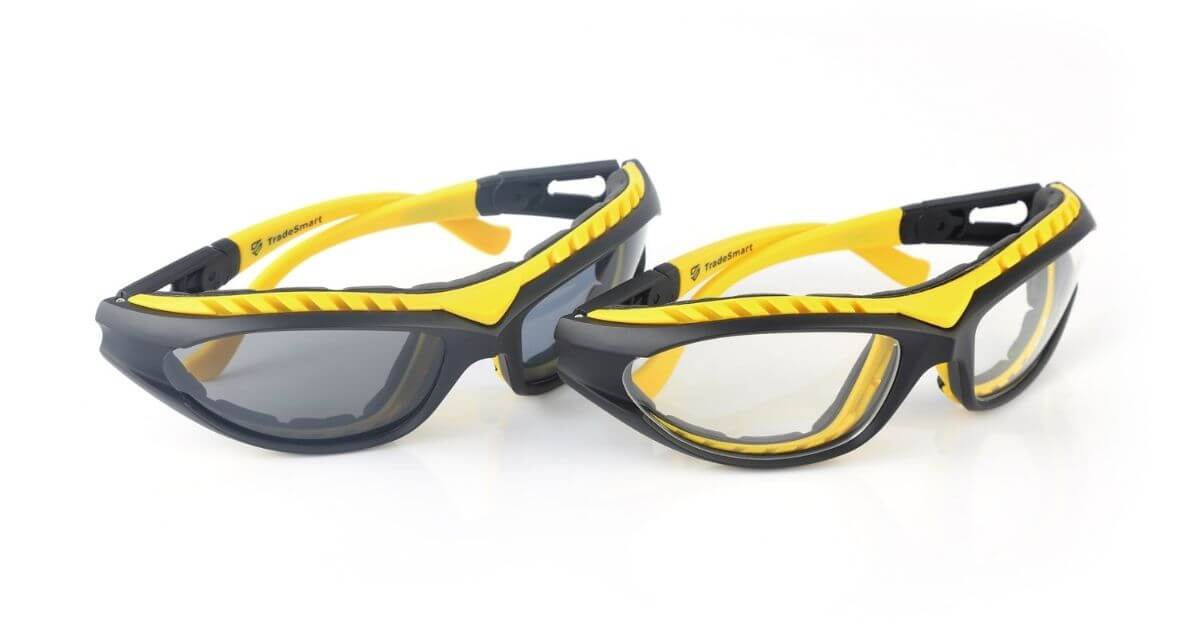
TradeSmart Safety builds shooting glasses specifically for the demands of the firing line. Every pair is ANSI Z87.1+ certified, constructed with impact-resistant polycarbonate lenses, and features anti-fog coating to handle the temperature swings that come with indoor range sessions.
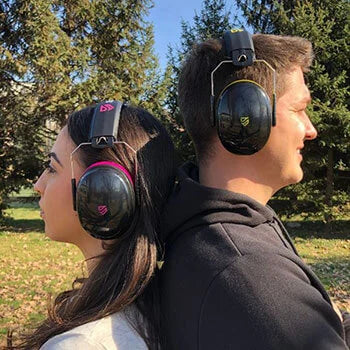
What sets TradeSmart apart is that their safety glasses are not sold as standalone accessories. They are part of complete range protection kits that pair eye protection with NRR-rated ear protection, ensuring both your vision and your hearing are covered from the moment you step onto the range.
Here are the options to consider based on your needs:
- Shooting Range Kit: Includes NRR 28 earmuffs and ANSI Z87.1+ safety glasses. A reliable starting point for new shooters building their range gear.
- Premium Kit (Clear Lenses): Includes premium earmuffs, clear safety glasses, a hard-shell protective case, and NRR 33 foam earplugs. Ideal for indoor range shooters who want clear-lens protection with dual hearing protection.
- Premium Kit (Clear + Tinted): Everything in the Premium Kit, plus tinted safety glasses for outdoor shooting. This is the most versatile option if you shoot both indoors and outdoors.
- Electronic Ear + Eye Protection Kit: Pairs ANSI Z87.1+ safety glasses with electronic earmuffs that amplify conversation while blocking harmful gunshot noise. Perfect for shooters who want to communicate clearly at the range without removing their ear protection.
Every TradeSmart kit includes free access to the Range Confidence Course, an online firearms fundamentals program designed to help new shooters build safe habits from day one. All products are backed by a 10-year warranty and ship free.
Putting It All Together: Complete Range Protection
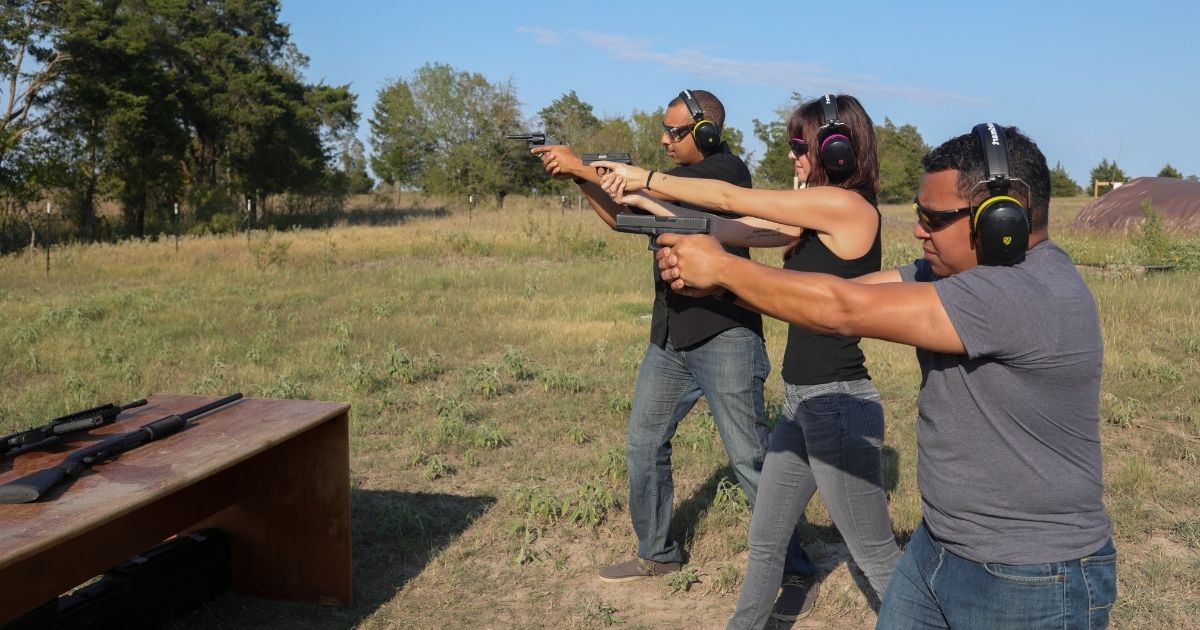
Eye protection is one piece of a larger safety picture. At the range, your eyes, ears, and overall preparedness all matter. The smartest approach is to think in terms of complete protection rather than individual pieces of gear.
A well-equipped range bag should include:
- ANSI Z87.1+ shooting glasses (clear lenses minimum, plus tinted if you shoot outdoors)
- NRR-rated hearing protection (earmuffs, earplugs, or both for maximum noise reduction)
- Proper range attire that minimizes exposed skin where hot brass can land
- A protective case to keep your glasses and gear from getting scratched or damaged in transit
If you are still building out your range setup, our guides on what to wear to a gun range and gun range etiquette cover everything you need to know before your first visit.
Frequently Asked Questions
What type of eye protection should you wear when shooting a firearm?
You should wear safety glasses or goggles rated to the ANSI Z87.1+ high-impact standard. The lenses should be polycarbonate for maximum impact and shatter resistance. Look for a wrap-around design that provides coverage from the front and sides. Standard prescription glasses or fashion sunglasses do not provide adequate protection against ejected brass, ricochets, or powder residue at the range.
Are regular sunglasses safe enough for shooting?
No. Regular sunglasses are not impact-tested to the ANSI Z87.1+ standard and can shatter on impact, potentially driving lens fragments into your eyes. Even high-quality sunglasses are designed for UV and glare reduction, not for stopping high-velocity debris. Always use purpose-built shooting glasses with the Z87+ marking on both the lens and frame.
What does the "+" in ANSI Z87.1+ mean?
The "+" indicates that the eyewear has passed high-velocity impact testing, not just the basic drop-ball test. For Z87.1+ certification, lenses must withstand a 1/4-inch steel ball fired at 150 feet per second without cracking, chipping, or allowing the ball to pass through. This is the minimum standard you should accept for any shooting application.
What lens color is best for indoor shooting?
Clear lenses are the best choice for indoor ranges because they allow maximum light transmission without altering color perception. Indoor ranges use artificial lighting, and tinted lenses can make targets harder to see. A light yellow tint is an acceptable alternative if you want slightly enhanced contrast, but clear remains the standard recommendation for indoor use.
What lens color is best for outdoor shooting?
It depends on conditions. Smoke or gray lenses are best for bright, sunny days because they reduce glare without distorting colors. Yellow or amber lenses excel in overcast or low-light conditions by enhancing contrast. Copper or bronze lenses are a versatile middle ground. For the most flexibility, carry both a clear and a tinted pair.
Can I wear my prescription glasses under shooting glasses?
Yes, if you choose OTG (Over-The-Glasses) style shooting glasses specifically designed to fit over prescription frames. Alternatively, you can invest in prescription safety glasses built with ANSI Z87.1+ rated lenses ground to your prescription. Never assume your standard prescription glasses alone provide sufficient impact protection at the range.
How do I stop my shooting glasses from fogging up?
Choose glasses with a built-in anti-fog coating as your first line of defense. Beyond that, ensure proper ventilation by selecting a frame design that allows airflow. Avoid pushing your glasses tight against your face, and consider using an anti-fog spray or wipe before your session. Temperature acclimation also helps: let your glasses adjust to the range temperature for a few minutes before shooting. For more detailed strategies, see our full guide on how to keep safety glasses from fogging up.
How often should I replace my shooting glasses?
Replace your shooting glasses immediately if the lenses are scratched, cracked, pitted, or show any signs of impact damage. Even minor scratches can weaken polycarbonate and reduce its ability to withstand future impacts. Under normal use with proper care and storage in a protective case, quality shooting glasses can last several years. TradeSmart Safety backs their glasses with a 10-year warranty, giving you long-term confidence in your investment.
Protect Your Vision Every Time You Shoot
Your eyesight is irreplaceable. The cost of quality shooting glasses is negligible compared to the cost of a single eye injury, and the right pair makes every range session safer and more comfortable.
Look for ANSI Z87.1+ certification, polycarbonate lenses, anti-fog coating, and a wrap-around fit. Match your lens tint to your shooting environment. And pair your eye protection with proper hearing protection for complete range safety.
Shop TradeSmart Safety's complete range protection kits and get ANSI Z87.1+ certified shooting glasses, NRR-rated ear protection, a protective carrying case, and free access to the Range Confidence Course, all backed by a 10-year warranty with free shipping.



Leave a comment (all fields required)