



Best Concealed Carry Gun: Top 7 Best Conceal Carry Guns in 2026
Choosing the best concealed carry gun is one of the most important decisions a responsible gun owner will make. Your everyday carry (EDC) firearm needs to balance concealability, reliability, capacity, and shootability — and getting that balance wrong can have serious consequences.
The concealed carry market has evolved dramatically over the past few years. Micro-compact 9mm pistols now dominate the category, offering capacities that would have seemed impossible in a pocket-sized frame just a decade ago. With over 20 million concealed carry permit holders in the United States — plus millions more carrying legally under the 29 states with constitutional carry laws, according to the Crime Prevention Research Center — demand for capable, concealable handguns has never been higher.
We have tested, carried, and evaluated dozens of concealed carry firearms to bring you the seven best options for 2026. Whether you are a first-time carrier looking for the best beginner handgun or a seasoned shooter upgrading your EDC, this guide covers every detail you need to make a confident decision.
What Makes a Great Concealed Carry Gun?
Before we dive into specific models, it helps to understand the six key criteria that separate a good concealed carry gun from a great one. Every firearm on this list was evaluated against these factors.
1. Size and Concealability
The best concealed carry gun is the one you actually carry — every day. If your pistol is too large, too heavy, or too bulky, it stays in the safe. Look for overall length under 6.5 inches, width under 1.1 inches, and a barrel length between 3.0 and 3.7 inches. These dimensions allow comfortable inside-the-waistband (IWB) carry under a t-shirt without printing. For guidance on selecting the right carry method, check out our guide on the best concealed carry holsters.
2. Weight
A concealed carry pistol you wear all day needs to weigh between 17 and 23 ounces unloaded. Lighter is generally better for comfort, but excessively light firearms can produce sharper felt recoil. The sweet spot for most carriers is 18–21 ounces — heavy enough to manage recoil, light enough to forget it is there.
3. Capacity
Modern micro-compact pistols have redefined what is possible. Where single-stack subcompacts once topped out at 6–7 rounds, today's best concealed carry guns offer 10–17 rounds in nearly the same footprint. Higher capacity means more rounds available in a defensive situation without needing to carry a spare magazine — though carrying a spare is always wise.
4. Caliber
9mm Luger is the dominant concealed carry caliber in 2026, and for good reason. Modern defensive ammunition has closed the terminal performance gap between 9mm and larger calibers like .40 S&W and .45 ACP, while 9mm offers significantly lower recoil, higher capacity, and more affordable practice ammunition. We cover the caliber debate in detail later in this article.
5. Reliability
A concealed carry gun must go bang every single time the trigger is pulled. Period. All seven firearms on this list have been proven through thousands of rounds of testing across multiple independent reviewers and have earned reputations for dependable function with a variety of ammunition types. You should put at least 200 rounds of your chosen defensive ammunition through any carry gun before trusting your life to it.
6. Trigger Quality
A clean, predictable trigger makes a concealed carry gun easier to shoot accurately under stress. Look for a trigger with a short, smooth take-up, a distinct wall, and a crisp break. Heavy, gritty triggers lead to flinching and poor shot placement when it matters most.
Top 7 Best Concealed Carry Guns for 2026
1. SIG Sauer P365 — Best Overall Concealed Carry Gun
The SIG Sauer P365 remains the gold standard for concealed carry in 2026. When SIG introduced this pistol, it fundamentally changed what shooters expected from a micro-compact — 10+1 rounds of 9mm in a frame barely larger than a single-stack subcompact. That innovation has only been refined since.
Key Specifications:
- Caliber: 9mm Luger
- Capacity: 10+1 (flush), 12+1 (extended), 15+1 (available)
- Barrel Length: 3.1 inches
- Overall Length: 5.8 inches
- Weight: 17.8 oz (unloaded)
- Width: 1.0 inch
Why It Tops the List: The P365 offers a near-perfect balance of size, capacity, and shootability. Its XRAY3 day/night sights are among the best factory sights on any carry gun. The trigger is smooth with a short reset, and accuracy is outstanding for a 3.1-inch barrel. SIG's modular approach means you can upgrade to the P365XL slide or X-Macro grip module without buying a new firearm.
Pros:
- Industry-leading capacity-to-size ratio
- Excellent factory sights and trigger
- Massive aftermarket support and modularity
- Optics-ready models available
- Proven reliability across millions of units sold
Cons:
- Higher price point than budget competitors ($550–$600 street price)
- Small grip may not suit shooters with large hands
- Proprietary rail limits light/laser options on base model
Best For: Shooters who want the best all-around concealed carry gun with maximum capacity in the smallest possible package.
2. SIG Sauer P365 X-Macro — Best High-Capacity Concealed Carry Gun
If you want the most rounds possible in a concealable handgun, the P365 X-Macro delivers 17+1 capacity in a frame that still disappears under a cover garment. Built on the proven P365 platform, the X-Macro adds a longer grip and magazine well while keeping the slide profile compact.
Key Specifications:
- Caliber: 9mm Luger
- Capacity: 17+1
- Barrel Length: 3.7 inches (standard) / 3.1 inches (COMP)
- Overall Length: 6.6 inches
- Weight: 21.5 oz (unloaded)
- Width: 1.0 inch
Why It Ranks Here: Seventeen rounds of 9mm in a pistol that weighs under 22 ounces is remarkable. The X-Macro features a factory flat trigger, optics-ready slide, and the COMP variant includes an integrated compensator that noticeably reduces muzzle flip. This gun bridges the gap between a compact carry gun and a full-size duty pistol.
Pros:
- 17+1 capacity — near full-size round count
- Flat trigger with excellent feel
- COMP model reduces felt recoil significantly
- Optics-ready with standard XRAY3 sights
- Compatible with P365 holster ecosystem
Cons:
- Larger grip prints more than standard P365
- Higher MSRP (~$800)
- Heavier than other micro-compacts
Best For: Carriers who prioritize maximum capacity and do not mind a slightly larger grip footprint.
3. Glock 43X MOS — Best Reliability-Focused Concealed Carry Gun
If you want the concealed carry gun that is most likely to function flawlessly no matter what — dropped in mud, left in a truck for six months, or fed the cheapest ammo on the shelf — the Glock 43X is your answer. Glock's reputation for boringly reliable operation is well-earned, and the 43X delivers it in a slim, shootable package.
Key Specifications:
- Caliber: 9mm Luger
- Capacity: 10+1 (factory), 15+1 (Shield Arms S15 magazines)
- Barrel Length: 3.41 inches
- Overall Length: 6.5 inches
- Height: 5.04 inches
- Weight: 18.7 oz (unloaded)
- Width: 1.10 inches
Why It Ranks Here: The 43X combines the Glock 43's slim slide with a longer grip that accommodates a proper firing grip and 10-round factory magazine. The MOS (Modular Optic System) variant adds an optics-ready slide and slim accessory rail. While the factory capacity is only 10+1, Shield Arms S15 aftermarket magazines boost that to 15+1 in the same frame — giving you P365 X-Macro capacity in a slimline Glock.
Pros:
- Glock reliability — proven worldwide
- 15+1 capacity possible with aftermarket magazines
- MOS slide accepts micro red dots
- Huge aftermarket for holsters, sights, and accessories
- Simple manual of arms — no external safety
Cons:
- Factory 10-round capacity is low for 2026
- Stock sights are plastic and underwhelming
- Trigger is functional but not exceptional
- Slightly wider than some competitors at 1.10 inches
Best For: Shooters who value proven reliability above all else and want the backing of the largest handgun aftermarket in the world.
4. Smith & Wesson M&P Shield Plus — Best Value Concealed Carry Gun
The Smith & Wesson M&P Shield Plus delivers a premium concealed carry experience at a mid-range price. The "Plus" designation refers to the upgraded stagger-stack magazine design that boosted capacity from the original Shield's 7–8 rounds to 10+1 flush and 13+1 extended — a significant improvement in the same slim frame.
Key Specifications:
- Caliber: 9mm Luger
- Capacity: 10+1 (flush), 13+1 (extended)
- Barrel Length: 3.1 inches
- Overall Length: 6.1 inches
- Weight: 20.0 oz (unloaded)
- Width: 1.1 inches
Why It Ranks Here: The Shield Plus hits a remarkable price-to-performance ratio. Street prices often fall in the $350–$450 range, putting it well below the SIG P365 while delivering comparable capacity and reliability. The improved trigger system is one of the best in the micro-compact class — flat-faced with a crisp, clean break. Smith & Wesson also offers an optics-ready (OR) model with a milled slide for micro red dots.
Pros:
- Excellent price — often $100+ less than competitors
- Outstanding trigger for the category
- 13+1 extended capacity
- Optimized grip texture without being abrasive
- Optics-ready models available
Cons:
- Slightly heavier than the P365 at 20 ounces
- Factory sights are adequate but not exceptional
- Grip texture may be too aggressive for some shooters
Best For: Budget-conscious carriers who refuse to compromise on quality or capacity.
5. Springfield Armory Hellcat — Best Micro-Compact for Capacity
The Springfield Hellcat stormed onto the scene as a direct competitor to the SIG P365, and it brought a fight. The Hellcat offers 11+1 rounds from its flush-fit magazine — the highest flush-fit capacity of any micro-compact on the market — and up to 13+1 with the extended magazine.
Key Specifications:
- Caliber: 9mm Luger
- Capacity: 11+1 (flush), 13+1 (extended)
- Barrel Length: 3.0 inches
- Overall Length: 6.0 inches
- Weight: 18.3 oz (unloaded)
- Width: 1.0 inch
Why It Ranks Here: The Hellcat packs impressive capacity into an incredibly small package. The adaptive grip texture provides excellent traction without tearing up your skin during all-day carry. Springfield's OSP (Optical Sight Pistol) variant comes with a slide milled for the Shield RMSc micro red dot footprint. The U-Dot tritium/luminescent front sight paired with a tactical rack rear sight is one of the better factory sight setups in this class.
Pros:
- Highest flush-fit capacity (11+1) in the micro-compact class
- Extremely small overall footprint
- Excellent adaptive grip texture
- Good factory tritium sights
- Available in both 9mm and .380 ACP
Cons:
- Snappier recoil than the P365 due to lighter slide
- Trigger has a longer, spongier take-up than competitors
- Short grip can make it difficult for shooters with large hands
Best For: Carriers who want maximum rounds in the smallest possible frame and prioritize deep concealment.
6. Ruger MAX-9 — Best Budget Concealed Carry Gun
The Ruger MAX-9 proves you do not need to spend $600+ to get a feature-rich, reliable concealed carry pistol. Priced well under $400 at most retailers, the MAX-9 delivers optics-ready capability, 12+1 capacity, and Ruger's legendary durability in an ultra-slim package.
Key Specifications:
- Caliber: 9mm Luger
- Capacity: 10+1 (flush), 12+1 (extended)
- Barrel Length: 3.20 inches
- Overall Length: 6.0 inches
- Height: 4.52 inches
- Weight: 18.4 oz (unloaded)
- Width: 0.95 inches
Why It Ranks Here: At under $400, the MAX-9 is the thinnest pistol on this list at just 0.95 inches wide, making it disappear in an IWB holster. The cold hammer-forged barrel delivers accuracy that punches well above its price point. It ships with a tritium fiber-optic front sight and an optics-ready slide — features you would expect at twice the cost. Models are available with or without an external thumb safety, giving you a choice based on your carry preference.
Pros:
- Best price-to-feature ratio in the category
- Thinnest profile at 0.95 inches
- Optics-ready at a budget price
- Cold hammer-forged barrel for durability and accuracy
- Optional external safety
Cons:
- Trigger is adequate but not as refined as the P365 or Shield Plus
- Smaller aftermarket support than Glock or SIG
- Grip texture is less aggressive than some competitors
Best For: First-time carriers and budget-conscious shooters who want modern features without the premium price. Also a strong pick for women concealed carriers due to its slim profile and light weight.
7. Springfield Armory Hellcat Pro — Best Compact-Size Concealed Carry Gun
The Hellcat Pro splits the difference between a micro-compact and a traditional compact pistol. If you find micro-compacts too small to shoot comfortably but still need genuine concealability, the Hellcat Pro offers 15+1 capacity with a full-size grip feel in a package that is only slightly larger than the standard Hellcat.
Key Specifications:
- Caliber: 9mm Luger
- Capacity: 15+1
- Barrel Length: 3.7 inches
- Overall Length: 6.6 inches
- Weight: 21.0 oz (unloaded)
- Width: 1.0 inch
Why It Ranks Here: Fifteen rounds of 9mm with a 3.7-inch barrel gives you genuine accuracy at defensive distances without the bulk of a Glock 19 or similar compact. The Hellcat Pro fills the niche for shooters who want to carry with confidence but struggle to shoot micro-compacts well under stress. It ships optics-ready and includes a Picatinny accessory rail for lights and lasers.
Pros:
- 15+1 capacity with flush-fit magazine
- Longer grip and barrel improve shootability
- Optics-ready with accessory rail
- Significantly less felt recoil than micro-compacts
- Excellent accuracy at 15–25 yards
Cons:
- Larger overall size limits deep concealment
- Heavier than true micro-compacts at 21 ounces
- May print under thin cover garments
Best For: Shooters who want compact-size capacity and shootability with better concealment than a traditional compact pistol.
Quick Comparison: Top 7 Concealed Carry Guns at a Glance
| Firearm | Capacity | Weight (oz) | Barrel (in) | Width (in) | Street Price |
|---|---|---|---|---|---|
| SIG P365 | 10+1 / 12+1 | 17.8 | 3.1 | 1.0 | $550–$600 |
| SIG P365 X-Macro | 17+1 | 21.5 | 3.7 | 1.0 | $700–$800 |
| Glock 43X MOS | 10+1 / 15+1* | 18.7 | 3.41 | 1.10 | $480–$550 |
| S&W Shield Plus | 10+1 / 13+1 | 20.0 | 3.1 | 1.1 | $350–$450 |
| Springfield Hellcat | 11+1 / 13+1 | 18.3 | 3.0 | 1.0 | $450–$550 |
| Ruger MAX-9 | 10+1 / 12+1 | 18.4 | 3.2 | 0.95 | $350–$400 |
| Hellcat Pro | 15+1 | 21.0 | 3.7 | 1.0 | $500–$600 |
*Glock 43X 15+1 capacity uses Shield Arms S15 aftermarket magazines.
The Caliber Debate: 9mm vs .380 ACP for Concealed Carry
The caliber question comes up in every concealed carry conversation, and the answer in 2026 is more nuanced than ever.
Why 9mm Dominates Concealed Carry
Nine millimeter Luger has become the default concealed carry caliber for several compelling reasons:
- Terminal performance: Modern 9mm defensive loads like Federal HST, Speer Gold Dot, and Hornady Critical Defense consistently achieve 12–18 inches of penetration with reliable expansion in ballistic gel — meeting the FBI's performance standards.
- Capacity advantage: In the same-size firearm, 9mm offers 2–4 more rounds than .40 S&W or .45 ACP. In a micro-compact, that could mean the difference between 10+1 and 7+1.
- Manageable recoil: Lower recoil means faster follow-up shots, better accuracy under stress, and more enjoyable range practice.
- Affordable training: 9mm practice ammunition costs roughly 30–40% less than .40 S&W or .45 ACP, making it easier to get the regular trigger time that concealed carry demands.
When .380 ACP Makes Sense
The .380 ACP still has a role in concealed carry, particularly for:
- Deep concealment: Pistols chambered in .380 can be made significantly smaller and lighter than 9mm equivalents, making pocket carry and ankle carry more practical.
- Recoil-sensitive shooters: The .380 produces less felt recoil, which can improve accuracy for shooters with limited hand strength or those who are new to firearms.
- Specific body types and carry situations: When wardrobe or physical constraints make carrying even a micro-compact 9mm difficult, a .380 like the Ruger LCP Max or Smith & Wesson M&P 380 Shield EZ provides a viable defensive option.
The bottom line: If you can comfortably carry and shoot a 9mm, it is the better choice. If recoil sensitivity, physical limitations, or extreme concealment requirements make a 9mm impractical, a .380 ACP loaded with quality defensive ammunition remains a legitimate self-defense caliber. A .380 you carry every day beats a 9mm that stays home.
Ammunition Considerations for Concealed Carry
Your concealed carry gun is only as effective as the rounds loaded in it. For your carry magazine, use quality jacketed hollow point (JHP) ammunition from a reputable manufacturer — Federal HST, Speer Gold Dot, Hornady Critical Defense, and Sig Sauer V-Crown are all proven performers that consistently meet FBI penetration and expansion standards. Run at least 200 rounds of your chosen defensive load through your carry gun to verify reliable feeding and function.
For range training, full metal jacket (FMJ) ammunition is the cost-effective choice. Match the bullet weight of your defensive load (typically 124 or 147 grain) so point of impact and recoil stay consistent between practice and carry ammo.
Why Range Training Is Non-Negotiable for Concealed Carriers
Owning a concealed carry gun creates a profound responsibility. According to research from the Crime Prevention Research Center, concealed carry permit holders are among the most law-abiding groups in the country. Maintaining that standard requires consistent, quality training.
Regular range time helps you:
- Build and maintain proficiency: Shooting is a perishable skill. Without regular practice, your accuracy and speed degrade.
- Develop safe gun handling habits: Practicing the four rules of gun safety until they become automatic reduces the risk of negligent discharges.
- Test your equipment: Range sessions let you verify that your firearm, ammunition, holster, and carry setup all work together reliably.
- Build confidence: Confidence comes from competence, and competence comes from repetition under controlled conditions.
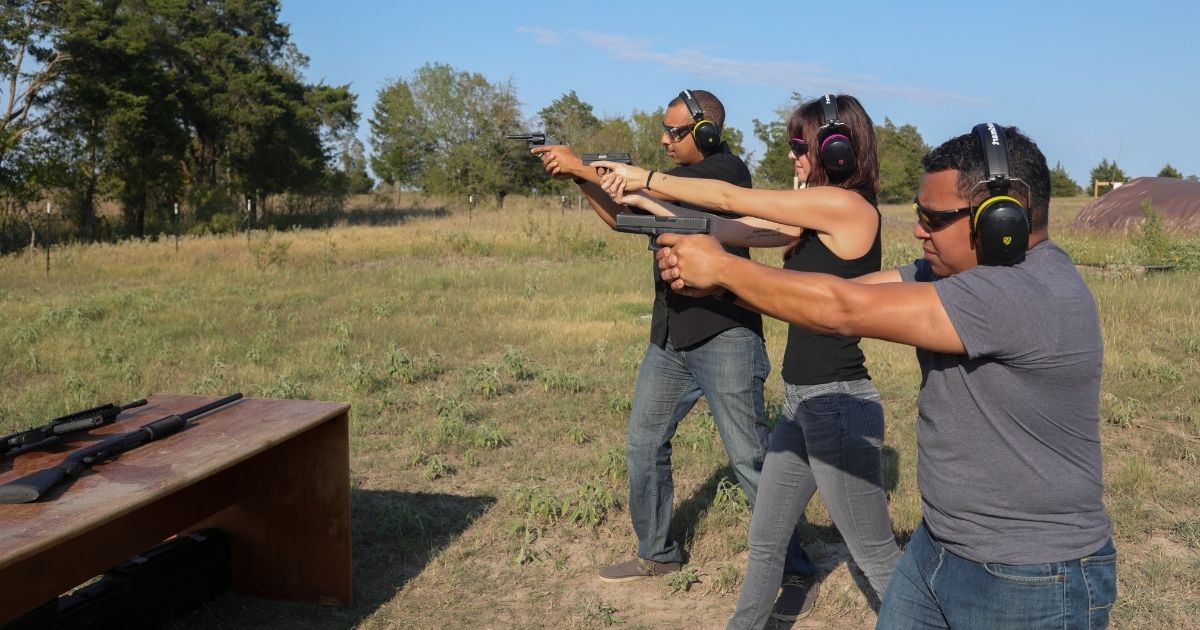
Protecting Your Hearing at the Range
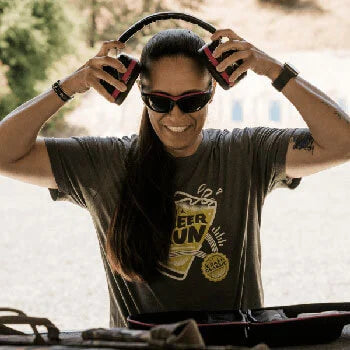
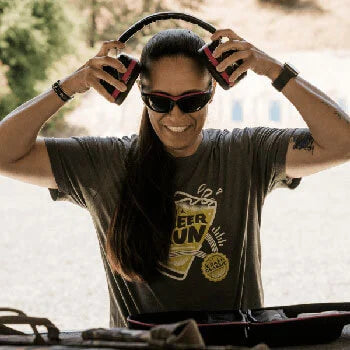
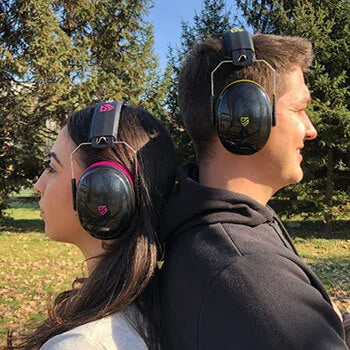
Here is something every concealed carrier needs to understand: a single gunshot can cause immediate, permanent hearing damage. According to NIOSH, gunshots produce 140–175 decibels depending on caliber — well above the 85 dB threshold where hearing damage begins. Recreational shooters are four times more likely to develop noise-induced hearing loss than non-shooters.
The roughly 40 million Americans with noise-induced hearing loss, as reported by the National Institute on Deafness and Other Communication Disorders (NIDCD), did not all lose their hearing overnight. It happens one unprotected exposure at a time. As a concealed carrier who should be hitting the range regularly, proper ear protection for shooting is essential — not optional.
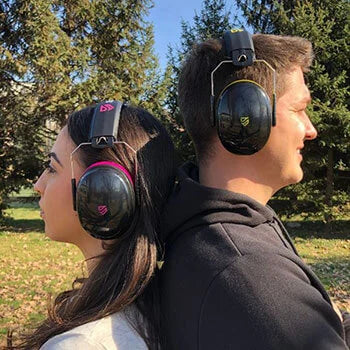
TradeSmart Safety's shooting ear and eye protection kits are purpose-built for range training. The earmuffs deliver an NRR 28 noise reduction rating, and when combined with the included NRR 33 foam earplugs for dual protection, you get effective noise reduction that lets you train without risking your hearing. Every kit also includes ANSI Z87.1+ certified safety glasses to protect against ejected brass, lead particles, and debris — because your eyes are just as irreplaceable as your hearing.
For shooters who want to maintain situational awareness at the range, TacticalEdge electronic earmuffs amplify conversation and range commands while instantly compressing harmful gunshot noise. This is particularly valuable for concealed carriers training in group settings or taking instruction.
Protecting Your Eyes at the Range
Eye protection gets overlooked far too often. Ejected brass, unburned powder, and lead fragments are real hazards at any shooting range. ANSI Z87.1 standards require safety lenses to withstand a quarter-inch steel ball traveling at 150 feet per second — standard prescription glasses cannot provide this level of protection. Learn more about proper eye protection in our guide on what type of eye protection you should wear when shooting a firearm.
How to Choose Your Concealed Carry Gun
With seven excellent options on this list, here is how to narrow down your choice:
Step 1: Determine Your Carry Position
Your carry position influences what size firearm works best. Appendix inside-the-waistband (AIWB) carry favors shorter, slimmer pistols like the P365 or Hellcat. Strong-side hip carry can accommodate slightly larger firearms like the Hellcat Pro or Glock 43X. For detailed holster guidance, read our best concealed carry holster guide.
Step 2: Handle Multiple Firearms
Visit a local gun shop and hold every firearm on your short list. Grip angle, texture, trigger reach, and control placement all matter — and they are entirely subjective. The "best" gun on paper may feel wrong in your hand.
Step 3: Rent and Shoot Before You Buy
Many ranges offer rental programs. Spend time shooting your top two or three choices. Pay attention to how each gun points naturally, how the trigger feels under live fire, and how you manage recoil. The firearm you shoot best is the one you should carry.
Step 4: Invest in Quality Gear
A great gun deserves a great holster, quality defensive ammunition, and proper safety equipment. Budget for a quality IWB holster, 200+ rounds of defensive ammunition for break-in testing, and reliable ear and eye protection for the range sessions that will make you proficient.
Step 5: Get Proper Training and Licensing
If your state requires a concealed carry permit, complete the process before you carry. Our guide on how to get a concealed carry permit in all 50 states walks you through the requirements for your specific state. Even in constitutional carry states, formal training is strongly recommended.
Frequently Asked Questions
What is the best concealed carry gun for beginners?
The Smith & Wesson M&P Shield Plus and the Ruger MAX-9 are both excellent choices for beginners. Both offer manageable recoil, intuitive controls, optional external safeties, and affordable price points that leave room in your budget for ammunition and training. The Shield Plus has a particularly good trigger that helps new shooters develop proper fundamentals. If you are brand new to handguns, also read our guide on the best beginner handguns.
What caliber is best for concealed carry?
9mm Luger is the best overall caliber for concealed carry in 2026. Modern defensive 9mm ammunition delivers terminal performance that meets FBI standards for penetration and expansion, while offering lower recoil, higher capacity, and cheaper practice ammunition compared to .40 S&W and .45 ACP. The .380 ACP is a viable alternative for shooters who need reduced recoil or smaller firearms for deep concealment.
How many rounds should I carry in my concealed carry gun?
Carry your gun with a full magazine plus one round in the chamber. Most defensive encounters are resolved within 3–5 rounds, but you cannot predict the scenario you will face. A micro-compact with 10–13 rounds provides a reasonable balance. Many experienced carriers also carry one spare magazine — not only for additional capacity but because magazines are the most common failure point in semi-automatic pistols.
Do I need an external safety on my concealed carry gun?
It depends on your training level and comfort. Most modern striker-fired pistols have robust internal safety systems (trigger safety, firing pin block, drop safety) that prevent discharge unless the trigger is deliberately pulled. External safeties add an extra layer but also add a step you must remember to disengage under extreme stress. If you choose a gun with an external safety, practice drawing and disengaging the safety until it becomes automatic.
Should I add a red dot sight to my concealed carry gun?
A quality micro red dot sight (like the Holosun 507K, Shield RMSc, or Sig Romeo Zero Elite) can significantly improve target acquisition speed and accuracy, especially in low-light conditions. Most modern concealed carry guns are available in optics-ready configurations. The trade-off is added cost ($200–$400 for a quality optic), slightly increased height/bulk, and the need to maintain battery life and zero. For most shooters, the benefits outweigh the drawbacks.
How often should I practice with my concealed carry gun?
At minimum, shoot your carry gun once per month with 50–100 rounds of practice ammunition. Ideally, train at least twice per month, incorporating draw-from-holster practice (where range rules allow), close-range defensive drills, and accuracy fundamentals. Dry-fire practice at home — with a verified unloaded firearm — is an excellent free supplement to live-fire training. Every time you hit the range, wear proper hearing protection rated NRR 28 or higher. TradeSmart Safety's shooting range kits include both ear and eye protection so you never have an excuse to skip safety gear.
Carry Confidently — Train Consistently
The best concealed carry gun is the one you shoot well, carry comfortably, and trust completely. Every firearm on this list has earned its place through proven reliability, thoughtful design, and real-world performance. Whether you choose the capacity king SIG P365 X-Macro, the bulletproof reliability of the Glock 43X, or the budget-friendly excellence of the Ruger MAX-9, you are making a solid choice.
But the gun is only half the equation. Consistent, quality range training is what transforms a concealed carrier from someone who owns a gun into someone who can use one effectively under pressure. That training demands proper safety equipment — every single session.
TradeSmart Safety's shooting ear and eye protection kits are built specifically for serious range use. NRR 28 earmuffs, NRR 33 earplugs for dual protection, ANSI Z87.1+ certified safety glasses, a hard-shell carrying case, and a free Range Confidence Course — all backed by a 10-year warranty and free shipping. Protect the hearing and vision you need to stay sharp behind the trigger.



Leave a comment (all fields required)