





Best Gun Safes: Top 6 Gun Safes For Any Budget
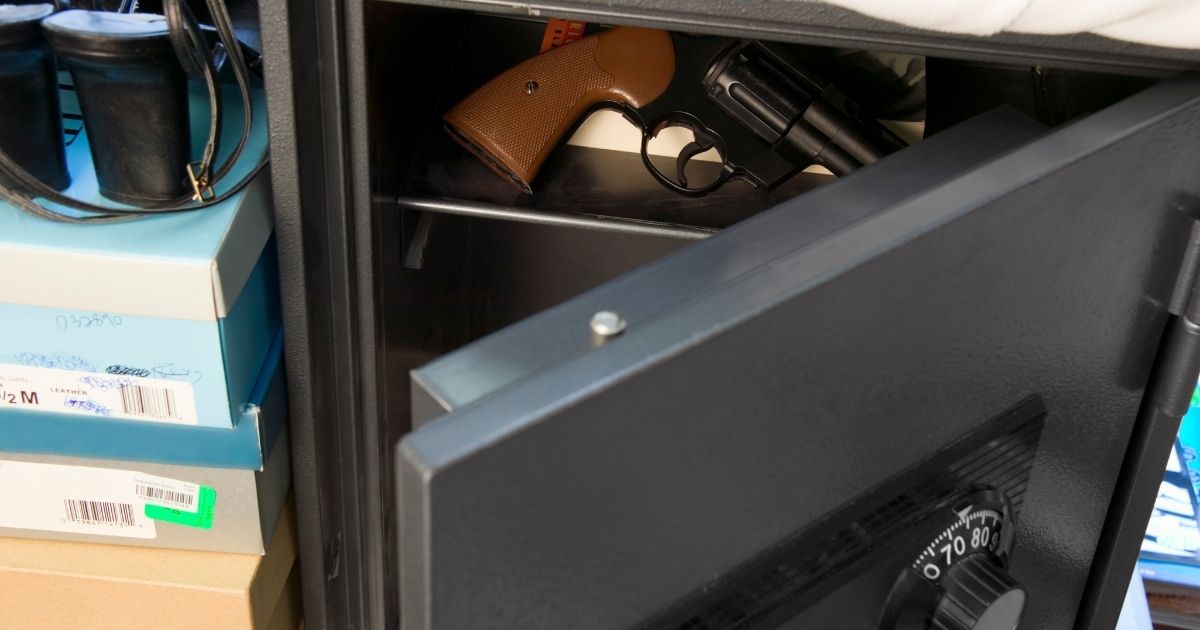
A firearm without a secure storage solution is a liability. Whether you own a single handgun or a growing collection, a quality gun safe protects against theft, unauthorized access (especially by children), and fire damage. It may also be a legal requirement depending on where you live.
The gun safe market in 2026 offers more options than ever — from compact biometric handgun vaults under $100 to fire-rated full-size safes that cost thousands. This guide breaks down the types, features, and specifications that matter, addresses updated regulatory requirements, and provides our top picks across every budget tier. Updated for February 2026.
Types of Gun Safes
Before comparing specific models, it is important to understand the fundamental categories of gun safes. Each type serves a different primary purpose, and choosing the right type depends on your specific needs.
Biometric Gun Safes
Biometric safes use fingerprint recognition to grant access. You press your finger to a scanner, and the safe unlocks — typically in under two seconds. Modern biometric safes can store 20 to 100+ fingerprints, allowing multiple authorized users.
Advantages: Fastest access method (critical for home defense situations), no combinations to remember, no keys to lose, can be programmed for multiple users.
Disadvantages: Battery dependent (dead batteries mean you need a backup access method), fingerprint scanners can fail in wet or dirty conditions, more expensive than mechanical alternatives, electronics can degrade over time.
Best for: Quick-access handgun storage, nightstand safes, home defense applications where seconds matter.
Electronic Keypad Safes
Electronic keypad safes use a numeric code (typically 4 to 8 digits) to unlock. They are the most common type in both quick-access and full-size configurations. Quality electronic locks from brands like S&G (Sargent & Greenleaf) and SecuRam are rated for hundreds of thousands of cycles.
Advantages: Fast access (3 to 5 seconds with practice), combination can be changed easily, reliable electronic locks have very low failure rates, available in all safe sizes.
Disadvantages: Battery dependent, codes can be observed or guessed, electronic components can fail (though this is rare with quality locks), slightly slower than biometric for immediate access.
Best for: General-purpose safes, full-size gun safes, applications where multiple people need access via a shared code.
Mechanical Combination Safes
Mechanical combination locks have been protecting valuables for over a century. They use no batteries, no electronics, and will function identically in 50 years as they do today. A quality mechanical lock (like the S&G 6730) requires 3 to 4 turns of the dial to open.
Advantages: No batteries, no electronics to fail, extremely long lifespan, proven reliability, EMP-proof (relevant for some security-minded owners).
Disadvantages: Slower to open (10 to 20 seconds vs. 2 to 5 seconds for electronic or biometric), combination changes typically require a locksmith, not suitable for rapid-access home defense applications.
Best for: Long-term storage, owners who prioritize reliability over speed, commercial and institutional applications.
Key Lock Safes
Key-operated gun safes and lock boxes are the simplest and typically least expensive option. They are common in compact handgun storage boxes and cable-lock portable safes.
Advantages: Simple, inexpensive, no batteries, no combinations to remember.
Disadvantages: Keys can be lost, copied, or found by unauthorized persons (especially children), single point of failure, not recommended as a primary security method for valuable firearms.
Best for: Budget handgun lock boxes, vehicle storage, travel safes where regulations require firearms to be locked during transport.
RFID Gun Safes
RFID (Radio Frequency Identification) safes unlock when an authorized RFID chip is brought within range of the scanner — typically 1 to 4 inches. The chip can be embedded in a card, wristband, key fob, or even a ring. Some models combine RFID with biometric or keypad backup.
Advantages: Very fast access (comparable to biometric), no combination to enter, wearable RFID options (wristband, ring) mean you always have your "key" on you, works with wet or dirty hands (unlike biometric).
Disadvantages: Battery dependent, RFID chip can be lost (though they are inexpensive to replace), less common than biometric or keypad options, quality varies significantly between manufacturers.
Best for: Quick-access handgun safes, owners who find biometric unreliable due to hand conditions (calluses, moisture), nightstand applications.
Critical Features to Evaluate
Fire Rating
Fire rating indicates how long a safe can protect its contents at a specific external temperature. The most common ratings are:
- 30 minutes at 1,200 degrees F: Entry-level fire protection. Adequate for most residential fires, where average room temperatures reach 1,100 degrees F.
- 60 minutes at 1,200 degrees F: The minimum recommended for valuable firearms collections.
- 90 to 120 minutes at 1,350 degrees F: Premium fire protection. Interior temperatures stay below 350 degrees F (the point at which ammunition can cook off and paper documents char).
Important caveats about fire ratings: There is no single universal standard for gun safe fire testing. UL (Underwriters Laboratories) offers the most rigorous testing protocol, but many safe manufacturers use independent testing labs or self-certify. A "60-minute fire rating" from one manufacturer may not be equivalent to a "60-minute fire rating" from another. Look for safes tested to UL 72 standards when fire protection is a priority.
Also understand that fire protection adds significant weight and cost. Fire-resistant safes use layers of gypsum-based fireboard (drywall) between the steel walls, and more layers equals more protection, more weight, and more expense. A safe with a 90-minute fire rating may weigh 200 to 500 pounds more than an identically sized safe with no fire rating.
Size and Capacity
Gun safes are typically marketed by gun capacity — "24-gun safe," "36-gun safe," etc. These numbers are almost universally optimistic. A safe marketed as a "24-gun safe" will comfortably hold 14 to 18 long guns in practice, especially once you account for scoped rifles, shotguns with wider profiles, and the desire to not have firearms crammed together and scratching each other.
Practical sizing guidelines:
- 1-2 handguns: Compact biometric or RFID safe (bedside or vehicle)
- 3-6 firearms (mix of handguns and long guns): 12 to 18-gun rated safe
- 7-15 firearms: 24 to 30-gun rated safe
- 16+ firearms: 36 to 48-gun rated safe or larger
A universal piece of advice from experienced gun owners: buy a safe one size larger than you think you need. Collections grow. A safe that seems spacious today will feel cramped in two years. And moving to a larger safe later means buying a second safe and potentially dealing with the installation logistics all over again.
Steel Gauge and Construction
The thickness of the safe's steel body determines its resistance to physical attack (drilling, prying, cutting). Steel gauge is measured inversely — lower numbers mean thicker steel:
- 14-gauge (0.075 inches): Premium full-size safes. Resistant to most hand tools and power tools.
- 12-gauge (0.105 inches): Heavy-duty commercial and high-security safes. Significantly more resistant to attack.
- 16-gauge (0.060 inches): Mid-tier safes. Adequate for residential use but vulnerable to determined attack with power tools.
- 18 to 20-gauge (0.048 to 0.036 inches): Entry-level "residential security containers." These are not true safes and can be compromised relatively quickly with a pry bar or angle grinder.
For a full-size gun safe intended to protect a serious collection, 12 or 14-gauge steel bodies should be the minimum standard. For quick-access handgun safes, the steel gauge matters less because these safes rely on concealment and bolt-down capability rather than raw material strength.
Bolt-Down Capability
This is the single most important security feature that many gun owners overlook. A gun safe that is not bolted to the floor or wall can be physically removed from your home. Burglars have been documented using hand trucks, furniture dollies, and even vehicles to extract unsecured safes from residences.
Almost every quality gun safe includes pre-drilled anchor holes in the bottom (and sometimes the back) for bolt-down installation. Use concrete anchors for slab foundations or lag bolts into floor joists for wood-frame construction. A properly bolted safe is exponentially harder to steal, even if the burglar has time and tools.
California DOJ Requirements
California has some of the most specific firearm storage requirements in the country. As of 2026, California law requires:
- Firearm Safety Device (FSD) requirement: All firearms sold or transferred in California must be accompanied by a California DOJ-approved firearm safety device or the owner must present proof of an approved gun safe.
- California DOJ-approved safe standards: To qualify as an approved safe, the device must meet the DOJ's testing criteria, which include resistance to prying, drilling, and manipulation. The DOJ maintains a list of approved devices and safes on their website.
- Child Access Prevention (CAP) law: California Penal Code 25100 makes it a criminal offense to negligently store a firearm where a child (under 18) could gain access to it. Using a DOJ-approved safe or lock is the primary compliance method.
- AB 452 (effective 2026): Updated regulations have expanded safe storage requirements in households with minors present, making secure storage increasingly important for California gun owners.
If you live in California, verify that any safe you purchase appears on the California DOJ's list of approved firearms safety devices. Not all safes — even expensive ones — meet California's specific testing criteria.
The Liberty Safe Controversy: What Gun Owners Should Know
In 2023, Liberty Safe — one of the largest gun safe manufacturers in the United States — generated significant controversy when it provided the FBI with the master access code to a customer's safe during a federal investigation related to the January 6th Capitol events. The customer had not provided consent.
The backlash was immediate and intense. Gun owners, privacy advocates, and Second Amendment organizations criticized Liberty for maintaining master access codes at all. The controversy raised important questions that remain relevant in 2026:
- Does the manufacturer retain access codes? Most electronic lock safes have a master override code set at the factory. Some manufacturers retain records of these codes, while others do not. After the controversy, Liberty Safe announced it would give new customers the option to have their backup codes deleted from company records.
- Can you change or delete the master code? On many safes, the factory master code can be changed or deleted by the owner. Consult your safe's documentation for instructions specific to your lock model.
- Are mechanical locks immune to this issue? Yes. Mechanical combination locks have no electronic backdoor. The combination exists only in the owner's memory and in whatever physical record they choose to maintain.
The practical lesson: if privacy from third parties (including the manufacturer) is important to you, either choose a safe with a mechanical lock, choose a manufacturer that does not retain access codes, or change/delete the factory master code after purchase. Ask the manufacturer directly about their code retention policy before buying.
Top 6 Gun Safes for 2026: Our Picks by Budget
1. Best Budget Quick-Access: Vaultek VT20i ($200 to $250)
The Vaultek VT20i is a compact biometric handgun safe that punches well above its price point. It features a fingerprint scanner (stores up to 20 fingerprints), backlit keypad, Bluetooth smartphone app for monitoring, and a rechargeable lithium-ion battery that lasts approximately 4 months between charges.
- Capacity: 1 full-size handgun plus a spare magazine
- Construction: 16-gauge carbon steel, anti-pry bars, interior LED lighting
- Access methods: Biometric, keypad, manual key backup, Bluetooth app
- Mounting: Pre-drilled for bolt-down, includes mounting hardware and security cable
- Fire rating: None
- Weight: 11.5 lbs
Why we recommend it: The Vaultek VT20i offers reliable biometric access, solid construction for the price, and the Bluetooth monitoring feature (which alerts you if the safe is opened or tampered with) is a genuine security advantage. It is one of the most popular quick-access safes on the market for good reason.
2. Best Budget Full-Size: Sports Afield Preserve SA5930P ($600 to $800)
If you need a full-size gun safe without spending $2,000 or more, the Sports Afield Preserve series offers solid value. The SA5930P is rated for 40 long guns (realistically 24 to 28 with scoped rifles) and includes a 45-minute fire rating at 1,400 degrees F.
- Capacity: 40-gun rated (24-28 practical)
- Construction: 14-gauge steel body, 3 layers of fireboard, 8 1.5-inch locking bolts
- Access methods: Electronic keypad with backup key
- Mounting: Pre-drilled for bolt-down
- Fire rating: 45 minutes at 1,400 degrees F
- Weight: 485 lbs
Why we recommend it: At this price point, getting 14-gauge steel, a credible fire rating, and 8 locking bolts is excellent value. The interior organization includes an adjustable shelving system and door-mounted organizer. It is not a premium safe, but it provides meaningful security at an accessible price.
3. Best Mid-Range: SecureIt Agile Model 52 ($750 to $950)
The SecureIt Agile Model 52 takes a different approach to gun storage. Instead of traditional vertical barrel racks, it uses a modular CradleGrid system that allows you to configure the interior for any combination of firearms, optics, gear, and accessories.
- Capacity: Up to 6 long guns in the stock configuration, highly reconfigurable
- Construction: Heavy-gauge welded steel, tamper-resistant hinge system
- Access methods: Electronic keypad (S&G lock), key backup
- Mounting: Bolt-down through the floor, or stack/connect multiple units
- Fire rating: None (add-on fire liner available)
- Weight: 115 lbs
Why we recommend it: The modular design solves the problem of trying to fit scoped rifles, shotguns, and AR-platform firearms into a traditional safe designed for bolt-action hunting rifles. The CradleGrid system prevents firearms from touching each other, reducing scratches. Its lighter weight makes it practical for upstairs bedrooms or apartments where a 600-pound safe is not feasible. The knockdown design (it ships flat and assembles on-site) also eliminates the delivery and installation challenges of traditional heavy safes.
4. Best Mid-Range Full-Size: Liberty Centurion 24 ($900 to $1,200)
Despite the 2023 controversy around master access codes, Liberty Safe continues to manufacture well-built safes. The Centurion 24 represents their entry into serious fire-rated gun safes. Following the controversy, Liberty now gives owners the option to have backup codes deleted from their records — address this at the time of purchase.
- Capacity: 24-gun rated (14 to 18 practical)
- Construction: 14-gauge steel body, composite door with 4 layers of fireboard
- Access methods: Electronic keypad (SecuRam lock), backup key
- Mounting: Pre-drilled anchor holes
- Fire rating: 40 minutes at 1,200 degrees F
- Weight: 425 lbs
Why we recommend it: Liberty's build quality and fit/finish are consistently above average for the price segment. The Centurion line uses the same basic construction methods as their more expensive safes. The SecuRam electronic lock is UL-listed and rated for 250,000+ cycles. If the code-retention issue concerns you, request code deletion at purchase — or swap the electronic lock for a mechanical S&G 6730 (a common aftermarket upgrade).
5. Best Premium: Fort Knox Defender 6031 ($3,000 to $4,000)
Fort Knox has built its reputation on American-made safes with exceptional build quality. The Defender 6031 represents their most popular size in the Defender series — a true security safe, not just a residential security container.
- Capacity: 25 to 30 long guns (practical)
- Construction: 10-gauge steel body (0.135 inches — significantly thicker than most competitors), 4-inch thick composite door
- Access methods: S&G mechanical combination lock (standard) or electronic lock (optional). Fort Knox does not retain access codes.
- Mounting: Pre-drilled anchor holes, internal hinge design
- Fire rating: 90 minutes at 1,680 degrees F (independently tested)
- Weight: 820 lbs
Why we recommend it: The 10-gauge steel body is in a different class than the 14-gauge steel found in most safes at lower price points. Fort Knox welds all seams continuously (not spot-welds) and uses internal hinges that cannot be attacked from the outside. The standard mechanical lock eliminates electronic failure concerns and privacy issues. This is a safe built to last generations — Fort Knox offers a lifetime warranty and has been manufacturing in Orem, Utah since 1985.
6. Best Ultra-Premium: Graffunder Bishop ($5,500 to $7,500)
For owners of serious firearms collections — particularly those with high-value sporting arms, Class III weapons, or extensive handgun collections — the Graffunder Bishop represents the upper tier of residential gun safes without entering the realm of custom vault construction.
- Capacity: 28 to 56 long guns depending on configuration
- Construction: 1/4-inch (0.250 inches) steel body — approximately three times the thickness of standard 14-gauge safes. Hardplate protection for lock and relocker mechanisms.
- Access methods: S&G or AMSEC electronic lock (mechanical available), relocker mechanisms that permanently lock the safe if drilling is detected
- Mounting: Pre-drilled, includes anchor bolts
- Fire rating: 2 hours at 1,680 degrees F
- Weight: 950 to 1,400 lbs depending on model
Why we recommend it: The Graffunder Bishop uses the heaviest steel in any production residential gun safe. The relocker system (which triggers additional locking mechanisms if someone attempts to drill or force the lock) provides genuine anti-attack capability. The 2-hour fire rating with UL testing certification provides the highest level of fire protection available in a production gun safe. Graffunder is a small, family-owned manufacturer in San Jose, California, and their safes are built to order.
Quick-Access vs. Full-Size: Do You Need Both?
Many gun owners eventually conclude that the answer is yes — you need both a quick-access safe and a full-size safe. Here is why:
A full-size safe protects your collection. It provides fire protection, theft deterrence, and organized storage for long guns, handguns, ammunition, optics, and documents. But a full-size safe in a basement or closet is not useful for home defense at 3 AM when you need a handgun in seconds.
A quick-access biometric or RFID safe in the bedroom provides immediate access to a home defense firearm while keeping it secured from unauthorized access (especially children). This is the safe you open in an emergency.
The ideal setup for many gun-owning households:
- Full-size safe: In a ground-floor closet, basement, or dedicated room. Bolted to the floor. Houses the collection, ammunition stores, and important documents.
- Quick-access safe: In the master bedroom, bolted to furniture or the floor/wall. Houses a loaded home defense handgun and a spare magazine. Biometric or RFID access for speed.
The Importance of Bolting Down Your Safe
This point deserves its own section because it is that important. According to FBI Uniform Crime Report data, burglaries average approximately 8 to 10 minutes. A gun safe that is not bolted down can be moved, tipped, or loaded onto a dolly and removed from the premises within that window — especially smaller safes under 300 pounds.
Bolt-down installation is straightforward:
- Concrete slab: Use 3/8-inch or 1/2-inch concrete anchor bolts through the pre-drilled holes in the safe's bottom. Drill into the concrete with a hammer drill and masonry bit. Set the anchors and tighten. Total installation time: 30 to 45 minutes.
- Wood floor: Use 3/8-inch lag bolts driven into floor joists. If the safe does not sit directly over joists, use a steel plate on the underside of the subfloor to distribute the load. Avoid bolting only into the subfloor without hitting joists — it will not hold.
- Rear wall attachment: Some safes include rear anchor points. Bolting to wall studs in addition to the floor provides additional security and helps prevent tipping.
If your safe came with anchor holes and you have not used them yet, make it a priority this week.
Storing Firearms Safely: A Broader Responsibility
A gun safe is the cornerstone of responsible firearms storage, but safe ownership is part of a broader commitment to safety. If you are a gun owner — particularly if you share your home with children, teenagers, or anyone unfamiliar with firearms — proper storage and education are parallel responsibilities.
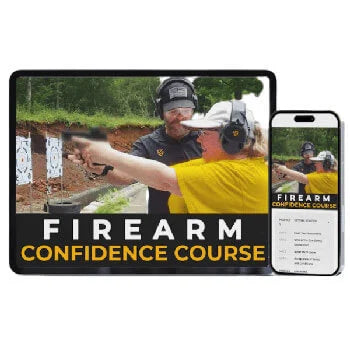
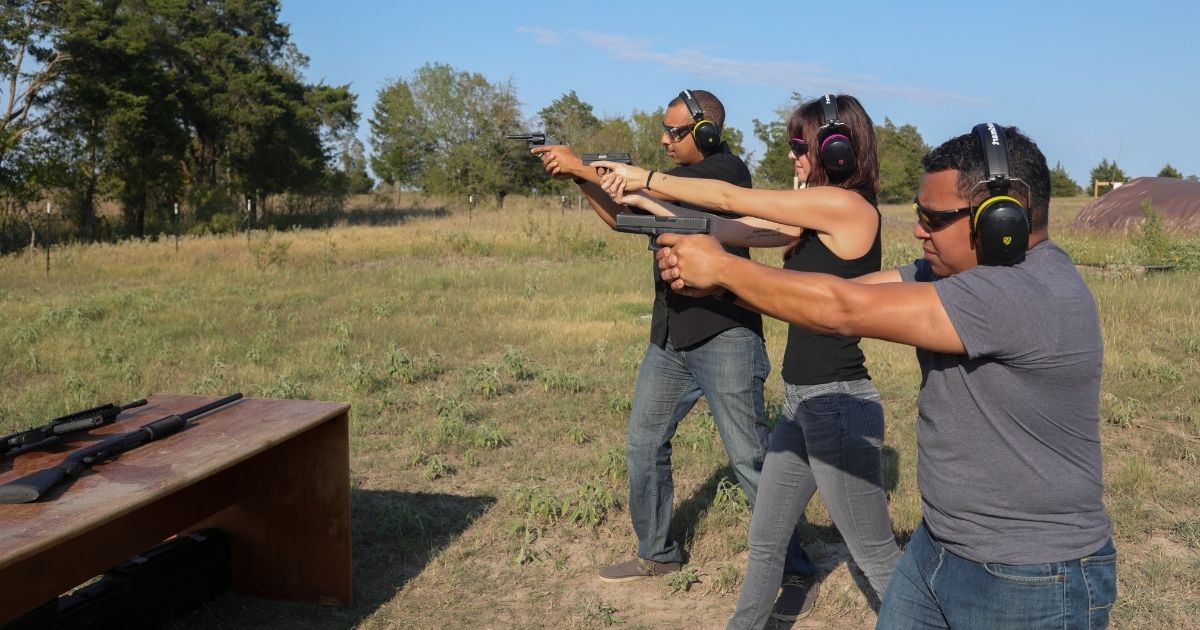
TradeSmart Safety's free Range Confidence Course, included with every product purchase, covers firearms safety fundamentals that every gun owner should understand. And when you are at the range practicing, proper safety gear is non-negotiable. A single gunshot produces 140 to 175 dB depending on caliber — well above the 140 dB threshold where NIOSH warns of immediate, permanent hearing damage. TradeSmart Safety's premium kits include NRR 28 earmuffs, ANSI Z87.1+ safety glasses, a hard-shell carrying case, and foam earplugs — complete hearing and eye protection backed by a 10-year warranty and free shipping.
For more on safety gear and range preparation, read our guides on the best ear protection for shooting, choosing the right eye protection, and the four rules of gun safety.
Frequently Asked Questions
What gun safe features matter most for home security?
The three most important features are: (1) bolt-down capability — a safe that is not anchored can be physically removed from your home; (2) steel gauge — 14-gauge minimum for full-size safes to resist prying and cutting; and (3) a quality lock — look for UL-listed electronic locks from S&G or SecuRam, or a mechanical combination lock. Fire rating, while important, is secondary to anti-theft features unless you live in a high fire-risk area. Interior organization, lighting, and aesthetics are nice but should not drive your primary purchasing decision.
Do I need a fire-rated gun safe?
A fire rating adds meaningful protection but also significant cost and weight. If your safe will store irreplaceable items (important documents, family heirlooms, firearms with sentimental or historical value), fire protection is worth the investment. A minimum 60-minute rating at 1,200 degrees F is recommended for serious collections. If your safe is primarily for security against theft and unauthorized access (and you have homeowner's insurance for fire loss), you can save money by choosing a non-fire-rated safe with superior steel construction. Note that ammunition stored in a safe without fire protection can cook off during a fire, though this poses less danger than commonly believed — ammunition that is not chambered in a firearm produces relatively little projectile velocity.
How do I determine what size gun safe I need?
Take the number of firearms you currently own, add 30 to 50 percent for future growth, and use that number to select a safe. Remember that manufacturer capacity ratings are optimistic — a "24-gun" safe typically holds 14 to 18 long guns comfortably. Account for scoped rifles (which take more space), shotguns (wider profiles), and any handguns, ammunition, documents, or valuables you plan to store. If you are debating between two sizes, always choose the larger one. Moving to a bigger safe later is expensive and logistically challenging.
Can I install a gun safe on an upper floor?
Yes, but with important caveats. Full-size gun safes weigh 400 to 1,400 pounds. Most residential floors are built to handle 40 pounds per square foot of live load. A 600-pound safe on a 2x2-foot footprint concentrates 150 pounds per square foot in one area — well above the standard load rating. To install on an upper floor: (1) position the safe directly over a load-bearing wall or beam, (2) consider reinforcing the floor joists beneath the installation point, (3) distribute the weight over a larger area using a thick steel or plywood platform, and (4) consult a structural engineer if the safe exceeds 500 pounds. Lighter safes like the SecureIt Agile (115 lbs) are ideal for upper-floor installations.
Are gun safe dehumidifiers necessary?
In most climates, yes. Enclosed safes trap moisture, and the temperature differential between the safe interior and the room can create condensation. This moisture causes rust on firearms, corrodes ammunition, and damages wood stocks and leather accessories. A gun safe dehumidifier — either a rechargeable desiccant unit (like the Eva-Dry) or a low-wattage heating rod (like the GoldenRod) — keeps interior humidity below 50 percent and prevents these problems. Heating rods require an electrical outlet near the safe and a cord passthrough. Rechargeable desiccant units are wireless and need periodic recharging (typically every 30 to 60 days). In humid climates (Southeast US, coastal areas), a dehumidifier is not optional — it is essential.
Should I tell my insurance company about my gun safe?
Yes. Most homeowner's insurance policies have sub-limits on firearms coverage (often $2,500 to $5,000 total, regardless of the actual collection value). To insure your collection at its full value, you typically need a scheduled personal property rider or a separate firearms insurance policy (through providers like the NRA's endorsed insurance program or collectibles insurers). Having a quality gun safe — particularly one that is bolted down and fire-rated — may qualify you for premium discounts on firearms riders. Document your collection with photographs, serial numbers, and receipts, and store copies of this documentation outside the safe (a bank safe deposit box, secure cloud storage, or with your insurance agent).



Leave a comment (all fields required)