



Best Tactical Backpack in 2026: The Complete Buyer's Guide
A tactical backpack is not a regular backpack with extra pockets. It is an engineered piece of equipment built to organize specialized gear, protect sensitive items, and perform under conditions that would destroy a standard daypack within weeks. Whether you are heading to the range every weekend, commuting through an urban environment with a concealed carry permit, or building out an emergency preparedness kit, the backpack you choose determines how effectively you can access, transport, and secure your gear.
The tactical backpack market has grown significantly over the past decade. According to industry data from the Outdoor Industry Association, the tactical and military-style bag segment now exceeds $1.2 billion in annual U.S. retail sales. That growth means more options, but it also means more low-quality products flooding the market with military-sounding names and substandard construction.
This guide breaks down everything that separates a legitimate tactical backpack from an overpriced regular pack: materials, locking systems, capacity sizing, hydration compatibility, and the specific features that matter for different use cases. We also cover TradeSmart Safety's tactical backpack and explain why its triple TSA-approved locking system sets it apart for shooters who need secure firearms transport.
What Separates a Tactical Backpack from a Regular Backpack
The word "tactical" gets applied to everything from flashlights to sandals, so it is worth defining what actually makes a backpack tactical rather than just rugged-looking. Four engineering features distinguish genuine tactical packs from their conventional counterparts.
MOLLE Webbing
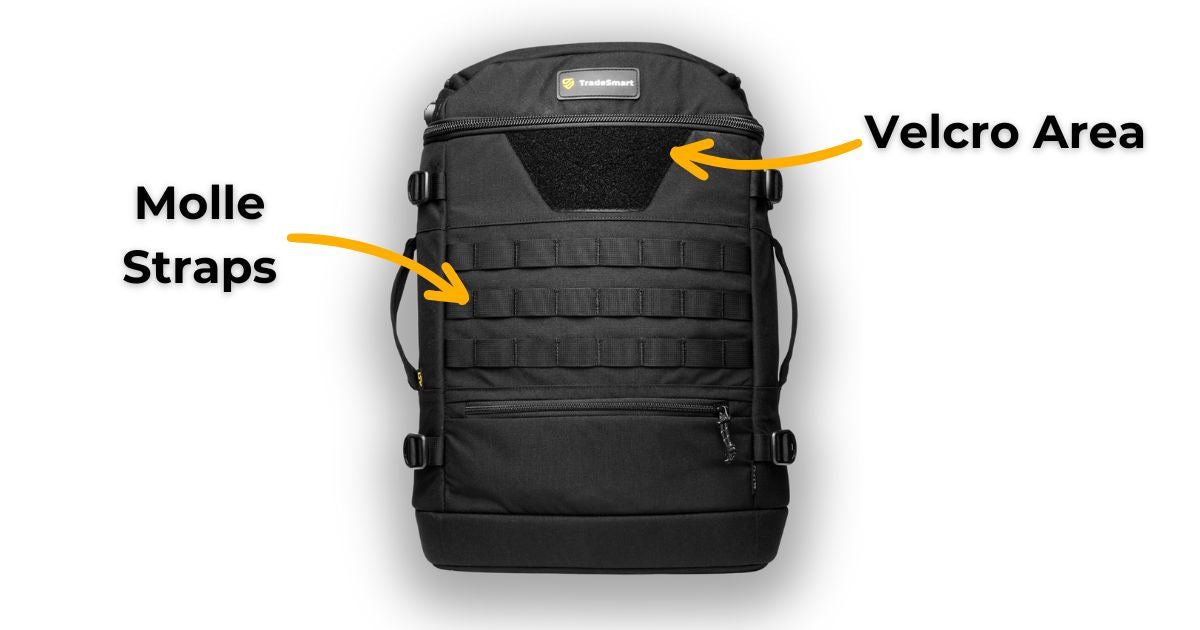
MOLLE stands for Modular Lightweight Load-carrying Equipment. Developed by the U.S. military in the late 1990s, MOLLE webbing consists of rows of heavy-duty nylon stitched to the exterior of a pack in horizontal lines. These rows create attachment points for pouches, holsters, medical kits, radio holders, hydration carriers, and other modular accessories.
The practical advantage is configurability. A regular backpack forces you to work within its fixed pocket layout. A MOLLE-compatible pack lets you build a custom loadout that changes based on your mission. Heading to the range? Attach magazine pouches and a dump pouch. Hiking? Swap those for a water bottle carrier and a first-aid kit. Traveling for work? Strip it down to a clean, low-profile silhouette.
Not all MOLLE is created equal. Look for webbing that uses bartack stitching at stress points and is spaced at standard 1-inch intervals to ensure compatibility with third-party accessories.
Reinforced Stitching
Standard backpacks use single-needle stitching that holds up under light loads. Tactical backpacks use double-stitched or bartacked seams at every stress point: shoulder strap anchors, handle attachments, zipper endpoints, and load-bearing panel joins. The difference becomes apparent under load. A regular backpack carrying 30 pounds will begin showing seam stress within months. A properly stitched tactical pack handles that weight for years.
The best tactical packs also reinforce their bottom panels with additional layers of fabric or rubberized coatings, since this is where most abrasion damage occurs from setting the pack down on concrete, gravel, or rough terrain.
Water Resistance
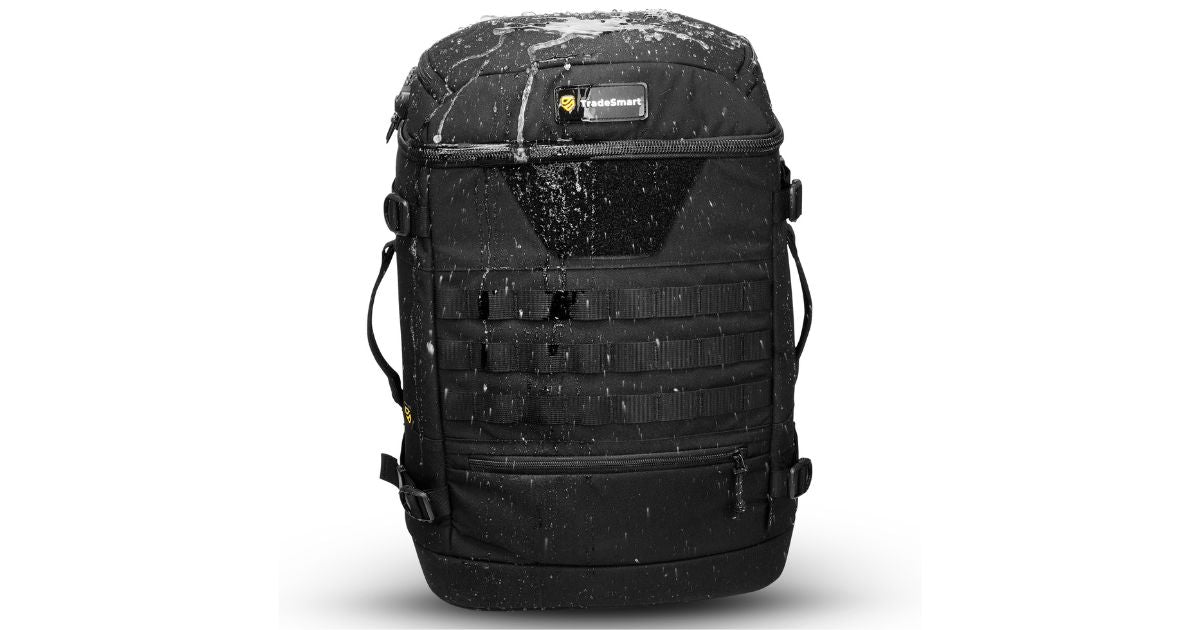
Tactical backpacks are not typically waterproof (that would require fully sealed seams and waterproof zippers), but they offer meaningful water resistance through a combination of DWR (Durable Water Repellent) coatings and tightly woven fabric construction. Most quality tactical packs will shed a moderate rain shower without moisture reaching the interior. For heavier downpours, a rain cover or dry bags inside the pack provide full protection.
This matters particularly for shooters. Ammunition, optics, and electronic hearing protection all degrade when exposed to moisture. A pack that lets water through a $12 zipper can ruin hundreds of dollars in gear.
Compartmentalization
This is arguably the most important distinction. A regular backpack gives you one large main compartment and a few accessory pockets. A tactical backpack provides purpose-built compartments: a padded section for firearms, dedicated ammo storage, separated spaces for eye and ear protection, quick-access pockets for identification and keys, and admin panels for pens, notebooks, and tools.
Compartmentalization is not just about organization. For firearms transport, it is a safety requirement. Keeping a firearm physically separated from ammunition and other gear during transport reduces the risk of accidental discharge and helps you comply with transport regulations in most jurisdictions.
Capacity Considerations: Matching Pack Size to Purpose
Tactical backpack capacity is measured in liters, and choosing the right size depends entirely on what you are carrying and for how long. Buying too large means unnecessary bulk and weight. Buying too small means cramming gear and losing the organizational advantage that makes tactical packs worth the investment.
EDC Packs: 20 to 30 Liters
An everyday carry tactical backpack in the 20 to 30 liter range is the sweet spot for daily commuters, concealed carry holders, and anyone who needs a grab-and-go bag. At this size, you can comfortably fit a 15-inch laptop, a change of clothes, a compact first-aid kit, a water bottle, documents, and a concealed carry firearm in a dedicated compartment.
Packs in this range typically weigh 2 to 4 pounds empty, which is critical for all-day carry. Look for a pack that sits flat against your back without protruding more than 6 to 8 inches, so it does not look out of place in an office or coffee shop. The best EDC tactical packs are the ones that do not announce themselves as tactical to casual observers.
This is also the ideal size range for a range day outfit companion: large enough to hold your essentials but small enough to stash in a vehicle or under a bench at the firing line.
Range Bags and Field Packs: 30 to 45 Liters
If your primary use case involves transporting firearms, ammunition, and shooting accessories to and from the range, you need a pack in the 30 to 45 liter range. This gives you enough room for one or two handguns in padded compartments, 200 to 500 rounds of ammunition, ear and eye protection kits, cleaning supplies, targets, a staple gun, and personal items.
For a full breakdown of what belongs in a range bag, see our guide to range bag essentials. The key point is that range-specific tactical packs need robust internal dividers and padding. Ammunition is heavy. A box of 50 rounds of 9mm weighs about 1.5 pounds. Carry 300 rounds and you are adding nearly 10 pounds of dense, shifting weight that needs to be distributed properly.
Packs at the upper end of this range also work well for overnight field trips, multi-day training courses, and bug-out bag configurations.
Extended Mission Packs: 45+ Liters
Packs above 45 liters enter rucksack territory. These are built for multi-day excursions, military deployments, and extended backcountry trips. They feature hip belts that transfer 60 to 70 percent of the load to your hips, internal frames for load stability, and sleeping bag compartments. Unless you are genuinely carrying a multi-day load, this category is overkill for range use and daily carry.
TSA Locking Systems for Firearms Transport
For shooters, the locking system on a tactical backpack is not optional. It is one of the most important features you will evaluate. Federal law (49 USC 44901) requires that firearms transported on commercial aircraft be in a hard-sided, locked container. But even for ground transport, a locking system provides critical security and legal compliance benefits.
What TSA-Approved Locks Offer
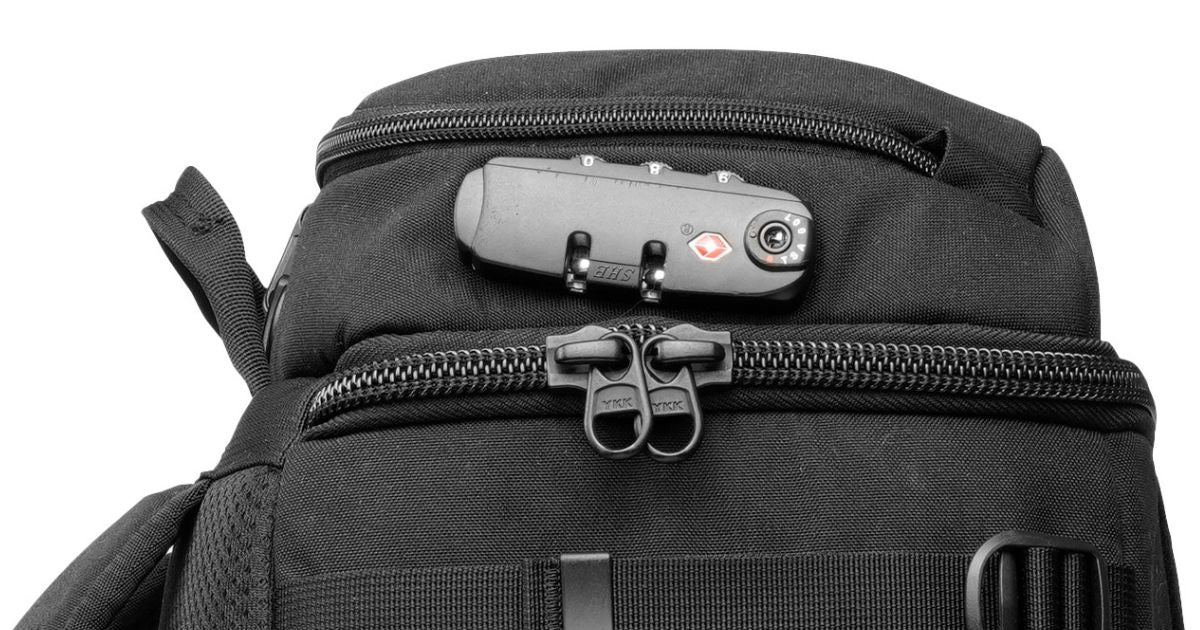
TSA-approved locks use a universal master key system that allows Transportation Security Administration agents to inspect locked containers without cutting the lock. This matters because if your bag is selected for inspection and it has a non-TSA lock, agents will cut it off. TSA locks give you security for everyday use while remaining compliant during travel.
For firearms transport specifically, TSA-approved locks on a tactical backpack provide several advantages:
- Child safety: A locked firearms compartment prevents unauthorized access by children in the home or vehicle.
- Legal compliance: Many states require firearms to be transported in a locked container. A TSA-locked backpack compartment satisfies this requirement in most jurisdictions.
- Theft deterrence: While no lock is impervious, a TSA lock adds a meaningful barrier against opportunistic theft, particularly when the locking compartment is concealed against the wearer's back.
- Quick access control: Unlike a cable lock threaded through a trigger guard, a compartment lock lets you secure or access the entire firearm in seconds.
Single Lock vs. Multiple Lock Systems
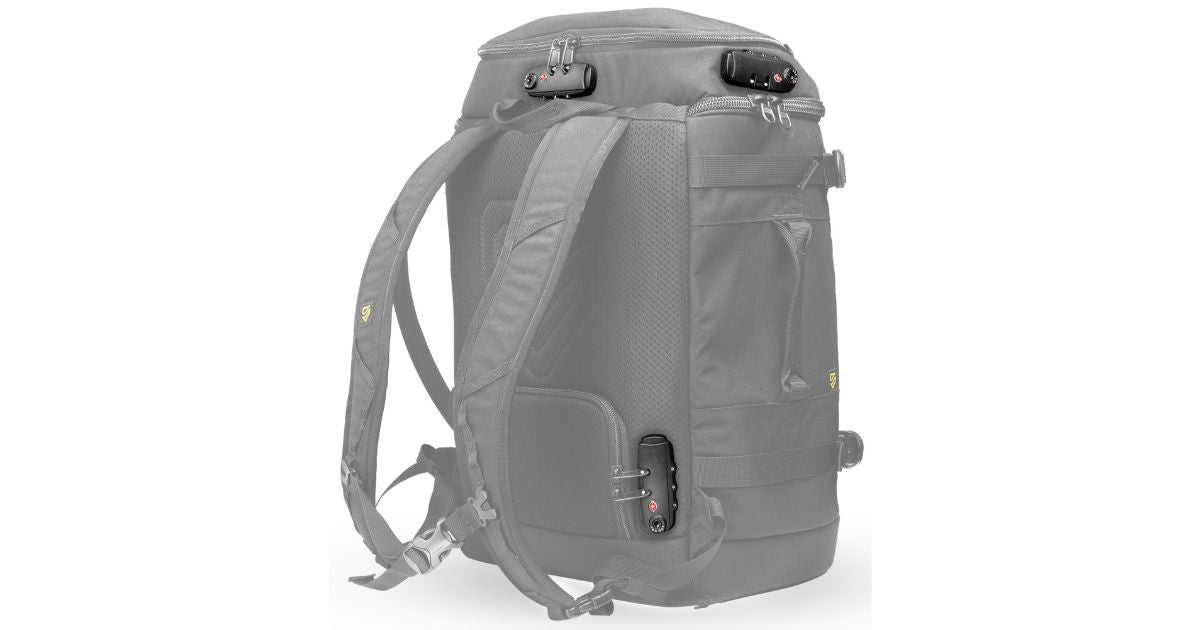
Most tactical backpacks with locking capability use a single lock on the main compartment. Higher-end designs incorporate multiple locks on separate compartments, allowing you to independently secure firearms, ammunition, and valuables. A triple-lock system, like the one found on the TradeSmart Safety Tactical Backpack, provides the most flexibility: you can lock the firearms compartment while leaving the ammo and general storage compartments accessible, or lock everything down for travel.
Disclaimer: Laws on firearms transportation vary by state and region. Always familiarize yourself with and comply with your local and state firearm transport laws. Compliance with all relevant laws and regulations is the sole responsibility of the user.
Material Guide: What Your Tactical Backpack Should Be Made Of
The fabric used in a tactical backpack directly determines its lifespan, weight, water resistance, and abrasion resistance. Two materials dominate the tactical backpack market, and understanding the difference helps you choose the right one for your use case.
1000D Cordura Nylon
Cordura is a brand name owned by Invista (formerly DuPont) that refers to a family of durable fabrics. The "1000D" designation means 1000 denier, a measurement of fiber thickness. In practical terms, 1000D Cordura is the gold standard for tactical gear. It is the same material used in military-issue packs, body armor carriers, and combat boots.
Key properties of 1000D Cordura include:
- Abrasion resistance: Exceeds standard nylon by a factor of 2 to 3 times in laboratory tear and abrasion testing.
- Water resistance: The tight weave combined with DWR coating sheds water effectively in moderate rain.
- UV resistance: Holds color and structural integrity after prolonged sun exposure, unlike cheaper nylon blends that degrade and fade.
- Weight penalty: 1000D Cordura is heavier than lighter fabrics. A full 1000D backpack typically weighs 15 to 25 percent more than a comparable pack in 500D nylon.
The TradeSmart Safety Tactical Backpack is constructed from Cordura fabric, which is why it delivers exceptional resistance to tears, scuffs, and abrasions even under sustained heavy use.
500D Nylon
500D nylon uses thinner fibers that produce a lighter, more flexible fabric. It is the most common material in mid-range tactical packs and offers a practical balance between durability and carry weight. For EDC use, commuting, and light-duty range trips, 500D nylon performs admirably. It shows wear faster than 1000D Cordura under heavy abrasion but remains far more durable than the 200D to 300D polyester found in consumer-grade backpacks.
500D nylon also tends to have a smoother hand feel and less rigid profile, which makes it a better choice for packs that need to look professional in office or travel environments.
Other Materials to Know
Ripstop nylon uses a grid pattern of reinforced threads woven into the fabric at regular intervals. If the fabric tears, the reinforced grid stops the rip from spreading. Many tactical packs use ripstop in liner panels and secondary compartments where weight savings matter more than heavy abrasion resistance.
Hypalon is a synthetic rubber used for pull tabs, zipper garages, and high-wear contact points. It resists UV degradation and chemicals better than standard rubber and adds a premium feel to the pack's hardware.
Hydration Compatibility
A hydration-compatible tactical backpack includes an internal sleeve sized for a 2 to 3 liter hydration bladder, a port or grommet for routing the drinking tube to the shoulder strap area, and internal clips or loops to secure the bladder and prevent shifting during movement.
Hydration compatibility matters in three scenarios:
- Range days in warm weather: Outdoor ranges in summer can expose you to hours of direct sun. Dehydration affects focus, reaction time, and fine motor control, all of which are critical for safe firearms handling. Having water on your back that you can sip without setting down a firearm is a genuine safety advantage.
- Hiking and field shooting: If you hunt or shoot on public land, you are often carrying gear over distance. Hands-free hydration keeps you moving without stopping to dig a water bottle out of a side pocket.
- Emergency preparedness: A bug-out bag or get-home bag should always include a hydration option. A bladder takes up less space than rigid water bottles and conforms to the pack's shape.
If a tactical backpack does not include a hydration sleeve, verify that the main compartment has enough vertical space to accommodate a standard 3L bladder (roughly 17 inches tall when filled) and that there is a tube routing port near the top of the pack.
Laptop Compartments in Tactical Packs
The modern tactical backpack has evolved to serve dual duty. Many shooters, military personnel, and law enforcement professionals carry laptops as part of their daily kit. A dedicated laptop compartment should meet three criteria:
- Padding: At minimum, closed-cell foam padding on all sides. The best designs use a suspended or "floating" sleeve that keeps the laptop from contacting the bottom of the pack when set down, preventing impact damage.
- Sizing: Fits a 15-inch laptop snugly. A compartment that is too large allows the laptop to shift and bounce. Too tight and you risk scratching the chassis or screen.
- Separation: The laptop compartment should be physically separated from the firearms compartment and any compartment that might contain ammunition, cleaning solvents, or lubricants. Solvent fumes and lead residue are not things you want seeping into your work computer.
For those who alternate between range days and office days, a tactical pack with a well-designed laptop compartment eliminates the need to own two separate bags. Pack your tactical pants, ear protection, and range gear in the main compartments, and your laptop goes in its own dedicated sleeve.
Top Tactical Backpack Picks by Use Case
Different missions demand different packs. Here is how to match a tactical backpack to your primary use case.
Best for Range Days: TradeSmart Safety Tactical Backpack
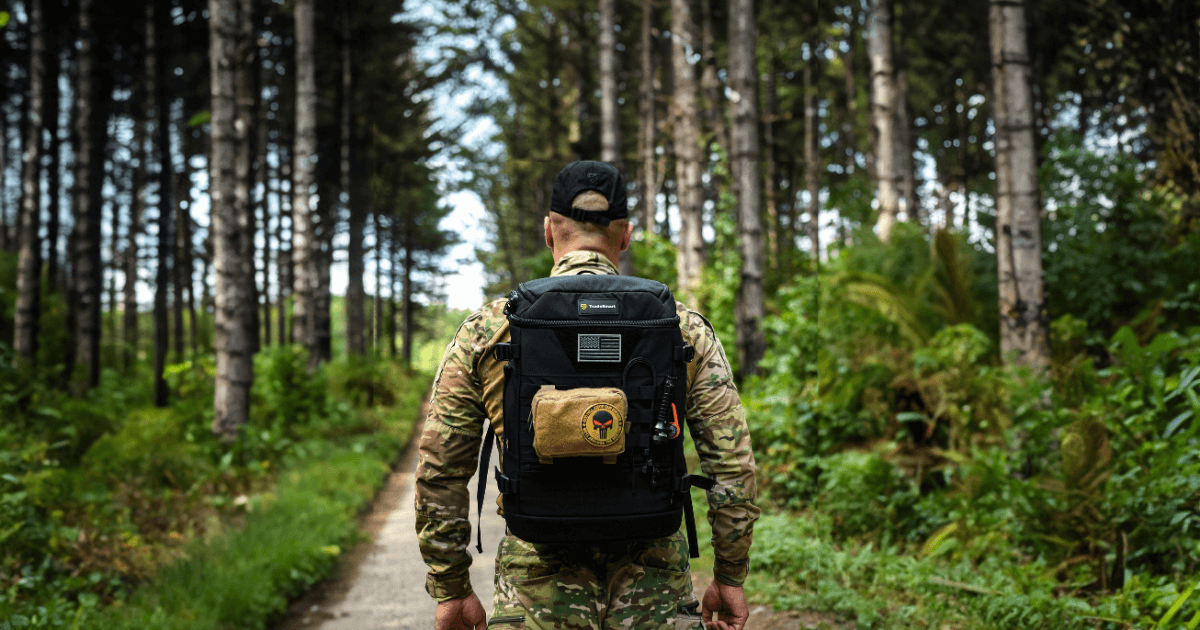
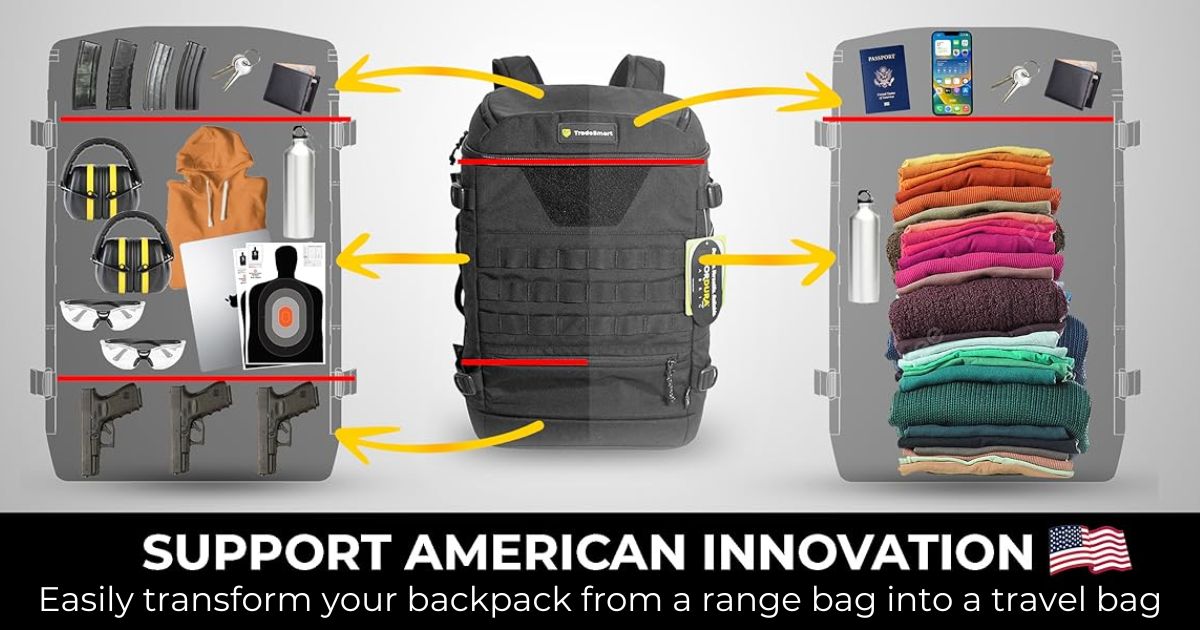
The TradeSmart Safety Tactical Backpack was designed specifically for shooters, and it shows. The defining feature is a triple TSA-approved locking system that secures three separate compartments independently. The concealed anti-theft gun compartment sits against your lower back, making it invisible to anyone behind you and inaccessible without your knowledge.
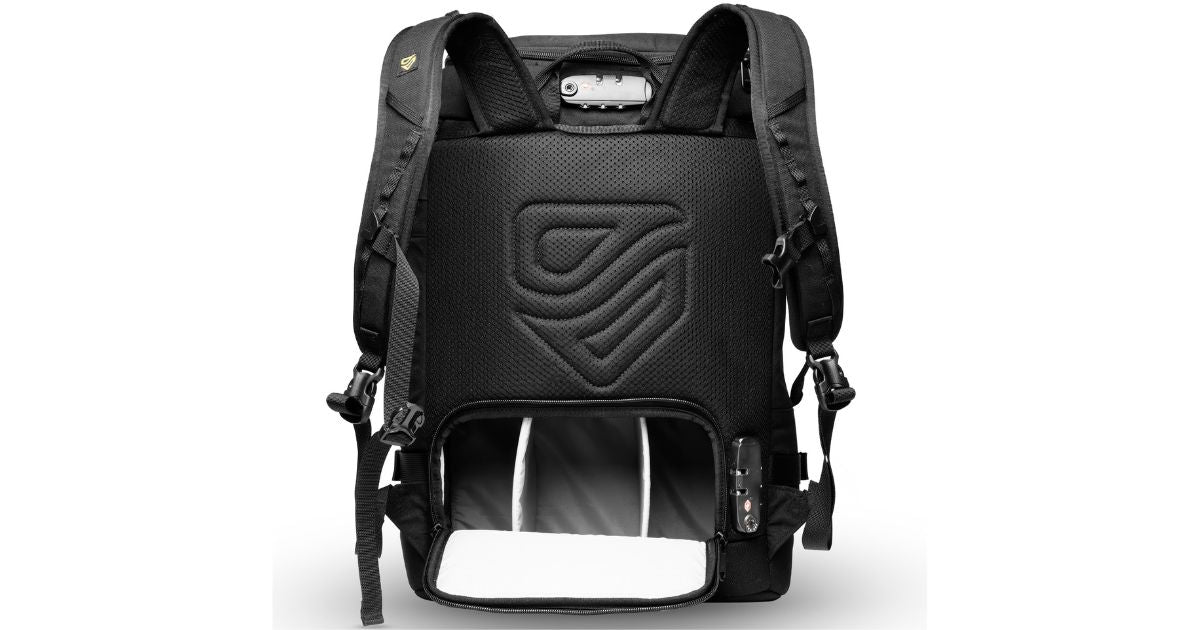
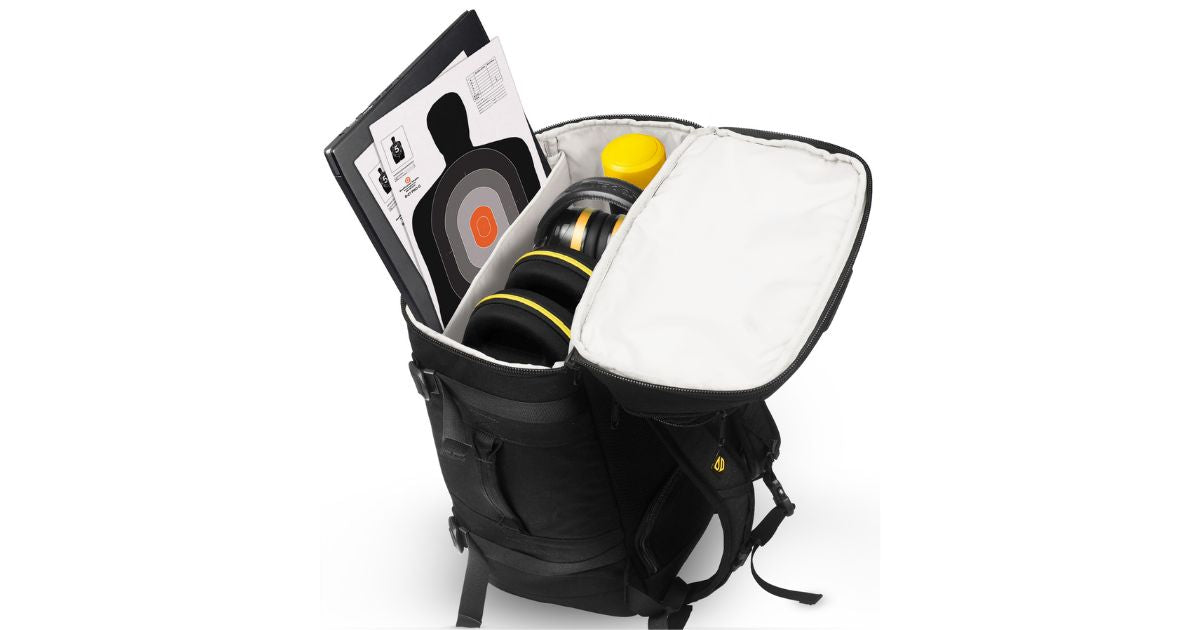
The firearms compartment features adjustable dividers that accommodate different handgun sizes. Smaller to medium-sized handguns can be positioned vertically with the dividers in place, while larger firearms fit horizontally with the dividers removed. The top ammo compartment stores various calibers separately, providing quick, organized access at the firing line.
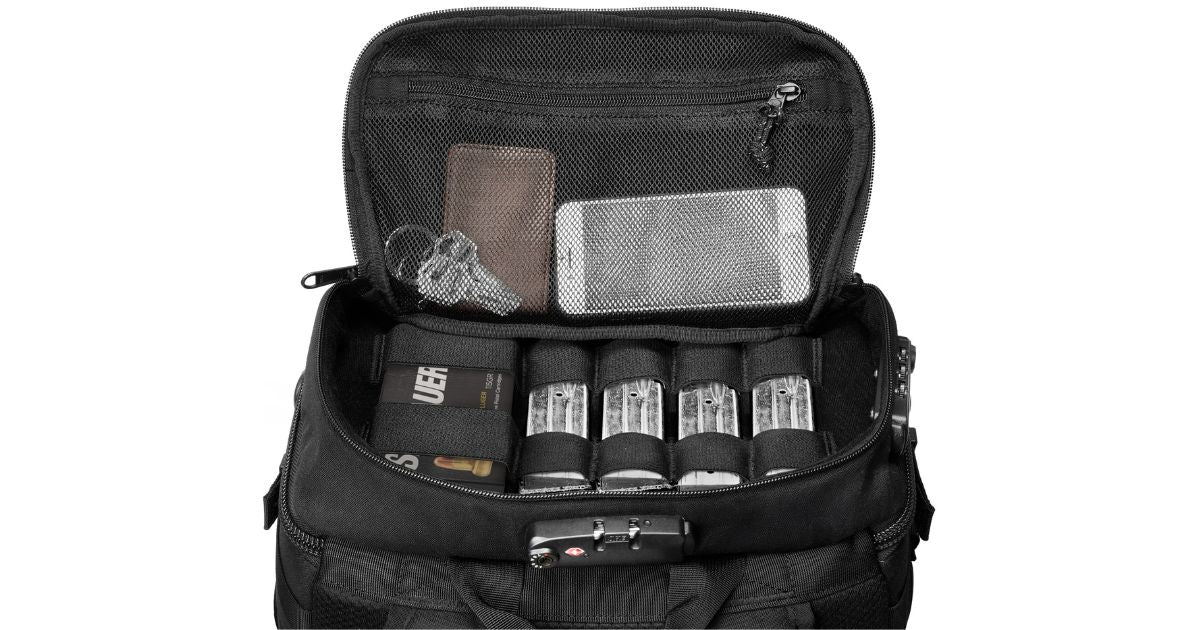
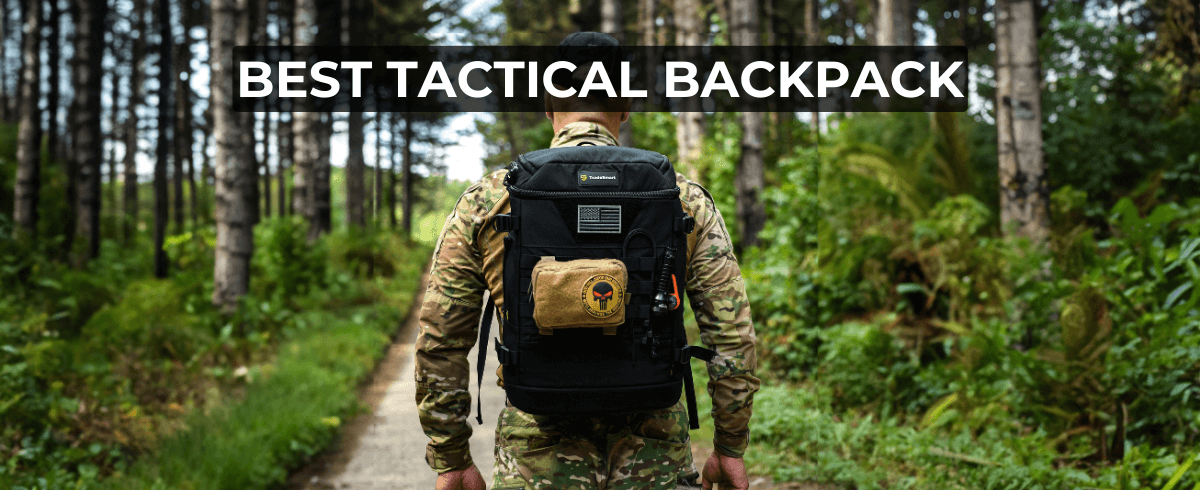
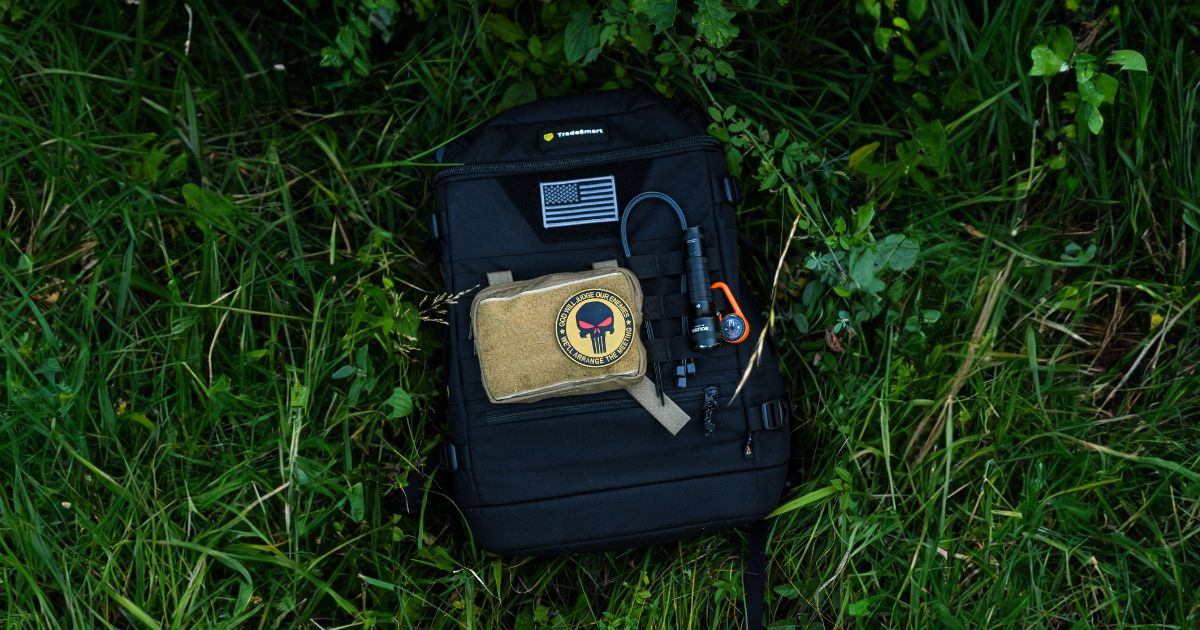
Built on Cordura fabric with YKK heavy-duty zippers, the TradeSmart pack balances substantial storage capacity with a weight-conscious design. MOLLE webbing on the exterior provides attachment points for additional pouches, and the Velcro panel allows for patch customization. Adjustable shoulder straps and a movable chest strap ensure a secure, comfortable fit across different body types.
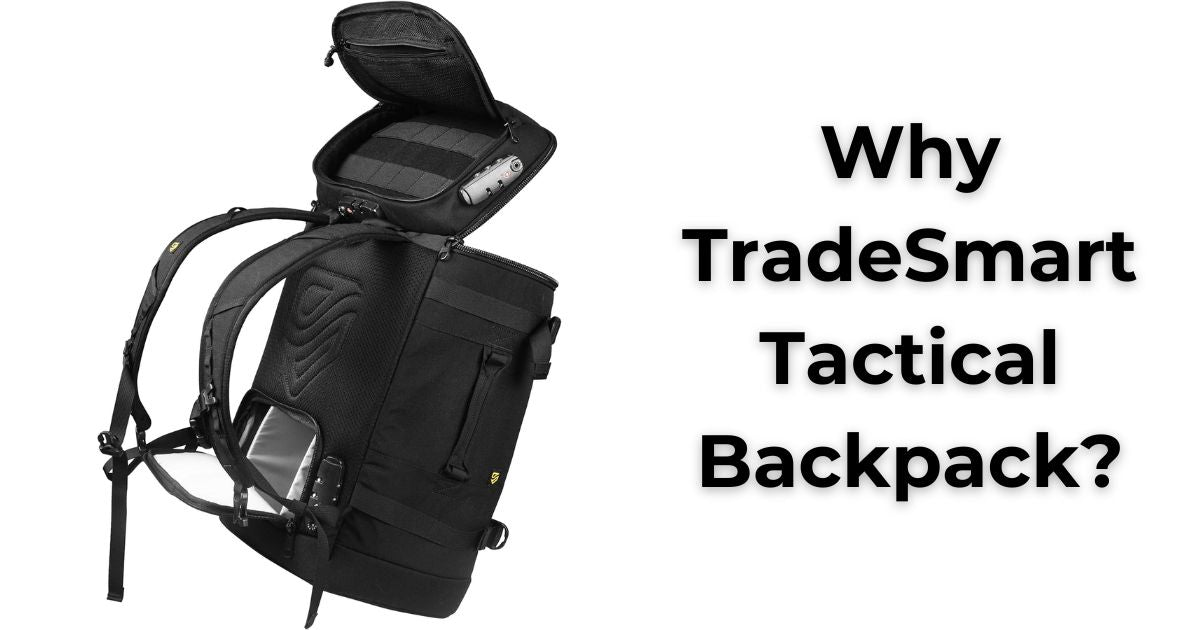
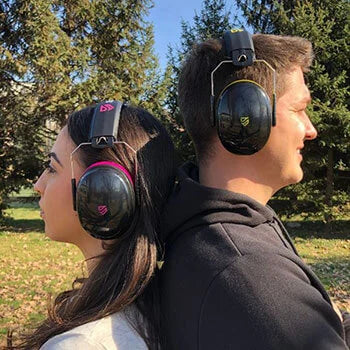
TradeSmart Safety backs this pack with a 10-year warranty and free shipping on all orders. For a complete range setup, pair it with a TradeSmart ear and eye protection kit, which includes NRR 28 earmuffs, ANSI Z87.1+ safety glasses, a hard-shell carrying case, NRR 33 foam earplugs, and a free Range Confidence Course.
Best for Everyday Carry
For EDC use, prioritize a pack in the 20 to 25 liter range with a low-profile silhouette, a padded laptop sleeve, and a concealed carry compartment that sits against your back. The exterior should be clean enough to pass in professional settings without the overtly military appearance that full MOLLE coverage creates. Look for packs with internal MOLLE or loop panels instead, which give you modularity without the tactical aesthetic.
Key features for EDC: quick-access pockets for keys and phone, an admin panel for pens and cards, a water bottle pocket sized for standard 32-ounce bottles, and a grab handle for carrying by hand through airports or offices.
Best for Travel
Travel-specific tactical packs should meet carry-on dimensions (22 x 14 x 9 inches for most airlines), include lockable zippers on all compartments, and offer a clamshell or full-zip opening that allows TSA agents to inspect the contents without unpacking everything. A separate shoe or dirty laundry compartment at the bottom is a practical bonus.
If you travel with firearms, the TSA locking system becomes non-negotiable. Pair the pack with a TSA-approved hard case for checked firearms, and use the pack's locking compartments for ammunition and accessories in your checked luggage. For a complete travel gear list including what to wear, check our guide on what to wear to a gun range.
Best for Outdoor and Field Use
Outdoor tactical packs need to prioritize water resistance, a robust hip belt, and hydration compatibility. Look for packs with reinforced bottom panels, external lash points for attaching trekking poles or a tripod, and compression straps that cinch the load tight against your back during uneven terrain movement. A pack in the 35 to 45 liter range covers most single-day field shooting, hunting, and hiking scenarios.
Pair your outdoor tactical pack with the right clothing. A tactical hat provides sun protection and a brim to shade your optics, while a tactical vest adds additional carry options when you need gear accessible at chest height rather than on your back.
Essential Features Checklist
Before purchasing any tactical backpack, run through this checklist to make sure it covers the fundamentals:
- Zippers: YKK or equivalent branded heavy-duty zippers with smooth action and corrosion-resistant pulls. Cheap zippers are the number one failure point on tactical packs.
- Stitching: Double-stitched seams with bartack reinforcement at all stress points.
- Material: 500D nylon minimum, 1000D Cordura preferred for heavy-duty use.
- Shoulder straps: Padded, adjustable, and wide enough to distribute load without digging into your shoulders.
- Chest strap: Adjustable sternum strap to prevent shoulder straps from sliding outward under load.
- Back panel: Padded and ventilated. Mesh-covered foam channels allow airflow and reduce sweat buildup during extended carry.
- Locking compartments: TSA-approved locks on firearms and valuables compartments.
- MOLLE compatibility: External or internal webbing for modular accessory attachment.
- Warranty: A manufacturer that stands behind their product with a multi-year warranty. TradeSmart Safety offers a 10-year warranty, which is among the strongest in the industry.
How to Pack a Tactical Backpack for the Range
Packing order matters. A poorly packed tactical backpack defeats the purpose of its compartmentalization. Follow this loading sequence for a typical range day:
- Bottom layer: Heavy, dense items. Ammunition boxes go here, centered over the pack's hip line for optimal weight distribution.
- Middle layer: Bulky protective gear. Your ear and eye protection kit in its hard case, cleaning supplies, and spare magazines.
- Top layer: Items you need first or most frequently. Targets, a staple gun, your range card, and personal items like sunscreen and a snack.
- Firearms compartment: Load last, unload first. Firearms should always travel unloaded in the dedicated locked compartment. Verify the chamber is clear before placing any firearm in the pack.
- External pockets: Keys, phone, wallet, and identification in quick-access pockets. A water bottle in the side pocket or hydration bladder in the internal sleeve.
This loading sequence puts the heaviest items closest to your back and center of gravity, reduces the number of times you dig through the pack at the range, and keeps firearms isolated until you are ready to use them.
Frequently Asked Questions
What is the difference between a tactical backpack and a regular backpack?
A tactical backpack is distinguished by four primary engineering features: MOLLE webbing for modular accessory attachment, reinforced double-stitching at all stress points, water-resistant materials (typically 500D to 1000D nylon or Cordura), and purpose-built compartmentalization for specific gear types. Regular backpacks use lighter materials, single-stitch construction, and a one-main-compartment design. Tactical packs are built to handle heavier loads, rougher treatment, and specialized equipment like firearms and ammunition.
What size tactical backpack do I need for the shooting range?
For most range trips, a 30 to 40 liter tactical backpack provides the right balance. This gives you room for one or two handguns, 200 to 500 rounds of ammunition, ear and eye protection, cleaning supplies, targets, and personal items. If you only carry a single handgun and minimal gear, you can manage with a 25-liter pack. If you bring long guns, multiple handguns, or plan for all-day sessions, look at the 40 to 45 liter range. For a full list of what to bring, see our range bag essentials guide.
Are TSA-approved locks on a tactical backpack actually secure?
TSA-approved locks provide meaningful security for everyday use, vehicle storage, and travel. They use a combination mechanism that only you and TSA agents (via a universal master key) can open. They are not designed to resist determined, sustained attack with tools, but no portable lock is. Their primary value is deterring opportunistic theft, preventing unauthorized access by children, and satisfying the legal requirement in many states that firearms be transported in a locked container. For maximum security, pair TSA-locked compartments with a concealed carry design that hides the firearms compartment entirely.
Is 1000D Cordura worth the extra weight compared to 500D nylon?
It depends on your use case. For range bags, field packs, and any pack that regularly carries heavy loads or gets set down on rough surfaces, 1000D Cordura is worth the 15 to 25 percent weight premium. Its abrasion resistance is roughly two to three times that of 500D nylon, which translates to years of additional service life under hard use. For EDC packs and travel bags where total carry weight matters more and abrasion exposure is lower, 500D nylon offers an excellent balance of durability and comfort.
Can I use a tactical backpack as my everyday carry bag?
Yes, and many people do. The key is choosing the right size and aesthetic. A 20 to 25 liter tactical pack with subdued colors and minimal external MOLLE blends into professional environments while still offering the organizational advantages, durability, and concealed carry capability that make tactical packs useful. Avoid packs with excessive external webbing, military-pattern camouflage, or oversized patch panels if you want to maintain a low profile in office settings.
How do I clean and maintain a tactical backpack?
Empty the pack completely and shake out debris. Spot-clean stains with a soft brush, warm water, and mild soap. Do not machine wash, as the agitation can damage internal stiffeners, MOLLE stitching, and DWR coatings. For deep cleaning, fill a bathtub with warm water and a small amount of non-detergent soap, submerge the pack, and gently scrub problem areas. Rinse thoroughly and hang to air dry completely before storing. Reapply a DWR spray every 6 to 12 months if you notice water no longer beading on the fabric surface. Store the pack in a cool, dry place with all zippers partially open to prevent mildew and zipper corrosion.
Gear Up for Your Next Range Day
A tactical backpack is an investment in how you organize, transport, and protect your gear. The right pack pays for itself by extending the life of your equipment, improving your efficiency at the range, and keeping your firearms secure during transport.
The TradeSmart Safety Tactical Backpack delivers what serious shooters need: Cordura construction, YKK zippers, a triple TSA-approved locking system, a concealed anti-theft firearms compartment, dedicated ammo storage, MOLLE webbing, and a 10-year warranty. Pair it with a TradeSmart shooting safety kit for complete range-day coverage, including NRR 28 earmuffs, ANSI Z87.1+ safety glasses, NRR 33 earplugs, a protective case, and a free Range Confidence Course.
Shop the TradeSmart Tactical Backpack | Shop Shooting Safety Kits
Free shipping on all orders. 10-year warranty. Built for shooters who take safety seriously.



Leave a comment (all fields required)