





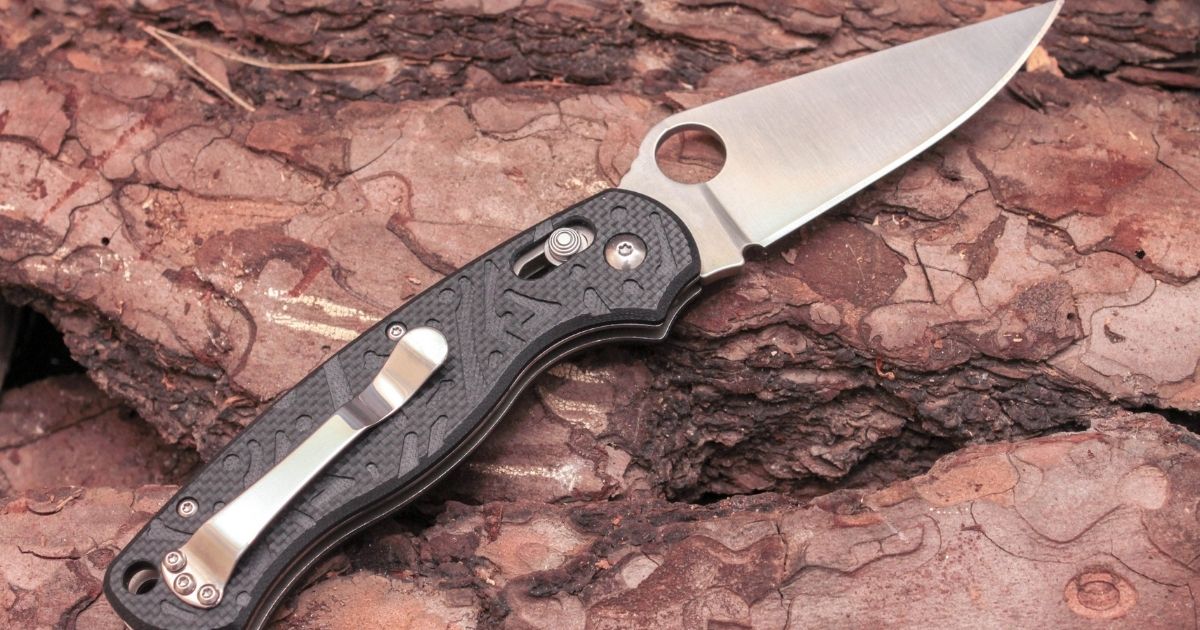

Best Tactical Knife: The Complete Guide to Choosing the Right Blade in 2026
A tactical knife is more than a cutting tool. It is a piece of purpose-built equipment designed for reliability under pressure, whether you are in the field, at the range, on a hike, or simply need a dependable everyday carry blade. But with hundreds of options on the market, choosing the right one requires understanding the fundamentals: blade steel, blade shape, handle materials, deployment mechanisms, and the legal landscape.
This guide breaks down everything you need to know to find the best tactical knife for your needs in 2026, from metallurgy to maintenance.
Fixed Blade vs. Folding Tactical Knives
The first decision when selecting a tactical knife is whether you need a fixed blade or a folding knife. Each design has clear advantages, and the right choice depends on how you plan to use it.
Fixed Blade Tactical Knives
Fixed blade knives have no moving parts. The blade extends directly into the handle, typically as a full tang (meaning the steel runs the entire length of the handle). This construction makes them inherently stronger and more reliable than folders.
- Strengths: Superior structural integrity, no lock mechanism to fail, faster deployment from a sheath, easier to clean and maintain, better suited for heavy-duty tasks like batoning wood or prying
- Drawbacks: Larger profile makes concealed carry more difficult, requires a sheath and dedicated carry position, less convenient for everyday pocket carry
- Best for: Field use, survival situations, camping, hunting, duty carry, and any scenario where maximum strength matters
Modern Kydex sheaths and horizontal carry systems have made fixed blades more practical for everyday carry than ever before. A compact fixed blade with a 3- to 4-inch blade can ride on your belt just as discreetly as a folder rides in your pocket.
Folding Tactical Knives
Folding knives use a pivot mechanism that allows the blade to fold into the handle. A locking mechanism holds the blade open during use. Modern tactical folders use robust lock designs, including frame locks, liner locks, and axis locks, that are engineered for hard use.
- Strengths: Compact and pocketable, easier to carry daily, legal in more jurisdictions due to smaller carry profile, wide variety of deployment mechanisms for one-handed opening
- Drawbacks: Lock mechanism is a potential point of failure under extreme stress, pivot requires periodic maintenance, slightly slower to deploy than a sheathed fixed blade
- Best for: Everyday carry (EDC), concealed carry, urban environments, and situations where discretion and convenience matter
For most people, a quality tactical folder with a reliable lock is the practical choice. If you need a knife primarily for field operations, survival, or duty use, a fixed blade is the stronger option.
Tactical Knife Blade Steels: What the Numbers Actually Mean
The steel used in a tactical knife blade determines its edge retention, toughness, corrosion resistance, and ease of sharpening. Understanding the most common steels helps you make an informed decision instead of relying on marketing claims.
440C Stainless Steel
440C is a high-carbon stainless steel (0.95-1.20% carbon, 16-18% chromium) that was once the gold standard for knife steel. At approximately 58 HRC hardness, it offers excellent corrosion resistance, good edge retention, and is the easiest of the four steels to sharpen with common tools. The trade-off is moderate toughness: at high hardness levels, 440C can become brittle under heavy impact. Best for budget-conscious buyers who want reliable rust resistance and low-maintenance field sharpening.
D2 Tool Steel
D2 is a semi-stainless tool steel (approximately 1.5% carbon, 11-12% chromium) that falls just below the 13% chromium threshold for true stainless classification. At 58-62 HRC, it holds an edge significantly longer than 440C but requires periodic oiling in humid environments since its corrosion resistance is only moderate. Sharpening D2 requires diamond stones or ceramic rods due to its hard carbide structure. Best for users who prioritize edge retention and accept more maintenance.
CPM S30V
S30V was developed by Crucible Industries specifically for the knife industry using Crucible Particle Metallurgy (CPM), a process that produces an extremely fine and uniform carbide structure. The "V" indicates its high vanadium content. At 58-61 HRC with 14% chromium, S30V delivers approximately 30-40% better edge retention than D2 according to standardized CATRA testing, while qualifying as true stainless steel. It is more challenging to sharpen than softer steels (use ceramic or diamond abrasives), but it remains the benchmark premium steel for tactical and EDC knives.
CPM S35VN
S35VN is the refined successor to S30V. The key difference is the addition of niobium (the "N" in the name), which creates a finer grain structure delivering approximately 15-20% more toughness than S30V while maintaining comparable edge retention. At 58-61 HRC with 14% chromium, S35VN is also easier to sharpen than S30V thanks to its finer grain. Arguably the most balanced premium knife steel available today, S35VN is better suited than S30V for larger tactical and survival knives where impact resistance matters.
Quick Steel Comparison
Here is how these four steels rank against each other across key performance categories:
- Edge retention (best to least): S30V > S35VN > D2 > 440C
- Toughness (best to least): S35VN > S30V > D2 > 440C
- Corrosion resistance (best to least): 440C > S35VN = S30V > D2
- Ease of sharpening (easiest to hardest): 440C > S35VN > D2 > S30V
- Price (lowest to highest): 440C > D2 > S30V > S35VN
For most tactical knife buyers, CPM S35VN represents the best overall value in premium steel. If budget is a concern, D2 offers strong edge retention at a lower price point, and 440C remains a reliable workhorse.
Blade Shapes: Choosing the Right Profile
The shape of a tactical knife blade determines what it excels at. Each profile represents a set of trade-offs between piercing ability, slicing efficiency, tip strength, and versatility.
Drop Point
The drop point is the most versatile blade shape and the most popular choice for tactical knives. The spine curves gently downward toward the tip, creating a strong, slightly rounded point with a large cutting belly.
- Tip strength: Excellent. The thick spine extends close to the tip, reinforcing it against breakage
- Slicing ability: Very good. The large belly provides ample cutting surface for slicing tasks
- Piercing ability: Good. Not as sharp a point as clip point or tanto, but more than adequate for most tactical applications
- Best for: General-purpose tactical use, EDC, hunting, field work. The drop point is the "do everything well" blade shape
Tanto
The tanto blade features a distinctive angular design with a flat grind that meets the sharpened edge at an angle rather than a curve. This geometry creates a reinforced, chisel-like tip that is exceptionally strong.
- Tip strength: Outstanding. The angular tip is the strongest of any common blade shape, highly resistant to breaking even under heavy thrust
- Slicing ability: Limited. The lack of a curved belly makes long slicing cuts less efficient
- Piercing ability: Excellent. The tanto was specifically designed for penetration through hard materials
- Best for: Military and law enforcement tactical use, self-defense, piercing tough materials. The tanto sacrifices slicing versatility for maximum tip strength and penetration
Clip Point
The clip point blade has a concave curve, or "clip," cut from the spine near the tip. This removes material from the top of the blade, creating a thinner, sharper point than a drop point.
- Tip strength: Moderate. The thinner point is more prone to breaking under lateral stress than drop point or tanto designs
- Slicing ability: Very good. Similar belly to a drop point, with a more refined tip for detail work
- Piercing ability: Excellent. The thin, sharp point excels at piercing and detail cuts
- Best for: Tactical applications that require precise piercing and detail work, utility tasks, and situations where a fine point is advantageous. The classic Bowie knife uses a clip point
Which Blade Shape Should You Choose?
If you need one tactical knife that handles the widest range of tasks, choose a drop point. If your primary concern is penetration and tip durability for hard-use tactical applications, choose a tanto. If you need a fine point for precision work and piercing, choose a clip point.
Handle Materials: What You Are Actually Gripping
The handle material on a tactical knife affects grip security, weight, durability, and comfort during extended use. Here are the materials you will encounter on quality tactical knives and what sets each apart.
G10
G10 is a high-pressure fiberglass laminate made by layering glass cloth with epoxy resin under extreme heat. It is the most popular handle material on modern tactical knives. G10 can be textured aggressively for a secure hold even with wet or gloved hands, is nearly indestructible (it will not crack, warp, or deteriorate from moisture, chemicals, or UV), and requires zero maintenance. If you need a handle that performs reliably in any condition, G10 is the standard.
Micarta
Micarta is made by layering natural fabrics (linen, canvas, or paper) with resin under heat and pressure. It offers a warmer, more organic feel than G10, and many formulations actually become grippier when wet, the opposite of most synthetic materials. Micarta has slightly less structural strength than G10 but is more than adequate for any tactical application. It can absorb small amounts of moisture, so occasional drying is recommended.
FRN (Fiberglass Reinforced Nylon)
FRN is an injection-molded polymer reinforced with fiberglass strands, giving it strength without the cost of laminated materials. It is the lightest common handle material and requires no maintenance, but it is generally less grippy than G10 and can flex under heavy stress. FRN is an excellent choice for budget-friendly tactical knives where weight savings matter.
Other Handle Materials
Titanium offers the best strength-to-weight ratio and is used on premium tactical folders as frame lock scales. It is corrosion-proof and develops a unique patina over time, but the trade-off is cost. Aluminum provides a solid, smooth feel at lower weight than G10 and is common on military-issue knives, though it can be slippery without texturing. Stainless steel handles are heavy and durable, which can benefit balance on larger knives but reduces carry comfort.
Deployment Mechanisms: How Your Knife Opens
For folding tactical knives, the deployment mechanism determines how quickly and reliably you can open the blade with one hand. This is a critical consideration for tactical use, and each mechanism carries different legal implications.
Thumb Stud
A thumb stud is a small metallic protrusion mounted on the blade within thumb reach. You press against it with your thumb to rotate the blade open. Thumb studs are fully manual, highly reliable with no springs to fail, and legal everywhere folding knives are permitted. Dual thumb studs provide ambidextrous operation. Speed is moderate and improves with practice.
Flipper Tab
A flipper is a small tab extending from the blade at the pivot point. You push the tab with your index finger to rotate the blade open. Many knife users consider flippers the best deployment mechanism available. They are fast (the tab provides excellent leverage for rapid one-handed deployment), inherently ambidextrous, fully manual with no springs, and legal everywhere folding knives are permitted.
Assisted Opening
Assisted opening knives use a spring mechanism that takes over once the user begins to open the blade past a certain point. You initiate opening with a thumb stud or flipper tab, and the spring snaps the blade fully open. This is the fastest deployment method, but the spring adds a potential failure point and requires periodic maintenance. Assisted opening knives are legal in most states but not all, so check your local laws before carrying.
Thumb Hole
A thumb hole is an oval or round opening cut directly into the blade. You place your thumb in the hole and rotate the blade open. Spyderco's Round Hole is the most recognized example. Thumb holes are fully ambidextrous, extremely reliable (no added parts to break), fast to deploy, and legal everywhere folding knives are permitted.
Legal Considerations: Blade Length Laws by State
Knife laws in the United States vary significantly by state, and in many cases, by city and county within a state. Before carrying any tactical knife, you are responsible for knowing the laws that apply where you live, work, and travel.
At the federal level, there are no specific blade length restrictions for everyday carry knives. However, individual states impose their own regulations on blade length, knife type, carry method (concealed vs. open), and restricted locations.
General Legal Framework
Here are some representative examples that illustrate the range of state knife laws as of 2026:
- California: Prohibits concealed carry of any fixed blade knife classified as a "dirk" or "dagger," regardless of blade length. Switchblades with blades over 2 inches are banned. Folding knives may be carried concealed
- New York: Does not distinguish between concealed and open carry. Fixed blade knives must be under 4 inches. Gravity knives and switchblades are restricted
- Texas: Generally allows knives with blades up to 5.5 inches. Knives with blades over 5.5 inches ("location-restricted knives") are prohibited in certain locations including schools, bars, and government buildings. Some municipal codes impose lower limits
- Georgia: Allows open or concealed carry of any knife with a blade of 12 inches or less, including switchblades. A strict 2-inch limit applies on school property
- Colorado, Oregon, and similar states: Generally allow EDC knives with blades 3 inches or shorter without restriction
Restricted Locations
Regardless of state law, tactical knives are almost universally prohibited in the following locations:
- Schools and university campuses
- Government buildings and courthouses
- Airports and secure transportation facilities
- Many bars and establishments that serve alcohol
- Sporting events and large public gatherings (venue-specific)
Practical Advice
For maximum legal portability, a folding knife with a blade under 3 inches and a manual opening mechanism (thumb stud, flipper, or thumb hole) is legal in the vast majority of U.S. jurisdictions. If you travel frequently, this is the safest configuration. Always verify current laws through official state statutes or resources like the American Knife and Tool Institute before carrying.
Maintenance and Sharpening Your Tactical Knife
A tactical knife is only as useful as its edge. Regular maintenance keeps your blade performing at its best and extends the life of your investment. Whether you carry a fixed blade in a Kydex sheath or a folder clipped to your pocket, these practices apply equally.
Cleaning and Lubrication
After each use, wipe the blade clean with a dry cloth. If the blade contacted moisture or corrosive materials, clean with warm soapy water and dry thoroughly. For folding knives, periodically flush the pivot area to remove lint and debris, then apply a small amount of knife-specific lubricant (such as Benchmade BlueLube or KPL) to the pivot and contact points. For fixed blades, a light coat of mineral oil prevents rust, particularly on D2 and other semi-stainless steels. If your knife has a leather sheath, ensure the blade is completely dry before re-sheathing.
Sharpening
Maintaining a sharp edge on your tactical knife requires the right tools and technique:
- Sharpening angle: Most tactical knives are ground at 15-20 degrees per side. Follow the factory edge angle for best results. If you are unsure, 20 degrees per side is a safe general-purpose angle
- Whetstones: Japanese whetstones are the gold standard for sharpening. Start with a medium grit (800-1000) for regular maintenance. Use a coarse grit (200-400) only if the edge is chipped or severely dulled, then progress through medium and fine (2000+) grits
- Ceramic rods: Ceramic honing rods are equivalent to approximately 2000 grit and are excellent for quick touch-ups in the field. They are portable and effective for maintaining an already sharp edge between full sharpening sessions
- Guided sharpening systems: Systems like the Lansky or KME provide consistent angle control and are ideal for users who want repeatable results without mastering freehand technique
- Diamond stones: Recommended for harder steels like S30V, S35VN, and D2. Diamond abrasives cut faster on hard carbides than traditional waterstones
Maintenance Schedule and Storage
If you carry daily, hone with a ceramic rod weekly and lubricate the pivot monthly on folding knives. Perform a full sharpening session every 3-6 months depending on use intensity and blade steel. Store tactical knives in a dry environment, ideally in a sheath (fixed blades) or with the blade deployed to relieve lock tension (folders). Avoid storing knives loose in drawers where blades can contact other metal and dull.
Top Tactical Knife Picks by Category for 2026
Here are recommendations across different use cases to help narrow your search.
Best Overall Tactical Folder
Look for a folding knife with CPM S35VN or S30V steel, a drop point blade between 3 and 3.5 inches, G10 or titanium handles, and a reliable frame lock or liner lock. This configuration gives you the best balance of performance, legal portability, and everyday practicality. Benchmade, Spyderco, and Zero Tolerance consistently produce knives in this category.
Best Tactical Fixed Blade
A full-tang fixed blade with CPM S35VN or similar premium steel, a 4- to 5-inch drop point or tanto blade, and G10 or Micarta handles. ESEE, Benchmade, and Tops Knives are known for purpose-built tactical fixed blades with proven track records in military and law enforcement use.
Best Budget Tactical Knife
D2 or 440C steel in a folding configuration with G10 or FRN handles. Ontario Knife Company, CJRB, and Civivi offer excellent value in the $30-$75 range without sacrificing build quality. At this price point, D2 steel delivers the best edge retention for the money.
Best Tactical Knife for EDC
A compact folder with a blade under 3 inches for maximum legal compliance, lightweight handle materials (G10 or FRN), and a deep-carry pocket clip. The smaller profile makes it comfortable for all-day carry without printing through clothing. Spyderco's Delica and Para 3 lines and Benchmade's Bugout platform are benchmarks in this category.
Best Heavy-Duty Tactical Knife
For hard-use scenarios, choose a fixed blade with a 5- to 7-inch blade in a tough steel like CPM 3V or S35VN, a full tang, and aggressively textured G10 handles. Cold Steel, Ka-Bar, and Tops Knives specialize in overbuilt tactical blades designed for extreme conditions.
Pairing Your Tactical Knife With the Right Gear
A tactical knife is one component of a well-prepared loadout. Whether you are heading to the range, the field, or simply building a reliable EDC setup, pairing your knife with the right supporting gear makes a measurable difference.
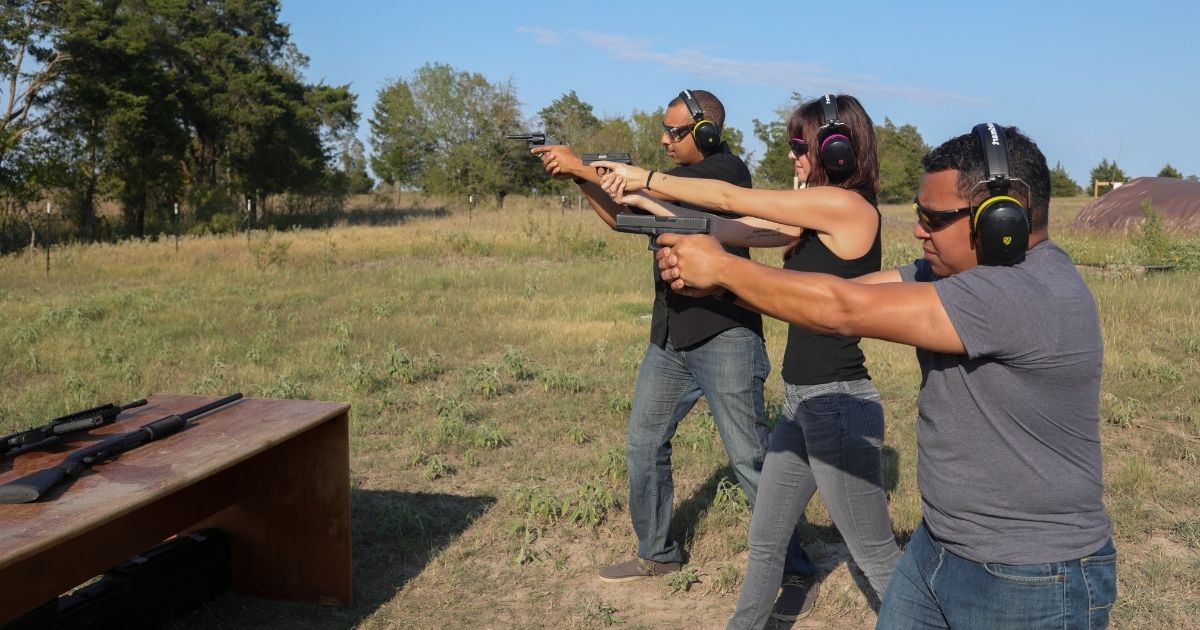
If you are putting together a range bag, a quality tactical knife belongs in it alongside your hearing and eye protection. At the range, a knife is useful for opening ammo boxes, cutting tape and targets, and general utility tasks.
For outdoor and tactical use, consider pairing your knife with a tactical backpack that has MOLLE webbing for mounting a sheathed fixed blade or dedicated knife pocket. A tactical flashlight is another essential companion, particularly if you carry your knife for preparedness or duty purposes.
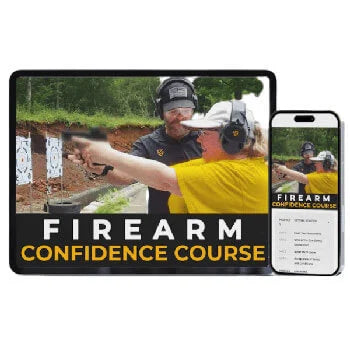
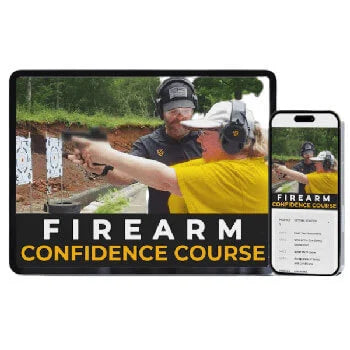
And if you are heading to the range, do not overlook the fundamentals. Your hearing and vision are irreplaceable. According to NIOSH, a single gunshot above 140 dB can cause immediate, permanent hearing damage, and gunshots from common calibers range from 140 to 175 dB. Proper ear and eye protection is not optional. TradeSmart Safety's shooting kits include NRR 28 earmuffs and ANSI Z87.1+ certified safety glasses, both backed by a 10-year warranty and free shipping. Every kit also includes the free Range Confidence Course to help you build proper fundamentals.
For guidance on what else to bring and how to dress, see our complete guide on what to wear to a gun range.
Frequently Asked Questions
What is the best blade steel for a tactical knife?
For most users, CPM S35VN offers the best overall balance of edge retention, toughness, corrosion resistance, and ease of sharpening. It is approximately 15-20% tougher than CPM S30V while maintaining comparable edge retention. If budget is a priority, D2 steel provides excellent edge retention at a lower price point, and 440C is a reliable, easy-to-sharpen option for budget knives.
What is the legal blade length for carrying a knife?
There is no single national standard. Laws vary by state, city, and even county. Many states allow folding knives with blades under 3 inches without restriction. Some states, like Texas, allow blades up to 5.5 inches. Others, like New York, set the limit at 4 inches for fixed blades. For maximum legal compliance while traveling, carry a manual folding knife with a blade under 3 inches. Always check current state and local statutes before carrying.
Fixed blade or folding knife: which is better for tactical use?
It depends on your use case. Fixed blade knives are structurally stronger with no lock mechanism to fail, making them superior for heavy-duty field work, survival, and duty carry. Folding knives are more compact, easier to carry daily, and legal in more jurisdictions. For everyday carry and general preparedness, a quality tactical folder is more practical. For dedicated field, military, or survival use, a fixed blade is the stronger choice.
How often should I sharpen my tactical knife?
With regular daily carry, hone the edge weekly using a ceramic rod or strop to maintain sharpness. Perform a full sharpening session on whetstones or a guided system every 3-6 months, depending on use intensity and blade steel. Harder steels like S30V and S35VN hold their edge longer between sharpenings than softer steels like 440C. The key is maintaining the edge before it becomes dull rather than waiting until it needs major re-profiling.
What is the difference between a drop point and a tanto blade?
A drop point blade has a gently curved spine that slopes toward the tip, creating a strong, versatile point with a large cutting belly ideal for slicing. A tanto blade has an angular, chisel-like tip where the flat grind meets the edge at an angle, creating the strongest tip geometry of any common blade shape. Choose a drop point for versatility and general-purpose use. Choose a tanto for maximum tip strength and penetration power in hard-use tactical applications.
Are assisted opening knives legal?
Assisted opening knives are legal in most U.S. states, but not all. Some jurisdictions classify them differently from manual folders, and local ordinances may impose additional restrictions. Assisted opening knives are distinct from automatic (switchblade) knives because they require manual initiation to begin opening. However, the legal distinction is not always clear-cut in every jurisdiction. If you travel between states, a manual-opening knife (thumb stud, flipper, or thumb hole) is the safest legal choice since these mechanisms are legal everywhere folding knives are permitted.
Final Thoughts
Choosing the best tactical knife is not about finding the most expensive option or the most aggressive-looking blade. It is about matching the right steel, blade shape, handle material, and deployment mechanism to your actual needs. A well-chosen tactical knife, properly maintained, is a tool that will serve you reliably for years.
Start with the fundamentals: decide between fixed and folding based on how you will carry it, select a steel that matches your maintenance commitment, choose a blade shape for your primary use case, and verify that your knife is legal where you carry it.
And whether you are heading to the range, the field, or just building a dependable everyday carry kit, make sure the rest of your gear matches the standard of your blade. TradeSmart Safety's shooting protection kits deliver NRR 28 earmuffs, ANSI Z87.1+ safety glasses, and a free Range Confidence Course with every order, all backed by a 10-year warranty and free shipping. Explore the full range of TradeSmart shooting kits here.



Leave a comment (all fields required)