



How Old Do You Have to Be to Go to a Gun Range? A Complete 2026 Guide
It is one of the most common questions asked by parents, young adults, and first-time range visitors: how old do you have to be to go to a shooting range? The answer is less straightforward than you might expect. There is no single federal age requirement for range use in the United States, and state laws vary significantly. On top of that, individual ranges set their own policies that may be stricter than state or federal law.
This guide covers everything you need to know about age requirements at shooting ranges in 2026 — from federal and state regulations to common range policies, youth shooting programs, and what parents should consider before bringing a young shooter to the range for the first time.
Federal Law: No Minimum Age for Range Use
Here is the fact that surprises most people: there is no federal minimum age for using a shooting range in the United States. Federal firearms law (the Gun Control Act of 1968) regulates the purchase and possession of firearms, but it does not set a minimum age for supervised shooting at a range.
The relevant federal age restrictions apply to purchasing firearms, not using them:
- 18 years old: Minimum age to purchase a long gun (rifle or shotgun) from a federally licensed dealer (FFL)
- 21 years old: Minimum age to purchase a handgun from an FFL
These purchasing restrictions do not prevent minors from using firearms at a range under supervision. Federal law allows minors to possess and use firearms in certain circumstances, including supervised target shooting and hunting.
That said, federal law is only the baseline. State laws and individual range policies add additional layers of regulation that determine what actually happens when you walk through the door.
State Age Requirements: A Breakdown
State laws regarding minors and firearms at ranges vary widely. Below is an overview of how different states approach age requirements for range use. This is a general guide — always verify current state law and specific range policies before visiting.
States with No Specific Minimum Range Age
Many states, particularly those in the South, Midwest, and Mountain West, do not set a specific minimum age for supervised range use. In these states, the decision falls to individual range operators and parental judgment:
- Texas: No state-mandated minimum age for supervised range use. Ranges set their own policies.
- Florida: No specific minimum range age. Minors may use firearms under adult supervision.
- Arizona: No state minimum. Arizona is one of the most permissive states for firearms use.
- Georgia: No minimum range age under state law. Parental supervision required for minors.
- South Carolina: No state-mandated minimum. Ranges typically require parental accompaniment for minors.
- Tennessee, Alabama, Kentucky, Oklahoma, Montana, Wyoming, Idaho: Similar — no state minimum range age, with ranges setting individual policies.
States with Specific Age Restrictions or Requirements
Some states have enacted laws that more specifically address minors' access to firearms, including in range settings:
- California: Minors under 18 must be accompanied by a parent, grandparent, or legal guardian to use a range. Some California ranges set their minimum at 10 or 12 years old even with a guardian present. California also has strict rules about which firearms minors can use.
- New York: New York City has particularly strict regulations. Outside NYC, ranges generally follow state law allowing supervised minor use, but policies vary.
- Illinois: Minors under 21 need a Firearm Owner's Identification (FOID) card or must be supervised by a FOID card holder to use a range.
- Massachusetts: Strict firearms regulations. Minors may shoot at ranges under direct adult supervision, but the supervising adult must hold a valid firearms license.
- Connecticut: Minors can use ranges under adult supervision. The supervising adult must be legally permitted to possess firearms.
- New Jersey: Minors can shoot at ranges under parental or guardian supervision. Ranges may have additional age restrictions.
- Hawaii: Among the strictest states. Permits required for firearm possession, with limited exceptions for supervised range use.
States with Notable Provisions for Youth Shooting
- Vermont: Youth may hunt at 15 (or younger with mentored hunting programs), and range use under supervision has no specific minimum.
- Wisconsin: Mentored hunting program allows youth as young as 10 to hunt under supervision. Range use follows similar supervised-access principles.
- Michigan: Strong youth hunting programs; ranges generally welcome supervised minors.
Important note: State laws change. This information reflects general provisions as of early 2026. Always verify current state law and check with the specific range before bringing a minor.
Common Range Policies for Minors
Regardless of what state law allows, individual ranges set their own policies. These are the most common policies you will encounter across the country:
Typical Age Minimums Set by Ranges
- 8 to 10 years old: Many ranges set this as the minimum age with mandatory parental or guardian supervision. Some specify that the child must be tall enough to safely reach the shooting bench.
- 12 years old: A common minimum at indoor ranges, especially in urban areas.
- 16 to 17 years old: Some ranges allow minors in this age group to shoot with any responsible adult (not necessarily a parent or guardian), while younger minors require a parent specifically.
- 18 years old: Some ranges, particularly upscale or high-volume urban facilities, restrict all use to adults 18 and older.
Common Supervision Requirements
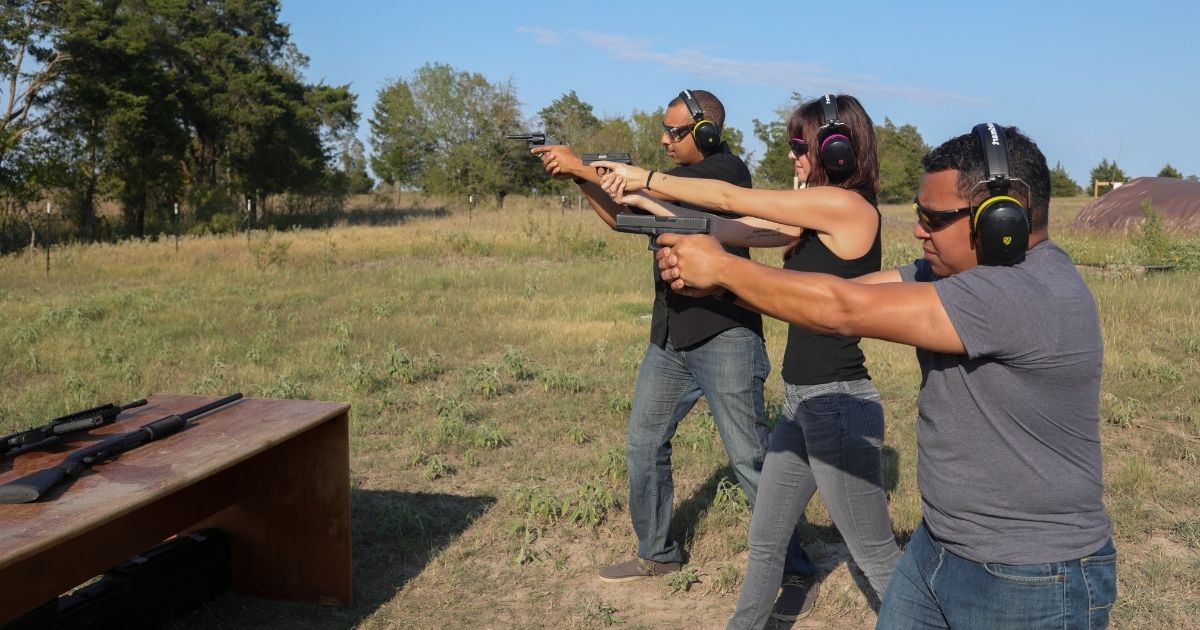
- Direct adult supervision: The accompanying adult must be on the firing line with the minor, not elsewhere in the facility. One-to-one supervision is standard.
- Adult-to-minor ratio: Many ranges enforce a 1:1 ratio — one adult per minor shooter. Some allow 1:2 for older teens.
- Adult must be the firearm handler: At some ranges, the adult must load, unload, and manage the firearm while the minor shoots. This is more common for younger children.
- Waivers and identification: A parent or legal guardian must sign a liability waiver for any minor. Proof of guardianship may be required. Valid ID is mandatory for the adult.
Firearm Type Restrictions for Minors
- Many ranges restrict minors to handguns only (no rifles or shotguns) or to .22 LR firearms specifically
- Some ranges require minors to start with the smallest available caliber before moving up
- Fully automatic firearms are almost universally restricted to adults 18 or 21 and older
- Ranges that rent firearms may have a separate (higher) age minimum for rentals versus shooting a family-owned firearm
Youth Shooting Programs: Getting Started the Right Way
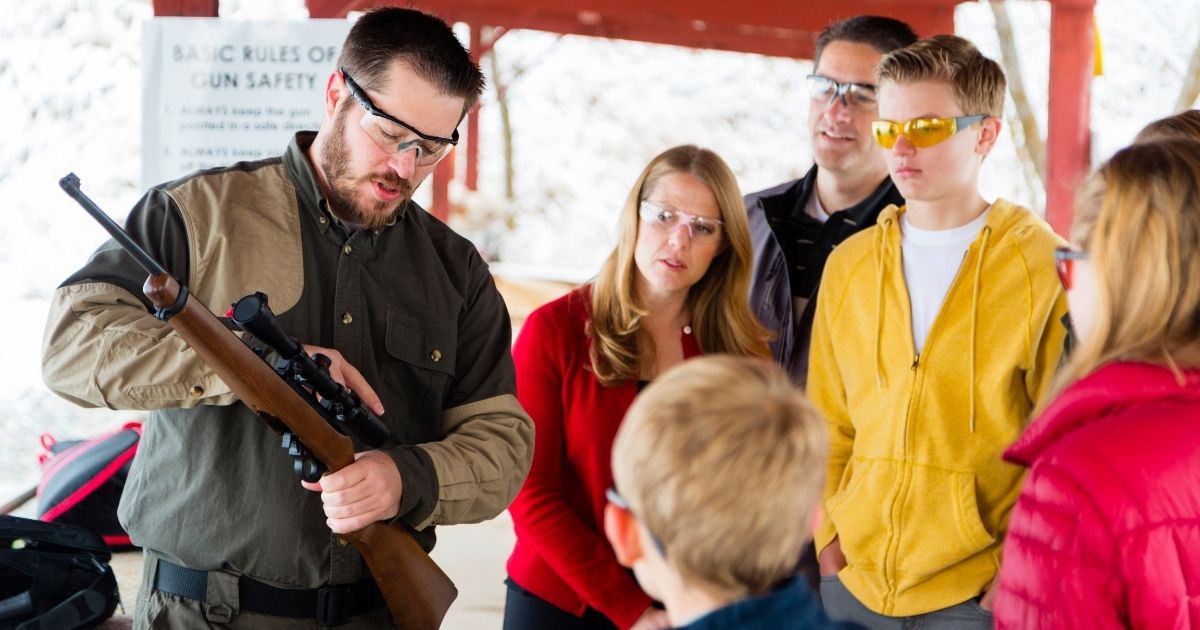
Formal youth shooting programs are one of the best ways to introduce young people to firearms safely. These programs provide structured instruction, supervised practice, and a community of peers — all of which build skills and safety habits systematically.
4-H Shooting Sports
The 4-H Shooting Sports program is one of the largest and most respected youth firearms programs in the country. Operating through the Cooperative Extension System, 4-H Shooting Sports is available in every state and covers multiple disciplines:
- Disciplines: Rifle, pistol, shotgun, archery, muzzleloading, hunting
- Ages: Typically 8 to 18 (varies by state and county)
- Structure: Volunteer-led with certified instructors. Regular practice sessions, county and state competitions.
- Safety emphasis: The program's primary goal is safe firearms handling. Competition is secondary to safety education.
- Cost: Generally very affordable. Minimal enrollment fees; equipment is often provided.
4-H Shooting Sports has introduced millions of young Americans to responsible firearms use. The program's emphasis on safety fundamentals — including the importance of hearing and eye protection — makes it an ideal starting point.
Boy Scouts / Scouts BSA
Scouts BSA offers several shooting-related merit badges and programs:
- Rifle Shooting merit badge: Available to all Scouts. Covers safety, marksmanship fundamentals, and range procedures.
- Shotgun Shooting merit badge: Focuses on shotgun safety and clay target sports.
- Ages: Scouts BSA members are typically 11 to 17.
- Structure: Merit badge instruction at council camps and special events. NRA-certified instructors often lead sessions.
NRA Youth Programs
The National Rifle Association operates several youth-focused programs:
- NRA Youth Explorer Program: Introduces youth to firearm safety and marksmanship in a structured, supervised environment.
- NRA Marksmanship Qualification Program: A progressive skill-building program where shooters earn ratings from Pro-Marksman through Distinguished Expert.
- NRA Collegiate Shooting Programs: For older youth transitioning to college-level competitive shooting.
- Ages: Various programs cover ages from approximately 8 through college age.
USA Shooting and Olympic Development
For young shooters with competitive aspirations, USA Shooting (the national governing body for Olympic shooting sports) offers development pathways:
- Junior Olympic Shooting Program: State and national-level competitions for youth shooters
- Development camps and clinics: Regional programs for promising young athletes
- Ages: Competitive programs typically begin around age 12 to 14
Appleseed Project
The Appleseed Project offers rifle marksmanship clinics (called "Appleseed Shoots") that are open to all ages. Youth under 21 shoot for free (with a paying adult). The program focuses on foundational rifle marksmanship and American heritage.
Safety Considerations for Young Shooters
Bringing a young person to the range is a decision that should be based on the individual child's maturity, physical ability, and interest level. Here are the key safety considerations:
Physical Requirements
- Strength: The child must be able to hold the firearm steady and safely. A firearm that is too heavy leads to muzzle control problems.
- Reach: The shooter must be able to reach the trigger while maintaining proper grip and stance without overextending.
- Recoil management: Start with the lowest recoil option available. A .22 LR rifle or pistol is standard for young beginners. Moving to larger calibers should only happen after demonstrating consistent safe handling at lower levels.
Hearing Protection for Young Shooters
This is critically important. Children's hearing is more susceptible to noise-induced damage than adult hearing. According to the National Institute on Deafness and Other Communication Disorders (NIDCD), approximately 40 million Americans aged 20 to 69 already have noise-induced hearing loss, and recreational shooters are four times more likely to develop hearing loss than non-shooters.
For young shooters, hearing protection is not optional — it is the most important safety item after the firearm itself. Here is what parents should know:
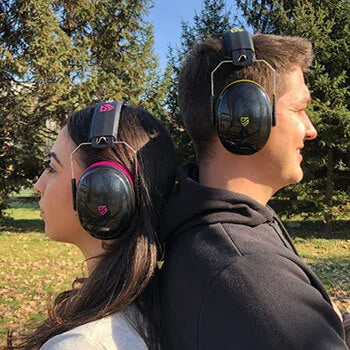
- Always double up: Use NRR 33 foam earplugs under NRR 28 earmuffs for maximum protection, especially at indoor ranges
- Proper fit matters: Earmuffs must seal completely around the ear. Adjust the headband to fit the child's smaller head. Earplugs must be inserted correctly — our guide on how to properly insert earplugs covers the technique.
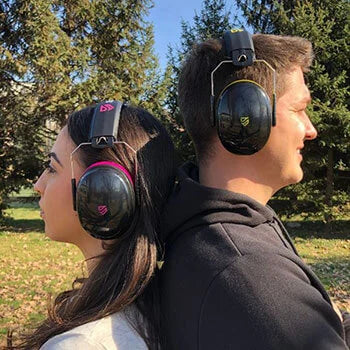
- Electronic earmuffs: For older youth (12+), electronic earmuffs like the TradeSmart TacticalEdge allow the child to hear instructor commands while blocking gunshot noise. This can significantly improve the learning experience.
- Check between strings of fire: Verify that hearing protection has not shifted or been removed. Young shooters sometimes adjust their gear without realizing the consequences.
For a comprehensive overview of hearing protection options, see our guide to the best ear protection for shooting.
Eye Protection for Young Shooters
Eye protection rated to ANSI Z87.1+ is mandatory. The standard requires lenses to withstand a quarter-inch steel ball traveling at 150 feet per second — protection against brass ejection, powder residue, and the rare ricochet. Make sure the glasses fit the child's face properly. Oversized adult glasses that slip down are not providing the protection they should. Read more about choosing the right eye protection.
Psychological Readiness
- Attention span: Can the child focus on safety instructions for an extended period? If a child's attention wanders frequently, they may not be ready for the range.
- Impulse control: Firearms require absolute discipline around trigger control and muzzle direction. A child who struggles with impulse control is not ready.
- Interest level: The child should genuinely want to learn. Forcing a reluctant child onto the range is counterproductive and potentially dangerous.
- Respect for rules: The child must demonstrate the ability to follow rules consistently before being trusted with a firearm.
What Parents Should Know Before the First Range Visit
If you have decided your child is ready for the range, here is how to set them up for a safe, positive first experience:
Before the Visit
-
Teach the four rules at home. Every shooter, regardless of age, must know the four fundamental rules of gun safety before touching a firearm:
- Treat every firearm as if it is loaded
- Never point the muzzle at anything you are not willing to destroy
- Keep your finger off the trigger until ready to shoot
- Be sure of your target and what is beyond it
- Call the range ahead of time. Confirm their minimum age policy, supervision requirements, available firearms for youth, and any required waivers or documentation.
- Consider a formal lesson. Many ranges offer youth-specific introductory classes. Having a professional instructor supplement your guidance adds another layer of safety and learning.
- Get properly fitted protection. Purchase ear and eye protection that fits the child correctly before the range visit. Do not rely on borrowed or range-provided equipment that may not fit properly. Every TradeSmart kit includes access to the free Range Confidence Course, which covers firearms fundamentals online — a great pre-visit resource for both parent and child.
At the Range
- Start slow. Begin with dry-fire practice (no ammunition) to practice grip, stance, and trigger control. Then move to live fire with the lowest available caliber.
- Keep sessions short. Thirty minutes to one hour is plenty for a first visit. Fatigue leads to mistakes.
- Maintain one-to-one supervision. Never leave a young shooter unattended, even for a moment.
- Praise safe behavior, not just accuracy. Reinforce that safety is the priority. A perfect group means nothing if the shooter is not handling the firearm safely.
- Know when to stop. If the child is tired, frustrated, or losing focus, end the session. There is always next time.
After the Visit
- Discuss what the child learned and enjoyed
- Reinforce the safety rules
- Clean the firearm together (a good teaching moment for respect and responsibility)
- If the child is interested in continuing, look into youth programs like 4-H Shooting Sports or Scouts BSA merit badges
Understanding Range Etiquette with Young Shooters
Teaching range etiquette from the beginning builds habits that last a lifetime. Before your visit, review gun range etiquette together. Key points for young shooters include:
- Always follow range officer commands immediately
- Never handle firearms during a cease fire
- Keep the firearm pointed downrange at all times
- Wait for permission before loading
- Clean up your lane (brass, targets, trash) when finished
Learning proper etiquette early means a young shooter develops respect for the range environment and the people sharing it. For a complete guide on what to wear, see our article on what to wear to a gun range.
Age Requirements for Specific Shooting Activities
Beyond general range use, different shooting activities have their own age considerations:
Hunting
Hunting age requirements vary by state and often differ from range use ages. Many states have mentored or apprentice hunting programs for youth as young as 8 to 12. Hunter education courses are typically required and available starting around age 10 to 12.
Concealed Carry Permits
Concealed carry permits (where required) are universally restricted to adults 21 and older, though some states allow 18-year-olds to obtain permits. This applies to carrying outside the range — it does not affect supervised range use.
Firearm Purchases
As noted, federal law sets the purchase age at 18 for long guns and 21 for handguns from FFLs. Private sales may have different age requirements depending on state law. These purchase restrictions do not prevent minors from using family-owned firearms at a range under supervision.
Competition Shooting
Most competitive shooting organizations welcome youth participants with appropriate supervision and safety measures. USPSA, IDPA, NRA competitions, and USA Shooting all have youth divisions or provisions for minor competitors.
Frequently Asked Questions
Can a 10-year-old go to a shooting range?
In most states, yes — provided they are accompanied by a parent or legal guardian and the specific range allows it. Many ranges across the country accept supervised minors as young as 8 to 10. However, the decision should be based on the individual child's maturity, physical ability, and genuine interest. Always call the range ahead of time to confirm their specific youth policy. Start with a .22 LR firearm and ensure the child has properly fitting ear and eye protection.
Do you have to be 18 to go to a shooting range by yourself?
At most ranges, yes. The standard industry practice is to require shooters under 18 to be accompanied by a parent or legal guardian. Some ranges extend this to age 21, particularly for firearm rentals. A few ranges allow unaccompanied 16- or 17-year-olds with a signed parental waiver on file, but this is less common. Check the specific range's policy before visiting.
What is the youngest age a child can shoot a gun?
There is no universal youngest age. Federal law does not set a minimum age for supervised shooting. Some states have no minimum either, leaving the decision to parents and range operators. In practice, most organized youth shooting programs start at age 8, and many ranges set their minimum at 8 to 12 with parental supervision. The real determining factors are the child's physical ability to safely handle the firearm, their maturity level, and their willingness to follow safety rules consistently.
Is hearing protection required for children at shooting ranges?
Yes, and it is even more important for children than for adults. Children's hearing is more vulnerable to noise-induced damage. A single gunshot produces 140 to 175 dB — far above the 85 dB threshold where hearing damage begins, according to NIOSH. Always provide children with properly fitting hearing protection. The best approach is doubling up with NRR 33 earplugs under NRR 28 earmuffs, especially at indoor ranges where sound levels are amplified by enclosed spaces.
Can I bring my teenager to a gun range in California?
Yes, but California has specific requirements. Minors under 18 must be accompanied by a parent, grandparent, or legal guardian (not just any adult). The supervising adult must be present at all times during shooting. Some California ranges set their minimum age at 10 or 12 even with a guardian present. California also restricts which types of firearms minors can use. Contact the specific California range for their current youth policy, and be prepared to show identification and proof of guardianship.
What are the best youth shooting programs for beginners?
The 4-H Shooting Sports program is widely regarded as one of the best starting points for young shooters. It operates in every state, is led by certified volunteer instructors, emphasizes safety above all else, and is very affordable. Scouts BSA offers rifle and shotgun shooting merit badges that provide structured introduction. The NRA Youth Explorer Program and Appleseed Project (free for youth under 21 with a paying adult) are also excellent options. All of these programs teach proper safety habits including the consistent use of hearing and eye protection from day one.
Start With the Right Gear
Whether your young shooter is heading to the range for the first time or joining a 4-H team, proper protection is the foundation of every safe shooting experience. The TradeSmart Premium Kit includes NRR 28 earmuffs, ANSI Z87.1+ safety glasses, NRR 33 foam earplugs for doubling up, and a hard-shell carrying case to keep everything together. Every kit comes with free access to the Range Confidence Course, an online firearms fundamentals program that is valuable for both new shooters and their parents.
TradeSmart Safety products are backed by a 10-year warranty and ship free from Jackson, Wyoming. When you are building a young shooter's safety habits from the ground up, start with gear that sets the right standard.



Leave a comment (all fields required)