





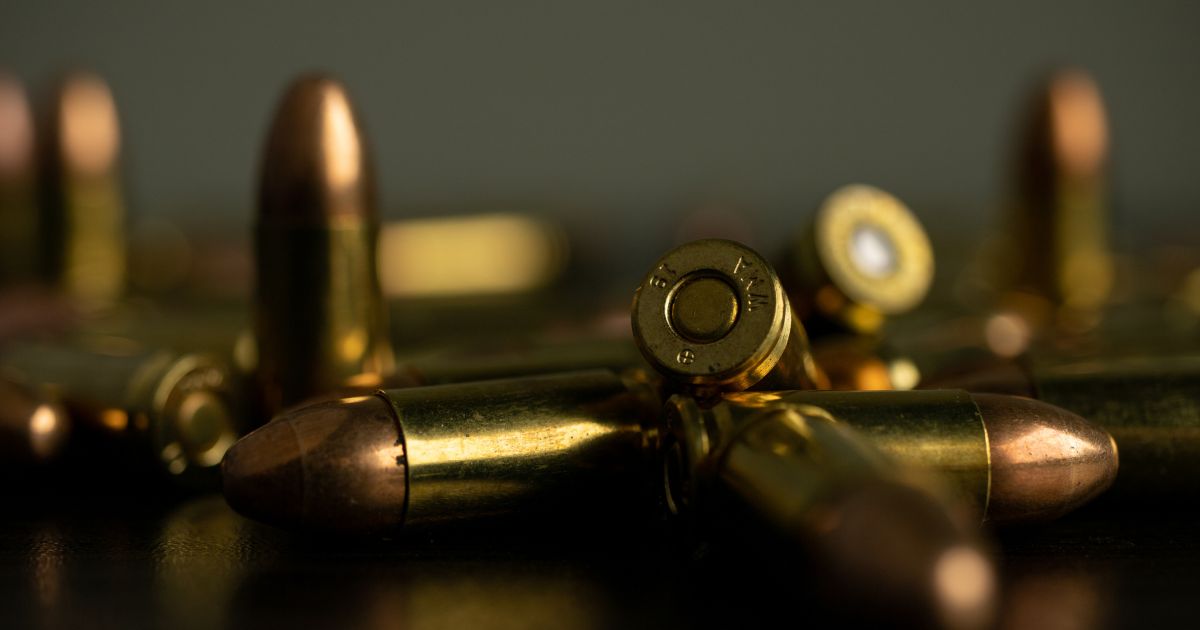

Gun Enthusiasts Weigh In: What Are the Best Ammo Brands?
Walk into any gun store, scroll through any firearms forum, or spend five minutes at a range and you will hear strong opinions about ammunition brands. Some shooters swear by a single manufacturer for everything. Others mix and match depending on the application. And a surprising number of gun owners have never given much thought to the ammunition they feed their firearms beyond whatever was cheapest at the time of purchase.
The truth is that ammunition brand matters — but how much it matters depends entirely on what you are doing with it. Range practice has different requirements than self-defense. Competition shooting demands different qualities than hunting. This guide breaks down the top ammunition brands for 2026, organizes them by use case, and addresses the debates that gun enthusiasts love to argue about.
How to Evaluate Ammunition Brands
Before getting into specific brands, it helps to understand the criteria that separate good ammunition from mediocre ammunition:
- Consistency: Shot-to-shot velocity variation should be minimal. Premium ammunition typically holds velocity standard deviations under 15 fps. Budget ammunition may vary by 30 to 50 fps or more. Consistency affects accuracy, point of impact, and reliability.
- Quality control: Does every round meet spec? Are primers seated correctly? Are bullets properly crimped? Are there no signs of case defects? Reputable brands have rejection rates and inspection processes that keep defective rounds from reaching consumers.
- Brass quality: Thicker, more uniform brass cases seal the chamber better, extract more reliably, and are more suitable for reloading. Cheap ammunition often uses thinner brass or steel cases.
- Projectile design: For self-defense and hunting, bullet construction is critical. Bonded cores, controlled expansion, and weight retention through barriers are engineering features that cost money to develop and manufacture.
- Reliability: Will every round fire when the striker hits the primer? Failure-to-fire rates should be essentially zero for any reputable brand.
The Top Ammunition Brands for 2026
Federal Premium Ammunition
Federal, headquartered in Anoka, Minnesota, is owned by Vista Outdoor and has been manufacturing ammunition since 1922. They produce everything from budget-friendly range ammunition (American Eagle line) to premium self-defense loads (HST) to high-end hunting ammunition (Terminal Ascent, Trophy Bonded).
What they do best: Federal's HST hollow point is widely regarded as the gold standard for self-defense ammunition. It is used by the FBI and numerous law enforcement agencies across the United States. The HST expands reliably through barriers (heavy clothing, drywall, auto glass) while retaining nearly 100% of its weight. Their American Eagle line offers consistent, affordable range ammunition with quality brass cases.
Best for: Self-defense (HST), range practice (American Eagle), hunting (Terminal Ascent, Trophy Bonded Tip)
Hornady
Based in Grand Island, Nebraska, Hornady has built a reputation as an innovator. They developed the FTX bullet used in their Critical Defense and Critical Duty lines, the ELD Match bullet for long-range precision, and the CX (Copper alloy eXpanding) bullet for lead-free hunting. Hornady is a family-owned company that consistently pushes the envelope on bullet design.
What they do best: Hornady's Critical Duty line is another law enforcement favorite, specifically designed to meet FBI protocol testing through all barrier types. Their Precision Hunter line with ELD-X bullets offers exceptional long-range terminal performance. For competition shooters, the Match line with ELD Match bullets provides sub-MOA accuracy potential.
Best for: Self-defense (Critical Defense/Critical Duty), hunting (Precision Hunter), competition (Match), long-range shooting (ELD Match)
Speer
Speer, also under the Vista Outdoor umbrella and based in Lewiston, Idaho, has a more focused product line than Federal or Hornady. Their flagship product is the Gold Dot — a bonded hollow point that has been a law enforcement staple for over 25 years. The bonding process (Uni-Cor) chemically bonds the jacket to the core, preventing jacket separation on impact.
What they do best: The Gold Dot is arguably the most proven self-defense bullet in existence. It has more real-world law enforcement performance data behind it than any competing design. Speer also produces the Lawman line for training — loaded to the same velocity and recoil specifications as Gold Dot, so officers (and civilians) can practice with ammunition that feels identical to their carry loads.
Best for: Self-defense (Gold Dot), law enforcement training (Lawman)
Winchester
Winchester is one of the oldest names in American ammunition, dating back to 1866. Based in East Alton, Illinois (under the Olin Corporation), Winchester produces an enormous range of products from budget range ammunition (USA Forged, white box "USA") to premium hunting loads (Expedition Big Game, Deer Season XP).
What they do best: Winchester's "white box" USA line is a range staple — affordable, generally reliable, and available in nearly every common caliber. Their PDX1 Defender line is a capable self-defense option, and the Silvertip line (recently reintroduced) is a solid mid-tier defensive round. For hunters, the Deer Season XP with its large-diameter polymer tip has proven effective for whitetail at typical hunting distances.
Best for: Range practice (USA/White Box), budget-conscious shooters, hunting (Deer Season XP, Expedition Big Game)
Remington
Remington's ammunition division has had a turbulent few years. After the parent company's bankruptcy in 2020, the ammunition operations were acquired by Vista Outdoor in 2020. Production has stabilized since then, and Remington ammunition is once again widely available. Based on the historic Remington legacy, the brand continues to produce its core product lines.
What they do best: Remington's Green Box UMC line has been a budget-friendly range option for decades. Their Golden Saber self-defense ammunition, with its brass-jacketed hollow point, offers good terminal performance. The Core-Lokt hunting bullet — introduced in 1939 — remains one of the most proven hunting projectiles in history, with a bonded Core-Lokt Tipped version now available.
Best for: Range practice (UMC), hunting (Core-Lokt), value-conscious shooters
CCI
CCI (Cascade Cartridge Inc.), based in Lewiston, Idaho, and also part of Vista Outdoor, is the undisputed leader in rimfire ammunition. If you shoot .22 LR, .22 WMR, or .17 HMR, CCI should be on your radar.
What they do best: CCI's Stinger, Mini-Mag, and Standard Velocity .22 LR loads are the benchmarks against which all other rimfire ammunition is measured. Their Quiet-22 loads reduce noise to approximately 68 dB (from a rifle barrel), and their Clean-22 line uses a polymer bullet coating to reduce lead fouling. For rimfire self-defense (in .22 LR or .22 WMR handguns), CCI's Velocitor and Maxi-Mag loads are among the few rimfire options that expand reliably.
Best for: Rimfire shooting (all applications), suppressed shooting (Quiet-22, Standard Velocity)
PMC
PMC (Poongsan Munitions Corporation) is a South Korean manufacturer that supplies ammunition to the South Korean military. Their commercial ammunition, particularly the Bronze line, has earned a solid reputation for quality at a competitive price point.
What they do best: PMC Bronze is one of the best value-for-money range ammunition options available. Quality control is consistently good — this is a military ammunition manufacturer, and those standards carry over to their commercial products. Brass cases are reloadable, primers are reliable, and accuracy is better than you would expect at the price point.
Best for: Range practice, budget-conscious shooters, reloaders (quality brass)
Sellier & Bellot
Sellier & Bellot (S&B) is a Czech manufacturer with a history dating back to 1825 — making it one of the oldest ammunition manufacturers in the world. Now owned by the Colt CZ Group (formerly Czechoslovak Group), S&B produces ammunition for military, law enforcement, and commercial markets worldwide.
What they do best: S&B offers excellent quality at prices that compete with budget domestic brands. Their brass is thick and uniform, making it highly prized by reloaders. Quality control is consistent, and accuracy tends to be above average for the price category. They also produce calibers that domestic manufacturers sometimes neglect (like 6.5x55 Swedish, 7.62x54R, and various European sporting calibers).
Best for: Range practice, reloaders (premium brass quality), European calibers, budget-conscious shooters who do not want to sacrifice quality
Fiocchi
Fiocchi is an Italian manufacturer founded in 1876, with U.S. operations based in Ozark, Missouri. They produce centerfire, rimfire, and shotshell ammunition, with particular strength in shotgun ammunition and niche centerfire calibers.
What they do best: Fiocchi's shotshell ammunition is particularly well-regarded in competitive clay shooting circles. Their centerfire pistol ammunition is clean-burning, consistent, and competitively priced. The Extrema line offers premium hunting and defense ammunition with respected projectiles (including Hornady bullets in some loads). Fiocchi also manufactures in calibers and loadings that other brands do not offer, including specific loadings for cowboy action shooting.
Best for: Shotgun sports, range practice, niche calibers, cowboy action shooting
Best Ammo by Category
Range and Practice Ammunition
For pure range practice, your priorities are reliability, acceptable accuracy, and low cost per round. You do not need match-grade projectiles or premium brass. You need ammunition that goes bang every time and hits reasonably close to your point of aim.
Top picks:
- Federal American Eagle — consistent, clean-burning, quality brass
- PMC Bronze — excellent value, military-grade QC
- Sellier & Bellot FMJ — slightly above-average accuracy at a budget price
- Winchester USA (White Box) — widely available, acceptable quality
- Remington UMC — affordable, adequate for range work
When shooting at the range, ammunition quality is important, but so is your safety gear. Hearing damage is cumulative, and practice sessions expose you to far more total noise than the occasional hunting trip. According to NIOSH, sustained exposure above 85 dB causes progressive hearing loss, and a single gunshot from a 9mm pistol produces approximately 160 dB. Make sure you are wearing proper ear protection and ANSI Z87.1-rated eye protection for every range session.
Self-Defense Ammunition
Self-defense ammunition is the one category where you should never compromise on quality. This is ammunition that may save your life. You need reliable ignition, consistent expansion through barriers, adequate penetration (12 to 18 inches in calibrated ballistic gelatin per FBI protocol), and weight retention.
Top picks:
- Federal HST — FBI-selected, consistent expansion, near 100% weight retention
- Speer Gold Dot — most field-proven defensive bullet, bonded construction
- Hornady Critical Duty — optimized for full-size duty pistols, barrier-blind performance
- Hornady Critical Defense — optimized for short-barreled carry pistols, FTX bullet resists clogging
- Winchester PDX1 Defender — bonded bullet, consistent performance
A critical point: you should always function-test your self-defense ammunition in your specific firearm. Load at least two full magazines of your chosen defensive load and fire them through your carry gun to confirm reliable feeding, extraction, and ejection. Some pistols are sensitive to specific bullet profiles, and it is far better to discover a compatibility issue at the range than during a defensive encounter.
Match and Competition Ammunition
Competition shooters need the tightest possible accuracy and the most consistent velocities. Every fps of variation translates to vertical dispersion on target. Match-grade ammunition uses carefully weighed charges, precision-seated bullets, and quality-checked brass to minimize shot-to-shot variation.
Top picks:
- Hornady Match (ELD Match bullet) — sub-MOA accuracy potential in quality rifles, excellent for both rifle and pistol competition
- Federal Gold Medal Match — the benchmark for precision rifle ammunition, also available in pistol calibers
- Lapua — Finnish-made, considered by many to be the finest mass-produced match ammunition available (primarily rifle calibers)
- Black Hills Match — small-batch production with exceptional quality control, used by the U.S. military's marksmanship program
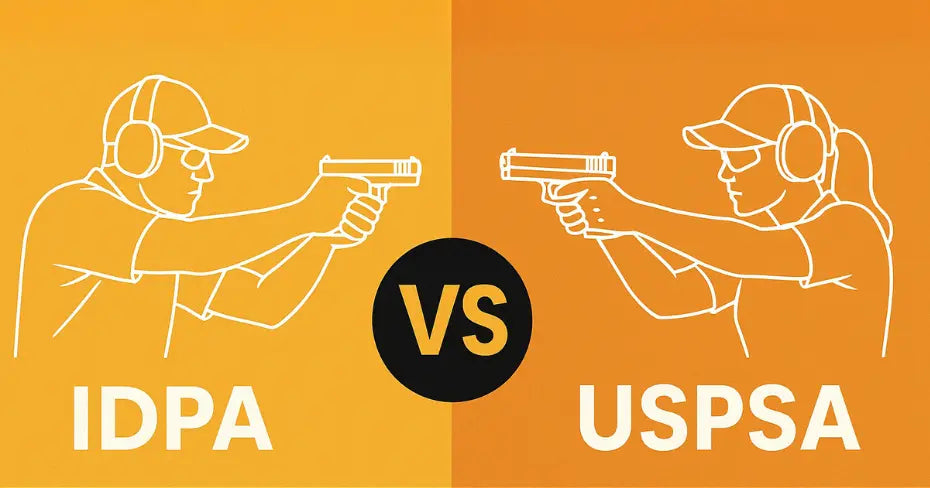
For practical shooting sports (USPSA, IDPA, 3-Gun), accuracy requirements are less extreme. Many competitors shoot handloads tuned to "make power factor" with minimum recoil, or use mid-grade factory ammunition like Federal American Eagle or S&B. The priority shifts from pure accuracy to reliable function, controllable recoil, and meeting the minimum power factor for their division.
Hunting Ammunition
Hunting ammunition demands controlled expansion, deep penetration, and high weight retention. The bullet must expand to create a lethal wound channel while penetrating deep enough to reach vital organs. These are engineering challenges that require sophisticated bullet designs.
Top picks:
- Federal Terminal Ascent — bonded construction with Slipstream polymer tip, excellent weight retention and long-range performance
- Hornady Precision Hunter (ELD-X) — heat-resistant polymer tip, InterLock ring, consistent expansion from 200 to 800+ yards
- Barnes VOR-TX — all-copper construction (lead-free), 100% weight retention, required in California and some other jurisdictions
- Nosler AccuBond — bonded core, high ballistic coefficient, consistent expansion across a wide velocity range
- Remington Core-Lokt Tipped — modernized version of the legendary Core-Lokt, with a polymer tip for improved ballistic coefficient
The Brass vs. Steel Case Debate
Few ammunition topics generate more heated discussion than brass versus steel-cased ammunition. Here is what actually matters:
Brass-Cased Ammunition
- Advantages: Better chamber seal (brass expands and contracts with chamber pressure more uniformly), smoother extraction, reloadable (typically 5 to 10 times per case), generally loaded to tighter tolerances, less abrasive to extractors and chamber walls
- Disadvantages: Higher cost (brass is significantly more expensive than steel as a raw material)
Steel-Cased Ammunition
- Advantages: Significantly cheaper (often 30 to 50% less than equivalent brass-cased loads), adequate for range practice and training
- Disadvantages: Not reloadable, harder on extractors over time (though modern extractors handle it well), some ranges prohibit it (due to backstop concerns or because they sell spent brass), often loaded with bimetal jackets that attract magnets and can damage steel targets, generally less consistent velocities
The verdict: For range practice where you are not reloading, steel-cased ammunition from brands like Tula, Wolf, or Barnaul is a reasonable cost-saving measure. It will not damage your firearm over a normal lifespan of shooting. For self-defense, hunting, competition, or any application where reliability and accuracy matter, stick with brass. And if you reload, brass is the only option.
Reloading Considerations
Reloading (handloading) your own ammunition is a natural progression for many serious shooters. It offers several advantages:
- Cost savings: Reloaded ammunition typically costs 40 to 60% less than factory ammunition, with savings increasing for larger calibers and premium loads
- Custom performance: You can tune loads to your specific firearm for optimal accuracy, recoil characteristics, and power factor
- Component availability: During ammunition shortages (which have become cyclical events), reloaders with component stockpiles can continue shooting
- Caliber flexibility: Some calibers are prohibitively expensive or nearly impossible to find in factory ammunition — reloading is the only practical option for many wildcat and obscure calibers
If you plan to reload, your choice of factory ammunition matters because you are also choosing your brass. Sellier & Bellot, Lapua, Starline, and Federal produce brass that reloaders consistently rate highest for uniformity and longevity. PMC brass is also well-regarded. Avoid cheap brass from unknown manufacturers if reloading quality is a priority.
Safety note: Reloading requires education and attention to detail. Using incorrect powder charges, wrong components, or improper techniques can result in dangerous over-pressure situations. Consult published reloading manuals (Hornady, Lyman, Sierra, and Nosler all produce excellent references) and start with minimum loads, working up carefully.
How to Store Ammunition Properly
Proper ammunition storage extends shelf life and ensures reliability. Modern factory ammunition stored correctly will remain reliable for decades. Here are the fundamentals:
- Temperature: Store ammunition in a cool, stable environment. Avoid attics, car trunks, and other locations with extreme temperature swings. Ideal temperature is between 55 and 85 degrees Fahrenheit.
- Humidity: Moisture is ammunition's greatest enemy. Store in a dry environment with relative humidity below 50% if possible. Desiccant packets in storage containers help control moisture.
- Containers: Military-surplus ammo cans with rubber gaskets provide excellent sealed storage. They are airtight, water-resistant, and stackable. Alternatively, quality plastic ammunition boxes work well.
- Separation: Store different calibers in separate, clearly labeled containers. Mixing calibers in the same container creates the risk of loading the wrong ammunition into a firearm — a potentially catastrophic error.
- Security: Store ammunition in a locked container separate from firearms when possible. Many states have specific legal requirements for ammunition storage, especially in households with children.
- Rotation: Use a "first in, first out" system. Shoot older ammunition first and replace it with fresh stock. This is particularly important for self-defense ammunition — cycle your carry ammunition every 6 to 12 months and use the rotated-out rounds for practice.
Protecting Your Hearing and Eyes at the Range
No matter what ammunition brand you choose, the noise it produces is the same — and it is damaging. According to the NIDCD, approximately 40 million Americans aged 20-69 have noise-induced hearing loss. Recreational shooters are four times more likely to develop hearing loss than non-shooters.
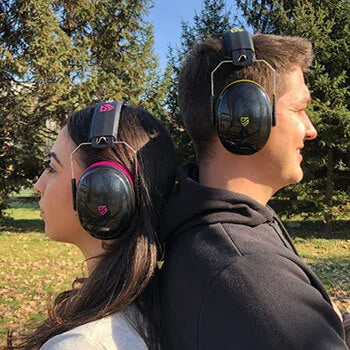
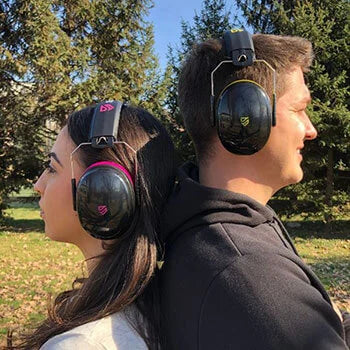
Every range session demands quality hearing protection. TradeSmart Safety's shooting kits offer NRR 28 earmuffs paired with ANSI Z87.1+ safety glasses — reliable, American-certified protection backed by a 10-year warranty. For shooters who prefer electronic hearing protection that amplifies conversation while blocking harmful impulse noise, the TacticalEdge electronic earmuffs provide NRR 24 protection with directional sound amplification. Every TradeSmart product ships free and includes access to their Range Confidence Course — a solid educational resource for shooters at any level.
For more on hearing protection, read our guides on passive vs. electronic earmuffs and why ear protection is essential when shooting. And for comprehensive range preparation, our article on range bag essentials covers everything you need to bring to the firing line.
Frequently Asked Questions
What is the best overall ammunition brand?
There is no single "best" brand because ammunition performance is application-specific. Federal is the strongest all-around choice due to the breadth and quality of their product lines — American Eagle for range practice, HST for self-defense, and Terminal Ascent for hunting. Hornady is the best choice for long-range precision shooting and also offers excellent defensive and hunting ammunition. For budget-conscious range shooting without sacrificing reliability, PMC Bronze and Sellier & Bellot are hard to beat.
Does ammunition brand matter for range practice?
For pure range practice where you are building fundamentals — grip, trigger control, sight picture — ammunition brand matters less than it does for other applications. Any ammunition from a reputable manufacturer (Federal, Winchester, PMC, S&B, Remington, Fiocchi) will function reliably and provide acceptable accuracy for practice purposes. The most important factor for range ammunition is reliability — a failure to fire disrupts your training rhythm and can be a safety concern.
How often should I rotate my self-defense ammunition?
Most experts recommend rotating carry ammunition every 6 to 12 months. This is not primarily a reliability concern — modern factory ammunition stored properly will last decades. The issue is that ammunition that is repeatedly chambered (loaded and unloaded from the chamber during daily carry) can develop bullet setback, where the bullet is pushed slightly deeper into the case. This increases chamber pressure and can be dangerous. Inspect your carry ammunition regularly for signs of bullet setback, case dents, or corroded primers. Use rotated-out carry ammunition for practice.
Is steel-cased ammunition bad for my gun?
Steel-cased ammunition will not damage a modern firearm over a normal volume of shooting. The steel cases are softer than your barrel and chamber steel. However, bimetal bullet jackets (common in steel-cased imports) are harder than pure copper jackets and will wear a barrel slightly faster than brass-cased ammunition with copper-jacketed bullets. Over thousands of rounds, this can add up — but for most recreational shooters, the barrel will last far longer than they will shoot. The primary downside is that steel cases are not reloadable and some ranges prohibit them.
What is the difference between +P and standard ammunition?
+P ammunition is loaded to higher pressures than standard SAAMI specifications, producing higher velocities and muzzle energy. For example, standard 9mm operates at a maximum average pressure of 35,000 PSI, while 9mm +P is rated at 38,500 PSI. The result is approximately 50 to 100 fps additional velocity, translating to 10 to 15 percent more muzzle energy. Only use +P ammunition in firearms rated for it by the manufacturer — the higher pressures increase wear on the barrel, slide, and frame. Most modern handguns from major manufacturers are rated for +P, but always verify in your owner's manual.
Should I buy ammunition in bulk?
Buying range ammunition in bulk (500 to 1,000 round cases) typically saves 10 to 20 percent per round compared to buying individual boxes. If you shoot regularly (200+ rounds per month), bulk purchasing makes financial sense. Store bulk ammunition properly in a cool, dry location in sealed containers. The main caveat is to buy bulk only after you have confirmed that the specific ammunition functions reliably in your firearm — buying 1,000 rounds of something your gun does not like is an expensive lesson. Start with a single box, test it, then buy in bulk if it performs well.





TradeSmart Safety
May 09, 2024
Thanks for your insights MLone, it sounds like you have a nuanced understanding of the different demands these two types of shooting put on your equipment and technique. It’s great to see how each discipline shapes its own unique set of requirements and preferences!