








Why Proper Earplug Insertion Matters More Than You Think
You bought a pack of earplugs rated at NRR 33. You rolled them up, stuffed them in, and headed to the firing line. But here's the problem: if those earplugs aren't inserted correctly, you could be getting 50% less protection than the label promises—or worse.
According to NIOSH research, real-world earplug performance often falls dramatically short of laboratory-tested Noise Reduction Ratings. The agency recommends derating foam earplugs by 50% and other earplug types by as much as 70% to account for typical fit issues in the field. That means your NRR 33 foam earplugs might only deliver NRR 16 or less if inserted incorrectly.
When you consider that a single gunshot produces 140 to 175 decibels depending on caliber—far above the 85 dB threshold where OSHA says hearing damage begins—the margin for error shrinks to zero. A poorly fitted earplug at the range isn't just uncomfortable. It's a direct path to permanent, irreversible hearing loss.
This guide covers exactly how to insert earplugs the right way, which earplug types work best for shooting, the most common insertion mistakes, and when you should double up with earmuffs for maximum protection. Whether you're heading to the range for the first time or the hundredth, getting this fundamental right is non-negotiable.
Types of Earplugs for Shooting: Which One Is Right for You?
Not all earplugs are created equal. The type you choose affects your noise reduction, comfort, and how easy it is to get a proper seal. Here's a breakdown of the four main categories used by shooters.
Foam Earplugs (NRR 25–33)
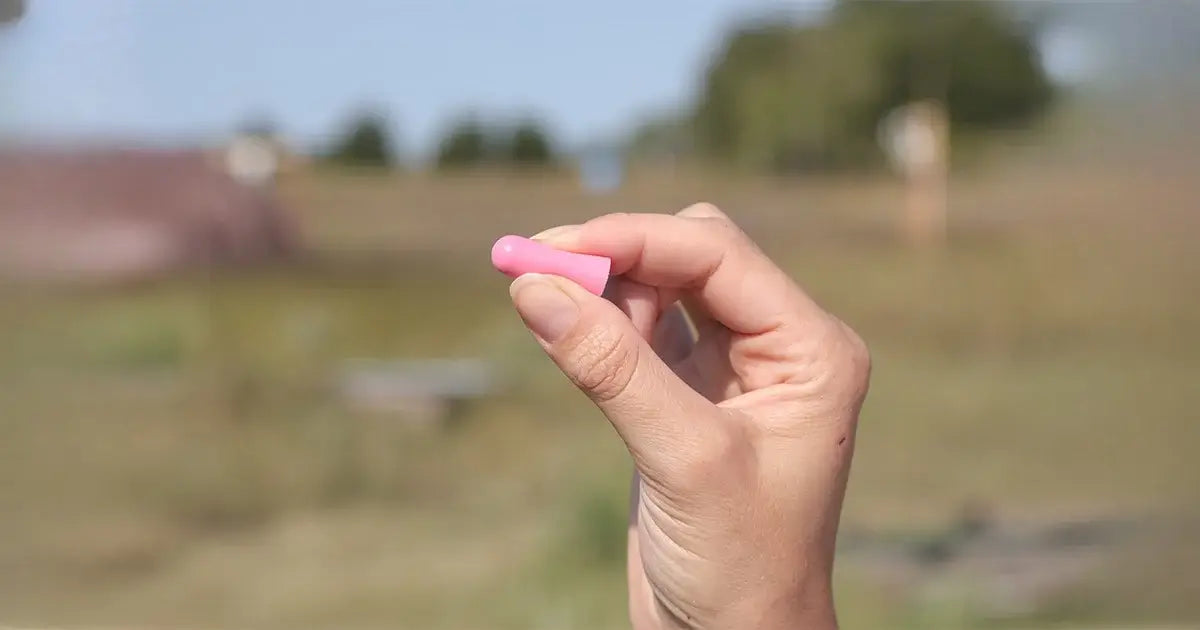
Foam earplugs are the gold standard for maximum noise reduction at the shooting range. Made from slow-recovery polyurethane foam, they compress down to a thin cylinder for insertion and then expand to fill the unique shape of your ear canal. This expansion creates an airtight seal that blocks more sound than any other disposable earplug type.
Top-rated foam earplugs reach NRR 33—the highest noise reduction rating available in any earplug. That makes them ideal for firearms use, where impulse noise from gunshots can cause immediate damage. The trade-off is that they require proper insertion technique to deliver their rated protection, which is exactly what we'll cover in detail below.
Foam earplugs are also the most affordable option, making them practical for bulk use. TradeSmart's NRR 33 earplugs come in a 200-pair bulk pack, so you always have a fresh pair ready for every range session.
Silicone Earplugs (NRR 22–28)
Silicone earplugs are pre-molded and reusable. Unlike foam, they don't need to be rolled before insertion—you simply press them into your ear canal. They're convenient and easy to clean, but they typically offer lower noise reduction than foam because they can't conform as precisely to the irregular shape of each individual ear canal.
For shooting, silicone earplugs work in a pinch, but their NRR usually tops out around 25–28, which leaves less margin for error when you're exposed to 160+ dB gunshots.
Flanged Earplugs (NRR 20–27)
Flanged earplugs feature two, three, or four soft silicone flanges (sometimes called "Christmas tree" earplugs) that create progressive seals within the ear canal. They're reusable, easy to insert and remove, and some models include a stem or cord for quick handling between shots.
Their noise reduction tends to be moderate—typically NRR 20 to 27. Some flanged designs include a mechanical filter that allows normal conversation to pass through while still blocking impulse noise from gunshots, making them popular at ranges where communication is important.
Custom-Molded Earplugs (NRR 25–33)
Custom-molded earplugs are created from impressions of your specific ear canals, usually taken by an audiologist. Because they're shaped exactly to your anatomy, they offer an excellent seal with minimal insertion hassle. Studies show custom-molded earplugs achieve up to 90% of their rated protection under real-world conditions, compared to just 30–50% for foam earplugs with typical (often incorrect) insertion.
The downside? Cost. Custom earplugs typically run $100–$300+ per pair. For most recreational shooters, properly inserted foam earplugs deliver the same NRR 33 protection at a fraction of the price.
Quick NRR Comparison Table
| Earplug Type | NRR Range | Reusable? | Best For |
|---|---|---|---|
| Foam | 25–33 | No (disposable) | Maximum noise reduction, bulk use |
| Silicone | 22–28 | Yes | Convenience, quick insertion |
| Flanged | 20–27 | Yes | Communication + protection |
| Custom-Molded | 25–33 | Yes | Perfect fit, long-term investment |
For a deeper dive into ear protection options beyond earplugs, check out our guide on the best ear protection for shooting.
How to Put in Foam Earplugs: Step-by-Step Guide
Foam earplugs are the most effective disposable hearing protection available, but only when inserted correctly. Follow these steps every single time and the process becomes second nature within a few range sessions.
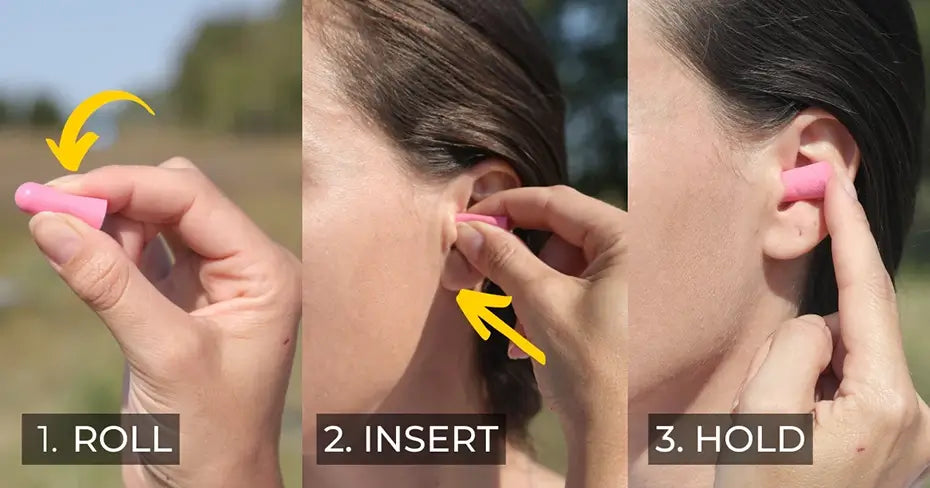
Step 1: Clean Your Hands
Start with clean, dry hands. Oils, dirt, or moisture on your fingers will make the compressed foam slippery and harder to insert. Dirt can also introduce bacteria into the ear canal, increasing the risk of infection with repeated use.
Step 2: Roll the Earplug Into a Tight, Thin Cylinder
This is the most critical step—and the one most people get wrong.
Place the earplug between your thumb and fingers and roll it (don't pinch or squeeze) into the thinnest, tightest cylinder you can. The goal is to compress the foam evenly along its full length. A well-rolled earplug should be about the diameter of a pencil or slightly thinner.
Work quickly. Once you release pressure, the foam immediately begins to expand, and you have roughly 10 to 15 seconds to get it into position before it's too large to slide into the ear canal.
Step 3: Pull Your Ear Up and Back
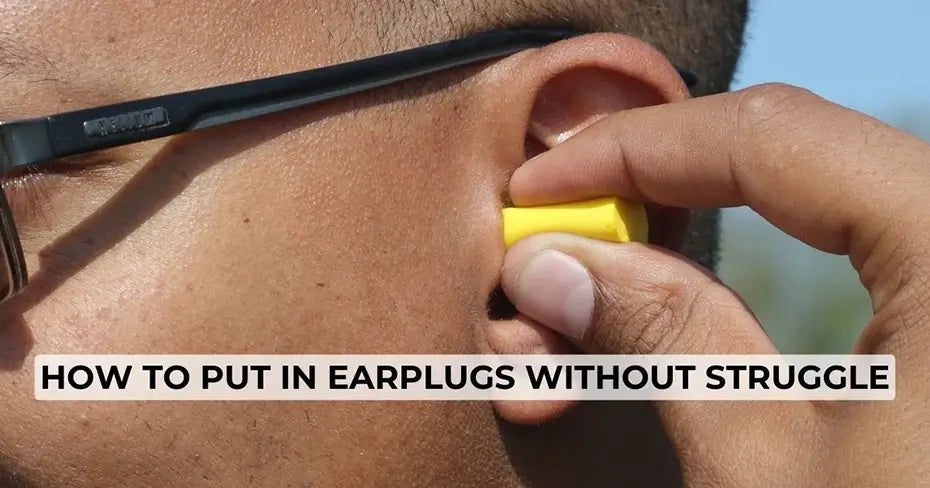
With your free hand, reach over your head and grasp the top of your outer ear (the pinna). Gently pull it up and back. This straightens the natural curve of the adult ear canal, creating a direct path for the earplug to slide in.
This step is essential. Without it, the ear canal's natural S-curve will block the earplug from reaching the proper depth, no matter how well you rolled it.
Step 4: Insert the Earplug Deep Into the Ear Canal
While still holding your ear open, slide the compressed earplug into the ear canal with a gentle, steady push. Insert it until approximately three-quarters of the earplug is inside the ear canal. Only a small portion should be visible or protrude from the ear opening—just enough to grasp with your thumb and forefinger when it's time to remove it.
Don't jam it in aggressively, but don't be timid either. A shallow insertion is the number one reason earplugs fail to protect your hearing.
Step 5: Hold in Place for 20–30 Seconds
Keep your fingertip gently pressed against the end of the earplug while the foam expands. Hold for at least 20 to 30 seconds. This gives the foam time to fill the full contour of your ear canal and create an airtight seal.
Resist the urge to let go early. If you release too soon, the expanding foam can push itself partially out of the canal before it's fully seated.
Step 6: Test the Seal
Once the foam has fully expanded, check the fit:
- The hum test: Hum or speak aloud. Your voice should sound deep, muffled, and more internal—like you're hearing yourself from inside your head. If your voice sounds normal, the seal isn't tight enough.
- The visual check: Look in a mirror or ask someone nearby. When viewed from the front, a properly inserted earplug should be barely visible or not visible at all. If the earplug is clearly protruding from the ear opening, it's too shallow.
- The cup test: Cup both hands tightly over your ears, then release. If the earplugs are properly sealed, there should be little to no change in the sound level you hear when you cup and release. A large difference means sound is leaking around the earplug.
If any test fails, remove the earplug, re-roll it, and start over. A fresh roll takes five seconds. Hearing loss is forever.
Common Earplug Insertion Mistakes (And How to Fix Them)
According to the CDC's hearing protection guidelines, most earplug failures come down to user error, not product deficiency. Here are the mistakes we see most often at the range—and how to fix each one.
Mistake #1: Not Rolling the Earplug Tightly Enough
This is the single most common problem. Many people give the earplug a light squeeze instead of rolling it down to a tight, thin cylinder. A loosely compressed plug is too wide to reach the proper depth in the ear canal. It seats shallow, and the foam expands before it's past the first bend.
Fix: Roll the earplug between your fingertips with firm, even pressure until it's pencil-thin. It should hold its compressed shape for several seconds before it starts expanding.
Mistake #2: Inserting Too Shallow
If you can clearly see the full earplug sticking out of someone's ear from a few feet away, it's not in far enough. A shallow-seated earplug sits in the outer ear canal where it provides almost no meaningful noise reduction—sound simply travels around it.
Fix: About three-quarters of the earplug should be inside the ear canal. Only a small nub should be visible, just enough to grab for removal. If the earplug falls out on its own, it was never deep enough.
Mistake #3: Skipping the Ear Pull
Inserting the earplug without pulling the ear up and back leaves the ear canal in its natural curved position. The earplug hits the first bend, meets resistance, and the user gives up or assumes it's in far enough.
Fix: Always reach over your head with the opposite hand and pull the top of the ear up and back. This straightens the canal and makes insertion significantly easier and deeper.
Mistake #4: Releasing Too Early
Letting go of the earplug immediately after insertion allows the expanding foam to push itself out of the canal before a proper seal is formed. Within seconds, the plug has migrated to a shallow position.
Fix: Hold the earplug in place for a full 20–30 seconds. Be patient. The foam needs time to expand and conform to the shape of your ear canal.
Mistake #5: Reusing Worn-Out Foam Earplugs
Disposable foam earplugs are designed for single or limited use. After several uses, the foam loses its elasticity and doesn't expand fully, leaving gaps in the seal. Dirt and earwax buildup also degrades performance.
Fix: Use a fresh pair for every range session. When you buy in bulk—like TradeSmart's 200-pair pack of NRR 33 earplugs—the per-pair cost is low enough that there's no reason to reuse worn plugs.
Mistake #6: Using the Wrong Size
Ear canals vary significantly from person to person. If a standard earplug feels impossible to insert or keeps falling out despite proper technique, the size may not be right for your anatomy.
Fix: Try a different earplug diameter or shape. Some manufacturers offer small/regular/large options. If no disposable plug fits comfortably, consider custom-molded earplugs or switching to over-ear earmuffs. Our guide on passive vs. electronic earmuffs can help you explore those options.
Understanding NRR: What Those Numbers Actually Mean for Shooters
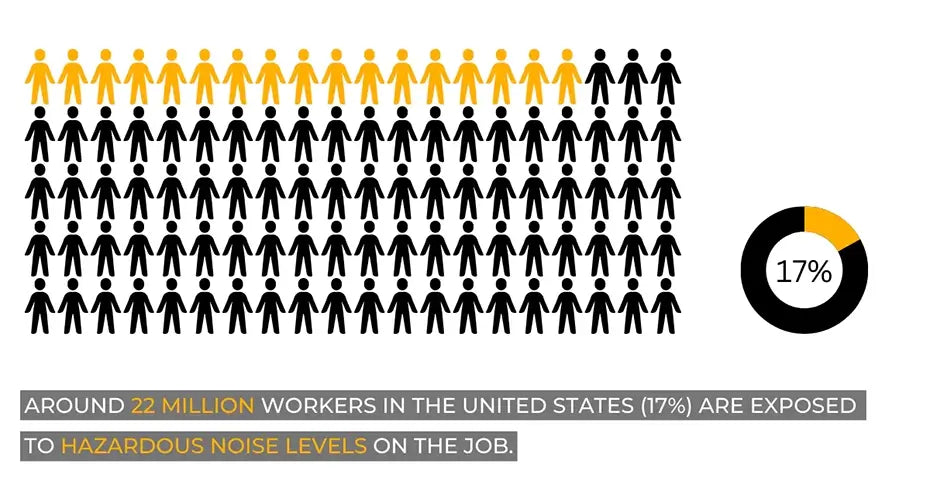
The Noise Reduction Rating (NRR) is a single-number rating, measured in decibels, that indicates how much a hearing protector reduces noise exposure. It's determined through standardized laboratory testing governed by the EPA.
But here's what most people don't realize: the NRR on the package does not translate directly to real-world decibel reduction.
How to Calculate Real-World Protection
OSHA uses a simple formula to estimate the actual noise reduction you receive from earplugs:
Estimated Protection = (NRR - 7) ÷ 2
For an NRR 33 foam earplug:
(33 - 7) ÷ 2 = 13 dB of estimated real-world noise reduction
That might seem low compared to the "33" on the label, but this formula is intentionally conservative. It accounts for the wide variation in how people actually insert and wear earplugs in the real world. With correct insertion technique—the kind we described above—your actual noise reduction will be significantly higher than this OSHA estimate, closer to the full rated value.
What This Means at the Range
Consider a 9mm handgun, which produces approximately 160 dB per shot. Even using the conservative OSHA formula with NRR 33 earplugs, the noise exposure drops to roughly 147 dB. With proper insertion technique that approaches the full rating, noise exposure could drop to approximately 130 dB or lower.
That's still above the 140 dB threshold where immediate hearing damage can occur from a single impulse. Which brings us to the most important recommendation for any shooter: dual protection.
When to Combine Earplugs With Earmuffs (Dual Protection)
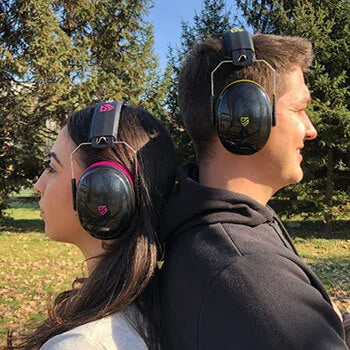
NIOSH recommends dual hearing protection—wearing earplugs underneath earmuffs—for any noise exposure above 100 dB. Since virtually all firearms exceed 140 dB, dual protection should be your default at the range, not an optional extra.
How Dual Protection Works
When you wear earplugs and earmuffs together, the noise reduction doesn't simply add up. According to OSHA guidelines, you take the higher NRR of the two devices and add 5 dB. For example:
- NRR 33 foam earplugs + NRR 28 earmuffs = effective NRR of approximately 36–38
- This provides roughly 5–10 additional decibels of real-world protection beyond either device alone
That extra margin can be the difference between safe exposure and cumulative damage, especially during extended shooting sessions or when firing high-caliber firearms.
Practical Setup for Dual Protection
- Insert your earplugs first. Follow the roll-pull-insert-hold method described above and verify the seal before proceeding.
- Place earmuffs over the earplugs. Adjust the headband so the ear cups sit flush against your head. Make sure no part of the earplug or your outer ear breaks the seal of the earmuff cushion.
- Check for gaps. The stems of safety glasses and the frame of eye protection can create small gaps in the earmuff seal. Adjust your glasses so the temples pass under the cushion with minimal disruption.
TradeSmart's shooting kits are designed with dual protection in mind. The Shooting Range Kit pairs NRR 28 earmuffs with ANSI Z87.1+ safety glasses, and when combined with NRR 33 earplugs, you get comprehensive dual protection at the range. Every kit also includes a free Range Confidence Course covering firearms fundamentals.
For shooters who want to maintain situational awareness while still having strong protection, our guide on passive vs. electronic earmuffs breaks down how electronic earmuffs amplify conversation while still blocking harmful impulse noise.
TradeSmart NRR 33 Earplugs: Built for the Range
TradeSmart's High-Performance NRR 33 Earplugs are designed specifically for shooters who want the highest available noise reduction in a disposable foam earplug.
What You Get
- NRR 33 rating—the maximum available in any earplug
- 200-pair bulk pack—enough for a full year of weekly range sessions with fresh pairs every time
- Slow-recovery foam—gives you ample time to insert before expansion begins
- Comfortable fit—contoured shape that conforms to the ear canal without excessive pressure
- 10-year warranty and free shipping on every order
At this NRR level, proper insertion technique (following the steps above) delivers the maximum passive noise reduction you can achieve from any earplug on the market. And at 200 pairs per pack, there's never a reason to reuse a degraded pair.
For complete range protection, pair these earplugs with a TradeSmart Earmuff & Eye Protection Kit for dual hearing protection plus impact-rated safety glasses—everything you need in one package.
Frequently Asked Questions
How far should earplugs go in your ear?
About three-quarters of the earplug should be inside the ear canal. When properly inserted, only a small portion of the earplug should be visible at the ear opening—just enough to grasp between your thumb and forefinger for removal. If someone looking at you from the front can clearly see the full earplug protruding, it's too shallow. A properly inserted foam earplug reaches past the first bend in the ear canal, which is where the seal needs to be formed for effective noise reduction.
Why do my earplugs keep falling out at the range?
The most common cause is insufficient compression before insertion. If you're not rolling the earplug into a tight, thin cylinder, it can't reach the proper depth in the ear canal. Other causes include not pulling the ear up and back during insertion, releasing the earplug before the foam has time to expand (hold for 20–30 seconds), or using earplugs that are the wrong size for your ear canal. Jaw movement from talking can also gradually work a poorly seated earplug loose.
Can earplugs damage your ears if inserted too deep?
It's extremely unlikely with standard foam earplugs. The ear canal is approximately 25mm (about 1 inch) long in adults, and the eardrum sits at the end of it. A foam earplug is not rigid enough to puncture the eardrum, and most people will feel discomfort well before reaching that depth. That said, never force an earplug with a hard object like a pen, and never insert anything rigid into the ear canal. Insert with your fingertip only, using gentle steady pressure.
What NRR do I need for shooting?
For firearms use, you want the highest NRR available. Gunshots produce 140–175 dB depending on caliber, and a single shot above 140 dB can cause immediate permanent hearing damage. NRR 33 foam earplugs provide the maximum earplug protection available. However, because even NRR 33 may not fully protect against all firearms noise, NIOSH recommends dual protection—wearing NRR 33 earplugs under NRR 28 earmuffs—for shooting environments.
Are foam earplugs better than silicone for shooting?
For pure noise reduction, yes. Foam earplugs achieve the highest NRR ratings (up to 33) because the expanding foam conforms precisely to the shape of your individual ear canal, creating an airtight seal. Silicone and flanged earplugs typically max out around NRR 25–28. The caveat is that foam earplugs require correct insertion technique to deliver their rated protection—without proper technique, a well-fitted silicone earplug may actually outperform a poorly inserted foam plug.
How often should I replace foam earplugs?
Disposable foam earplugs should be replaced after each use or at minimum after each range session. Over time, foam loses its elasticity, earwax and moisture accumulate on the surface, and the plug can no longer expand fully to create a proper seal. This is why buying in bulk—such as TradeSmart's 200-pair pack—is the most practical and economical approach. A fresh pair every session ensures maximum NRR 33 protection without compromise.
Protect Your Hearing the Right Way
Learning how to put in earplugs correctly is one of the simplest things you can do to protect your hearing—and one of the most commonly done wrong. According to the NIDCD, approximately 40 million Americans aged 20–69 already have noise-induced hearing loss, and recreational shooters are 4 times more likely to develop hearing loss than non-shooters.
The good news: this is entirely preventable. Proper insertion technique takes less than 30 seconds and costs nothing extra. Combined with high-quality NRR 33 earplugs and over-ear earmuffs, you can shoot safely for decades without sacrificing your hearing.
Ready to gear up? TradeSmart's NRR 33 Earplugs (200-pair bulk pack) deliver the highest available noise reduction rating at a price that makes fresh-pair-every-session practical. Pair them with a TradeSmart Shooting Kit for complete dual protection—earmuffs, earplugs, ANSI Z87.1+ safety glasses, a protective case, and a free Range Confidence Course. All backed by a 10-year warranty and free shipping.
Shop TradeSmart NRR 33 Earplugs | Shop Complete Shooting Kits




Leave a comment (all fields required)