




What Does "Class 3 Firearm" Actually Mean?
If you have spent any time around gun shops, online forums, or shooting ranges, you have probably heard someone mention a "Class 3 firearm" or "Class 3 weapon." It is one of the most common terms in the firearms world, and it is also one of the most misunderstood.
Here is the truth: there is no such thing as a "Class 3 firearm." The term "Class 3" actually refers to the federal firearms dealer license classification, not a category of weapon. Specifically, a Class 3 Special Occupational Taxpayer (SOT) is a Federal Firearms Licensee (FFL) who pays an annual Special Occupational Tax to the ATF, which authorizes them to deal in items regulated by the National Firearms Act (NFA) of 1934.
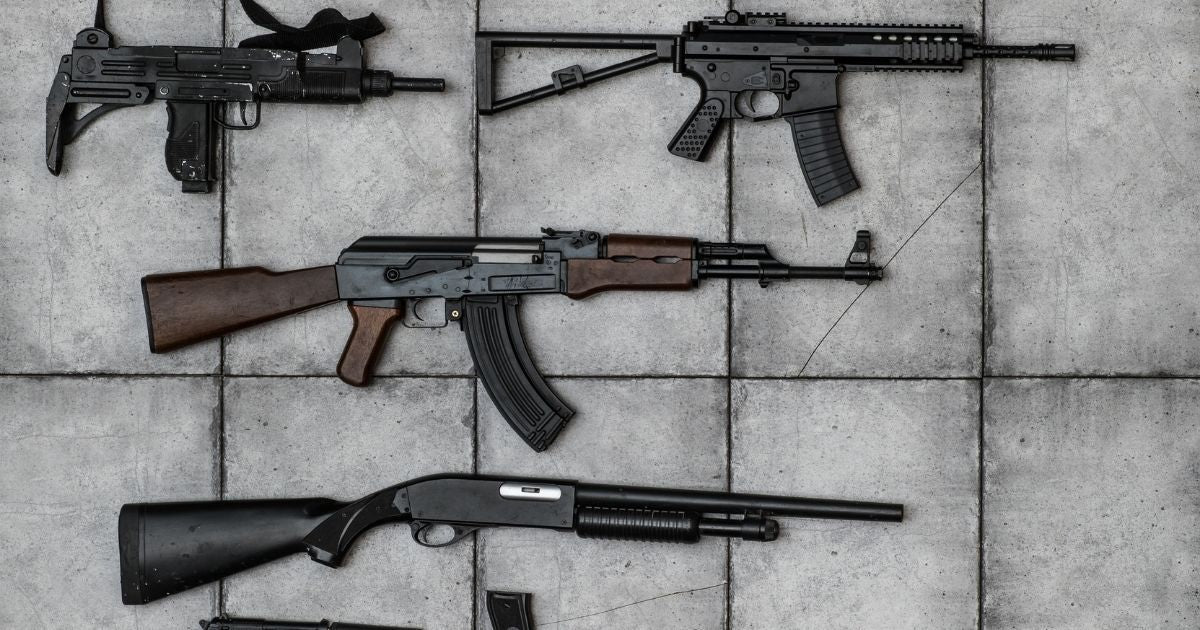
When people say "Class 3 weapon," they are really talking about NFA items, also called Title II firearms. These include suppressors, short-barreled rifles, short-barreled shotguns, machine guns, destructive devices, and a catch-all category called "Any Other Weapons."
Understanding this distinction matters because accurate terminology helps you navigate the legal process with confidence. This guide breaks down every NFA item category, the registration process, the 2026 legislative changes, and what you need to know before purchasing your first NFA item.
The Six Categories of NFA Items
The National Firearms Act regulates six distinct categories of firearms and devices. Each has specific legal definitions, and misunderstanding them can lead to serious federal consequences. Here is what falls under NFA regulation.
Suppressors (Silencers)
A suppressor, legally referred to as a "silencer" under federal law, is any device designed to muffle or diminish the report of a portable firearm. Suppressors work by trapping and gradually releasing the expanding gases that exit the barrel after a round is fired.
Contrary to how they are portrayed in movies, suppressors do not make a firearm silent. A suppressed gunshot typically registers between 130 and 140 dB, roughly the volume of a jackhammer. Without a suppressor, most centerfire rifles produce 160 to 170 dB. According to the National Institute for Occupational Safety and Health (NIOSH), any noise above 140 dB can cause immediate, permanent hearing damage from a single exposure.
Suppressors are the most commonly purchased NFA item. They reduce noise to less harmful levels, decrease felt recoil, and minimize muzzle flash, making them popular among hunters, competitive shooters, and recreational shooters. Even with a suppressor, proper ear protection is still strongly recommended, as most suppressed firearms still exceed safe hearing thresholds.
As of 2026, suppressors are legal for civilian ownership in 42 states. They remain prohibited in California, Delaware, Hawaii, Illinois, Massachusetts, New Jersey, New York, Rhode Island, and the District of Columbia.
Short-Barreled Rifles (SBRs)
A short-barreled rifle is defined under federal law as a rifle with a barrel length of less than 16 inches, or any weapon made from a rifle with an overall length of less than 26 inches. SBRs are popular for home defense and close-quarters applications because they are more maneuverable than full-length rifles while retaining rifle-caliber stopping power.
The legal distinction between an SBR and a standard pistol or rifle is important. Simply attaching a shoulder stock to a pistol or cutting down a rifle barrel below 16 inches without proper NFA registration constitutes a federal felony. If you are building or modifying a firearm, always verify your configuration against current ATF guidelines before making any changes.
Short-Barreled Shotguns (SBSs)
A short-barreled shotgun is a shotgun with a barrel length under 18 inches, or any weapon made from a shotgun with an overall length below 26 inches. Like SBRs, short-barreled shotguns offer increased maneuverability, making them appealing for home defense scenarios where space is limited.
The same manufacturing and modification rules apply to SBSs. Shortening a shotgun barrel below 18 inches without an approved ATF Form 1 (Application to Make and Register a Firearm) is a federal offense under the NFA.
Machine Guns
Under the NFA, a machine gun is any firearm that fires more than one round with a single pull of the trigger, as well as any part designed and intended solely for converting a weapon into a machine gun. This definition includes the frame, receiver, or any conversion device such as a drop-in auto sear or a lightning link.
Machine gun ownership has a unique restriction. The Firearm Owners Protection Act (FOPA) of 1986 banned the civilian manufacture and sale of new machine guns. Only machine guns manufactured and registered before May 19, 1986 ("pre-86" or "transferable" machine guns) can be legally purchased by civilians.
Because the supply is permanently fixed, transferable machine guns carry extreme prices. A transferable M16 lower receiver routinely sells for $30,000 to $40,000 or more, and simpler designs like a MAC-10 start around $8,000 to $12,000.
Destructive Devices (DDs)
Destructive devices fall into two subcategories under the NFA. The first includes explosive ordnance such as grenades, bombs, mines, rockets with a propellant charge exceeding four ounces, and missiles with an explosive or incendiary charge exceeding one-quarter ounce.
The second subcategory covers firearms with a bore diameter exceeding one-half inch (0.50 caliber or 12.7 mm), with exceptions carved out for shotguns that the ATF determines have a "legitimate sporting purpose." This is why a 12-gauge shotgun with a .729-inch bore is not classified as a destructive device, but a 40mm grenade launcher is.
Common civilian-owned destructive devices include 37mm and 40mm launchers and certain large-bore rifles. Each individual round of explosive ammunition is also considered a separate destructive device requiring its own registration.
Any Other Weapons (AOWs)
The "Any Other Weapon" category is the NFA's catch-all classification for weapons that do not fit neatly into the other five categories. According to the ATF, an AOW is any concealable weapon capable of discharging a projectile through an explosive action, excluding standard pistols and revolvers.
Common examples of AOWs include:
- Smooth-bore pistols that fire shotgun shells
- Pen guns and cane guns designed to be disguised as everyday objects
- Pistols with a vertical foregrip attached, since adding a second grip point changes the ATF classification
- Wallet holsters that allow a firearm to be discharged while inside the holster
- Combination firearms with both rifled and smooth-bore barrels between 12 and 18 inches that require manual reloading
Historically, the AOW category carried a lower transfer tax of $5, compared to $200 for other NFA items. As of January 1, 2026, the transfer tax on AOWs has been reduced to $0 along with suppressors, SBRs, and SBSs.
2026 NFA Regulatory Changes: What the "One Big Beautiful Bill" Means for Buyers
The most significant change to NFA law in decades took effect on January 1, 2026. The One Big Beautiful Bill Act (H.R.1), signed by President Trump on July 4, 2025, included provisions that eliminated the $200 federal transfer tax on several categories of NFA items.
Here is what changed and what stayed the same:
What Changed
- The $200 transfer tax on suppressors, short-barreled rifles, short-barreled shotguns, and "Any Other Weapons" was reduced to $0
- The $200 making tax (Form 1) for these same categories was also reduced to $0
- The ATF revised Form 4 in December 2025 to reflect the tax changes, including the option to submit a photo ID instead of a passport-style photograph
- New instructions were added for married couples to jointly register NFA items as an "other legal entity"
What Did NOT Change
- The $200 transfer and making tax on machine guns and destructive devices remains in place
- ATF Form 4 registration is still required for all NFA transfers
- Background checks, fingerprints, photographs, and CLEO notification are still mandatory
- State laws governing NFA items remain unchanged; a state that banned suppressors before 2026 still bans them
- NFA items must still be transferred through a licensed Class 3 SOT dealer
The elimination of the $200 tax removes a meaningful financial barrier, but the regulatory framework remains intact. If you are considering your first NFA purchase, the process itself has not been simplified, only the cost.
Expected Impact on Wait Times
The ATF temporarily halted eForms submissions from December 26 through December 31, 2025, to update its systems for the new tax structure. Since reopening on January 1, 2026, application volume has surged significantly as buyers who delayed purchases to avoid the $200 tax are now submitting their forms.
Industry experts and dealers anticipate that wait times will extend beyond the record-fast approvals seen in late 2025, when eForm 4 applications for individuals were being approved in as few as 2 to 10 days. The combination of increased demand and potential ATF staffing reductions may push wait times into weeks or months for early 2026 submissions. If you are planning an NFA purchase, submitting your paperwork sooner rather than later is advisable.
The ATF Form 4 Process: Step by Step
Whether you are buying a suppressor, an SBR, or any other NFA item, the transfer process follows the same general path through ATF Form 4 (Application for Tax Paid Transfer and Registration of Firearm). Here is how it works.
Step 1: Choose Your NFA Item and Dealer
You must purchase NFA items through a dealer with a Federal Firearms License (FFL) and an active Class 3 SOT status. Many gun stores do not carry NFA items, so you may need to locate a specialized dealer. Online retailers like Silencer Shop and Silencer Central have streamlined this process by partnering with local dealers nationwide.
Once you select and pay for your item, the dealer holds it until your ATF Form 4 is approved. You cannot take the item home until approval is received.
Step 2: Complete ATF Form 4
The Form 4 captures information about the transferor (dealer), transferee (you), and the specific NFA item being transferred. Key information includes:
- Your full legal name, address, date of birth, and citizenship status
- The NFA item's type, manufacturer, model, serial number, caliber, and barrel length
- Whether you are registering as an individual, through a trust, or through another legal entity
Most dealers now submit Form 4 electronically through the ATF's eForms system, which processes significantly faster than paper submissions. The revised December 2025 version of the form is the only currently accepted version.
Step 3: Submit Required Documentation
Along with the completed Form 4, you must provide:
- Fingerprints: Two FBI-compliant fingerprint cards (FD-258). Many dealers have electronic fingerprint kiosks that submit directly to the ATF.
- Photograph: A passport-style photo, or as of the December 2025 revision, a copy of a valid photo ID.
- CLEO Notification: A copy of your Form 4 must be sent to your local Chief Law Enforcement Officer (sheriff or police chief). This is a notification requirement only; the CLEO does not need to approve or sign anything.
- Responsible Person Questionnaire (ATF Form 5320.23): Required for each responsible person listed on a trust or legal entity application.
Step 4: Pay the Transfer Tax (If Applicable)
As of January 1, 2026, the transfer tax is $0 for suppressors, SBRs, SBSs, and AOWs. If you are transferring a machine gun or destructive device, the $200 tax still applies and is paid electronically through the eForms system or via check for paper submissions.
Step 5: Background Check and Approval
The ATF conducts an FBI background check on every applicant. If you are filing through a trust, every responsible person listed on the trust must pass a separate background check. Upon approval, the ATF issues a digital tax stamp (for eForms) or mails a physical stamp (for paper forms) to your dealer, who then contacts you for pickup.
You must complete the transfer by picking up your item in person from the dealer and filling out a standard ATF Form 4473 (the same form used for any firearm purchase from a licensed dealer).
NFA Trust vs. Individual Registration
When registering an NFA item, you have two primary options: filing as an individual or filing through an NFA gun trust. Each has advantages depending on your situation.
Individual Registration
Pros:
- Simpler paperwork with no trust documents to create or maintain
- Historically faster processing times
- Lower upfront cost with no attorney or trust fees
Cons:
- Only you can legally possess, transport, or use the NFA item. Anyone else handling it without you present is committing a federal felony.
- Upon your death, the item goes through probate, creating complications for heirs
- No flexibility to add or remove authorized users
NFA Gun Trust
Pros:
- Multiple "responsible persons" (co-trustees) can legally possess, transport, store, and use NFA items held by the trust
- Avoids probate upon the settlor's death; NFA items transfer to designated beneficiaries according to the trust's terms
- Provides long-term flexibility to add or remove trustees as circumstances change
- Protects against potential future regulatory changes by providing a legal framework for shared ownership
Cons:
- Every responsible person on the trust must submit fingerprints, a photograph, and pass a background check for each NFA item transfer (per ATF Rule 41F)
- Requires an initial investment to establish the trust, typically $50 to $150 for an online trust or $300 or more for an attorney-drafted trust
- Adds administrative complexity to each Form 4 submission
With the $200 tax stamp now eliminated for most NFA items, the financial incentive for trusts (historically, putting multiple items under one trust to share the cost burden) has shifted. However, trusts still provide significant practical benefits for shared household use and estate planning. If multiple family members will use your NFA items, or if you want to ensure a smooth transfer upon your passing, a trust remains the better option.
State-by-State NFA Restrictions
Federal legality does not override state law. Even with the 2026 tax elimination, you must comply with your state's regulations on NFA items. Here is a general overview, though you should always verify current laws with your state and local authorities before making a purchase.
Suppressors
Legal in 42 states. Prohibited in California, Delaware, Hawaii, Illinois, Massachusetts, New Jersey, New York, Rhode Island, and the District of Columbia. Connecticut and Vermont allow ownership but restrict or prohibit suppressor use while hunting.
Short-Barreled Rifles
Restricted or prohibited in several states including California, Hawaii, Illinois, New Jersey, New York, Rhode Island, and the District of Columbia, among others. Many states allow SBR ownership with NFA registration but impose additional state-level requirements.
Short-Barreled Shotguns
State restrictions on SBSs largely mirror SBR restrictions. States that ban SBRs typically also prohibit SBSs. Verify your state's specific statute before proceeding with a purchase.
Machine Guns
Even with federal NFA registration, several states completely ban civilian machine gun ownership. These include California, Hawaii, Illinois, Iowa, New York, and others. Because transferable machine guns are extremely expensive, always confirm state legality before making a five-figure investment.
Destructive Devices
Heavily restricted at the state level. Many states that allow other NFA items prohibit or severely restrict destructive devices. Some states allow specific types (such as large-bore rifles) while prohibiting explosive devices.
The key takeaway: always check your state and local laws before purchasing any NFA item, regardless of what federal law permits. A legal NFA transfer at the federal level does not protect you from state prosecution if your state bans the item.
Safety Considerations for NFA Items
Owning NFA items comes with additional responsibility. Proper storage, safe handling, and appropriate adherence to the four fundamental rules of gun safety are non-negotiable, regardless of what type of firearm you own.
Hearing Protection Still Matters
Even with a suppressor, most firearms still produce noise levels between 130 and 140 dB, well above the 85 dB threshold that NIOSH identifies as the onset of hearing damage risk. According to the National Institute on Deafness and Other Communication Disorders (NIDCD), approximately 40 million Americans aged 20 to 69 have noise-induced hearing loss, and recreational shooters are four times more likely to develop hearing loss than non-shooters.
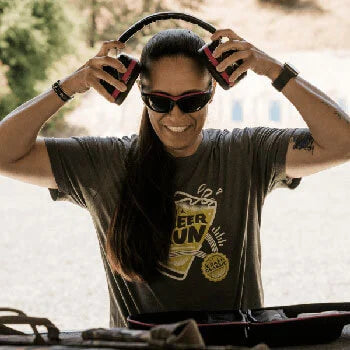
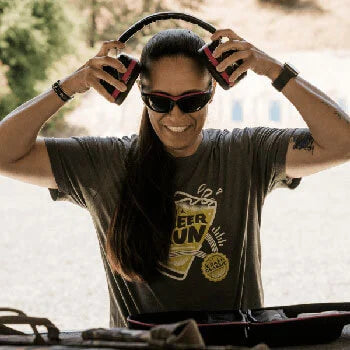
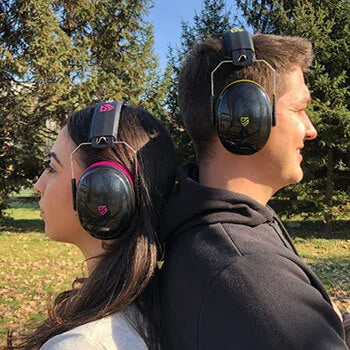
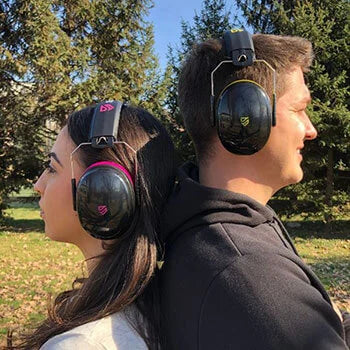
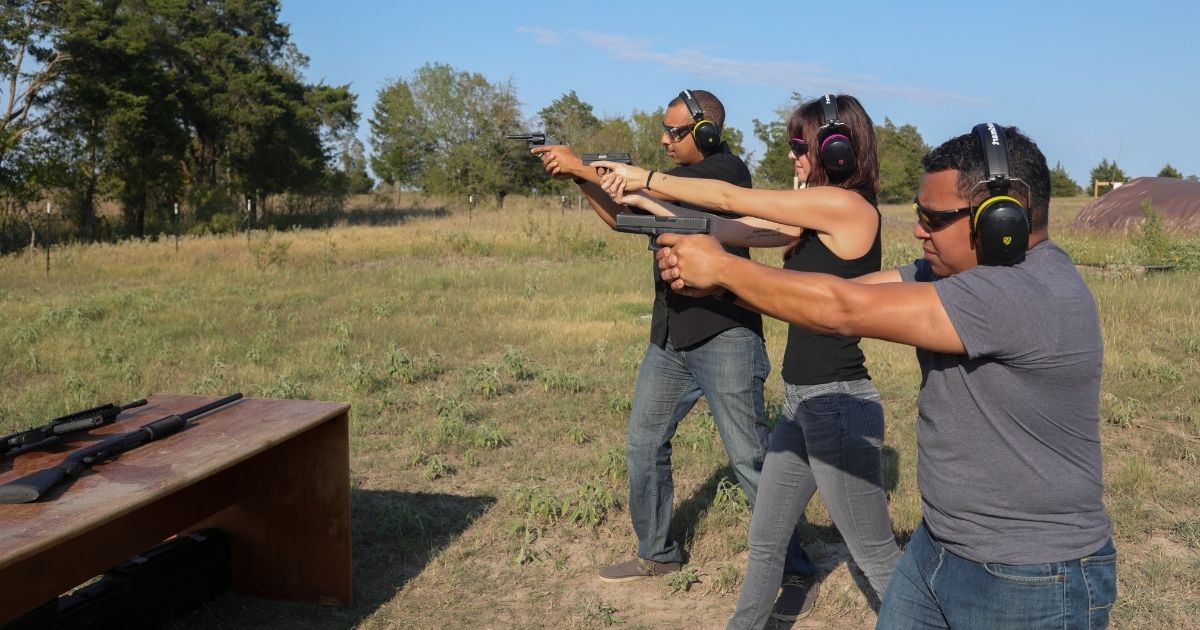
A suppressor is a valuable hearing protection tool, but it works best as one layer of a complete hearing protection strategy. Combining a suppressor with quality earmuffs rated NRR 28 or higher provides significantly better protection than either method alone. For indoor shooting or training with short-barreled NFA firearms, doubling up with both earmuffs and foam earplugs is the safest approach.
Secure Storage
NFA items carry additional legal obligations regarding possession and access. If you register an item as an individual, no one else may legally possess it. Storing NFA items in a quality gun safe is not just good practice; it is essential to prevent unauthorized access that could create federal legal liability for both you and the person who accesses the item.
Eye Protection
Short-barreled firearms, particularly SBRs and SBSs, often produce more muzzle blast and debris than their full-length counterparts due to increased unburned powder exiting the barrel. ANSI Z87.1-rated safety glasses are a must for shooting any firearm, but they become especially critical with short-barreled NFA weapons where gas blowback and ejection patterns may be more pronounced.
Getting Started With Your First NFA Purchase
If you have read this far and are ready to make your first NFA purchase, here is a practical checklist to follow:
- Verify state legality. Confirm that your state allows the specific NFA item you want to purchase. Do not rely on forum posts; check your state's actual statutes or consult a firearms attorney.
- Locate a Class 3 SOT dealer. Find a reputable dealer in your area that holds a valid FFL with Class 3 SOT status. Ask about their experience with eForms and their typical processing workflow.
- Decide on individual vs. trust. If you are the only person who will use the item and you do not have estate planning concerns, individual filing is simpler. If family members will use the item or you want succession planning, set up a trust first.
- Budget beyond the item. Even without the $200 tax stamp on most items, factor in the cost of the NFA item itself, any trust setup fees, dealer transfer fees, and accessories.
- Prepare your documents. Have your fingerprints taken, your photo ready, and your identification current before visiting the dealer. Being prepared reduces delays.
- Be patient. Even with eForms and the improved processing speeds seen in recent years, NFA transfers take time. Early 2026 wait times may be longer than usual due to the surge in applications following the tax elimination.
If you are new to firearms in general, completing a basic firearms course before diving into NFA items is a wise investment. The fundamentals of safe handling, marksmanship, and legal responsibility apply to every firearm, whether it is a standard handgun or a suppressed SBR. If you are looking for a convenient option, the Range Confidence Course covers the essentials of firearms fundamentals and range readiness.
Equip Yourself Properly
Whether you are running a suppressed rifle, breaking in your first SBR, or heading to the range with any firearm, proper safety gear is not optional. Gunshots produce 140 to 175 dB depending on caliber, and even suppressed firearms exceed safe hearing thresholds.
TradeSmart Safety offers American-certified shooting protection kits that include NRR 28 earmuffs, ANSI Z87.1-rated safety glasses, and high-performance NRR 33 foam earplugs, all backed by a 10-year warranty and free shipping. If you are investing in NFA items, invest equally in protecting yourself every time you pull the trigger. Explore our complete shooting protection kits and gear up the right way.
Frequently Asked Questions
What is the difference between a Class 3 firearm and an NFA item?
There is technically no such thing as a "Class 3 firearm." The term "Class 3" refers to the Special Occupational Tax classification for federal firearms dealers licensed to sell NFA-regulated items. When people say "Class 3 weapon," they mean an NFA item, which includes suppressors, short-barreled rifles, short-barreled shotguns, machine guns, destructive devices, and "Any Other Weapons." The correct term for the items themselves is "NFA items" or "Title II firearms."
Do I still need a tax stamp to buy a suppressor in 2026?
As of January 1, 2026, the $200 federal transfer tax on suppressors, SBRs, SBSs, and AOWs has been reduced to $0 under the One Big Beautiful Bill Act. However, you still need to complete ATF Form 4, pass a background check, submit fingerprints and a photograph, and notify your local CLEO. The registration process remains fully in effect; only the tax payment has been eliminated. Machine guns and destructive devices still carry the $200 transfer tax.
How long does it take to get approved for an NFA item in 2026?
Processing times vary and are expected to fluctuate in early 2026 due to a surge in applications following the tax elimination. In late 2025, eForm 4 approvals for individuals averaged around 2 to 10 days, with trust applications averaging 10 to 23 days. Industry experts anticipate early 2026 wait times will be longer as the ATF processes increased volume. Filing electronically through eForms remains significantly faster than paper submissions.
Can I let someone else use my suppressor or SBR?
If your NFA item is registered to you as an individual, only you may legally possess it. Handing it to a friend at the range while you step away, or allowing a family member to store or transport it, could constitute an illegal transfer under federal law. If you want shared access, register your NFA items through a gun trust and list other users as responsible persons (co-trustees). Each co-trustee must submit their own fingerprints, photo, and pass a background check.
Are NFA items legal in every state?
No. While federal law permits civilian ownership of NFA items with proper registration, individual states impose their own restrictions. Eight states plus the District of Columbia ban suppressors entirely. Several states prohibit SBRs, SBSs, or machine guns. The 2026 federal tax elimination does not change any state laws. Always verify that the specific NFA item you want is legal in your state before purchasing. Consult your state's statutes or a firearms attorney if you are unsure.
Should I get an NFA trust or file as an individual?
It depends on your situation. Individual filing is simpler and historically processes faster. However, a trust allows multiple people to legally possess your NFA items, avoids probate complications upon your death, and provides flexibility for future changes. If you live alone and have no estate planning concerns, individual filing may be sufficient. If your spouse, family members, or range partners will use your NFA items, a trust is the safer and more practical choice. With the $200 tax eliminated for most items, the financial dynamics have shifted, but the practical benefits of trusts remain significant.



James Aldrich
May 23, 2024
I already have a Florida ccw, im just curious if I could actually qualify and be licensed for a class 3 ffl, or to be able to own fully automatic weapons in other states then Florida where i do reside? I was told long time ago that if i owned a full auto in Florida that i could obtain a permit to only carry it from my house to an open outside controlled shooting range and back home? Is that true for Florida? But anyways i just really want to know if i could actually qualify to be able to own full auto weapons or not, i just want to rub in face of someone who says he knows everything about gun laws and the laws of full automatic weapons on whose aloud to have or not, i rather just have my semi automatic weapons, i just want to prove this guy hes wrong if i could actually qualify and be able to own, some kind of documentation from atf saying that im approved but if not no worries like i said not really interested in actually owning full auto, i was very fascinated when i was younger be cool to actually own one, but to many people not teaching proper gun handling and safety i dont want that type of weapon be known if i own them and some tries to break in my house to find and steal, i can furnished needed info plus have my Florida ccw license with number for you to on my current background information to show that i am a law biding citizen of the United States of America, no felonies or violent crimes im very honest and hard worker and cant stand punkasses who has disrespect to our men and women serving our armed forces defending ou rights to be free from harmful foreign powers. My dad and 2 uncles vietnam vets my dad stayed in usaf retired as captain.