



More women carry concealed firearms today than at any point in American history. According to a 2023 study published by the Crime Prevention Research Center, the number of women holding concealed carry permits has grown at more than twice the rate of men over the past decade. Meanwhile, the National Shooting Sports Foundation (NSSF) reports that women represent the fastest-growing demographic of new gun owners in the United States.
That growth is not surprising. Concealed carry offers women a proven means of personal protection, but it also introduces a distinct set of practical challenges that many resources fail to address. Holster positioning that works on a male frame does not automatically translate to a female frame. Clothing options are different. Hand size matters when selecting a firearm. Draw speed varies dramatically depending on carry method.
This guide covers the essential factors every woman should evaluate before carrying concealed, from firearm selection and holster positioning to clothing considerations, training requirements, and legal reciprocity.

Choosing the Right Firearm for Women's Concealed Carry
The firearm you carry needs to work with your body, not against it. For women, this means paying close attention to three variables that are often overlooked in general concealed carry advice: grip size relative to hand dimensions, overall weight for extended carry, and recoil management.
Hand Size and Grip Ergonomics
Women's hands are, on average, smaller than men's hands. According to NASA anthropometric data, the average female hand length is approximately 17.2 cm compared to 18.9 cm for males. That difference directly affects how comfortably and securely you can grip a firearm, which in turn affects accuracy and control.
When evaluating a firearm for concealed carry, consider the following:
- Grip circumference: You should be able to wrap your fingers around the grip with your trigger finger reaching the trigger face at the center of the pad, not the tip or the joint. If you have to strain to reach the trigger, the grip is too large.
- Backstrap options: Many modern firearms (such as the Smith & Wesson M&P Shield, Sig Sauer P365, and Glock 43X) ship with interchangeable backstraps that allow you to customize the grip circumference.
- Slide operation: Racking the slide requires hand strength. Firearms with lighter recoil springs or those designed with serrations and extended slide releases make this significantly easier.
Weight and Size Considerations
A full-size duty pistol like the Glock 17 weighs approximately 25 ounces unloaded. Carry it loaded with a full magazine, and you are approaching two pounds on your hip, ankle, or in your purse for the entire day. For many women, a compact or subcompact firearm is the better choice for concealed carry.
Popular options that balance concealability with stopping power include:
- Sig Sauer P365: 17.8 ounces unloaded, 10+1 capacity, slim profile
- Smith & Wesson M&P Shield Plus: 20.2 ounces, 13+1 capacity with extended magazine
- Glock 43X: 18.7 ounces, 10+1 capacity, designed for slimmer hands
- Springfield Hellcat: 18.3 ounces, 11+1 capacity, one of the highest capacity micro-compacts available
The best approach is to handle multiple firearms at a local gun store or rental range before purchasing. What feels right in a display case is very different from what feels right after 50 rounds at the range or eight hours of carry. For a deeper look at firearm selection, read our guide on the best concealed carry guns and our breakdown of the best guns for women.
Recoil and Caliber Selection
Recoil tolerance is personal, not gender-specific, but lighter-framed firearms do produce sharper felt recoil. A .44 Magnum revolver generates roughly 164 dB of sound and substantial muzzle flip, making it impractical for concealed carry and uncomfortable for extended practice sessions.
The 9mm Luger remains the gold standard for concealed carry across demographics. It offers manageable recoil, sufficient terminal ballistics with modern hollow-point ammunition, and lower cost per round for practice. According to FBI ballistic testing data, modern 9mm defensive loads perform comparably to .40 S&W and .45 ACP in gel testing, while allowing faster follow-up shots due to reduced recoil.

Holster Positioning for Different Body Types
Holster selection is where concealed carry becomes uniquely challenging for women. A holster designed to ride at 4 o'clock on a man's belt line may dig into a woman's hip curve, print visibly under fitted clothing, or become impossible to draw from quickly. Understanding how different holster positions interact with different body shapes is critical to comfortable, effective concealed carry.
Inside-the-Waistband (IWB) Holsters
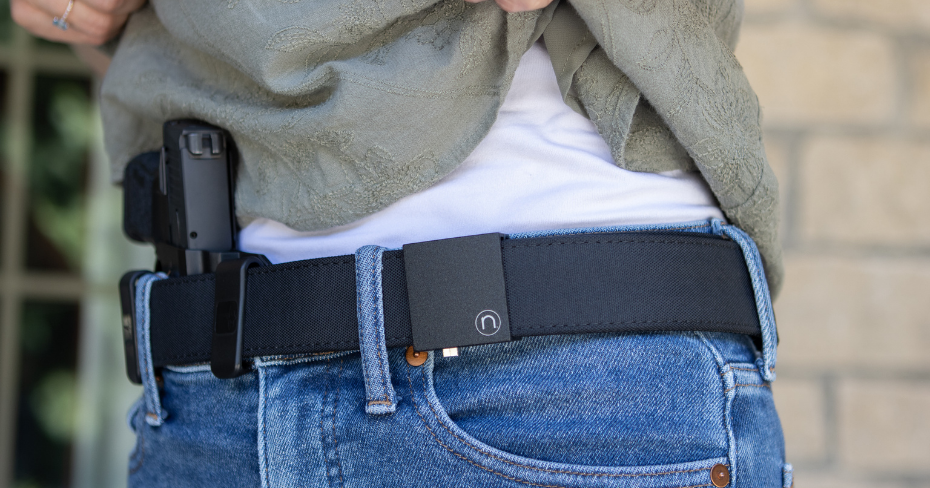
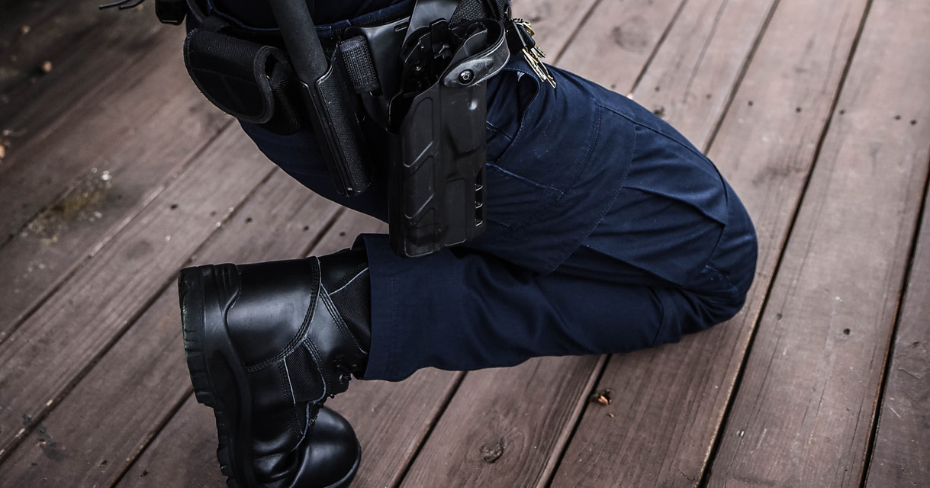
IWB holsters sit between your body and your waistband, providing excellent concealment under a cover garment. For women, the key consideration is the cant (angle) and ride height of the holster relative to your natural waist and hip curve.
- Appendix carry (AIWB): The firearm sits at 12 o'clock to 1 o'clock, in front of your hip bone. This position works well for women with a flatter midsection and provides the fastest draw. However, it can be uncomfortable when seated or for women with a longer torso.
- Strong-side hip (3-4 o'clock): A natural position for many women, especially when wearing jeans with a sturdy belt. The wider hip profile that many women have can actually help conceal the firearm at this position better than on a narrower male frame.
- Behind-the-hip (5 o'clock): Offers deep concealment but compromises draw speed and can cause discomfort when sitting against a chair back for extended periods.
Body-Conforming and Specialty Holsters
The concealed carry industry has expanded significantly to address women-specific carry challenges. Options now include:
- Belly band holsters: An elastic band worn around the midsection that holds the firearm in place without a belt. These work well under dresses, skirts, and athleisure wear where belt-mounted holsters are impractical.
- Bra holsters: Mount beneath the arm on the bra band, allowing carry under blouses and tops. Draw technique requires specific training, as the motion is different from hip-level draws.
- Thigh holsters: Worn around the upper thigh, these work under skirts and dresses. They offer reasonable draw speed but require a longer reach.
- Ankle holsters: Best suited for smaller, lighter firearms. They work well with boot-cut jeans or slacks but are the slowest draw position and can be uncomfortable during extended walking.
- Corset-style holsters: Worn like an undershirt, these distribute the firearm's weight across the torso and offer deep concealment under professional attire.
For a comprehensive comparison of holster types, styles, and materials, see our full guide on the best concealed carry holsters.

Clothing Considerations for Women Who Carry
Women's fashion presents a unique set of concealment challenges. Men's clothing tends to be looser and more structured, with belt loops as a standard feature. Women's clothing varies dramatically in fit, fabric weight, and construction, and many everyday outfits have no belt loops at all.
Wardrobe Adjustments for Effective Concealment
Effective concealment does not require a complete wardrobe overhaul, but it does require some strategic thinking:
- Layering: A blazer, cardigan, or open flannel shirt over a fitted top provides natural concealment for waistband-mounted holsters without looking out of place.
- Fabric weight: Heavier fabrics like denim, canvas, and structured cotton drape better over a firearm. Thin, clingy materials like jersey knit or silk will print easily.
- Patterns and dark colors: Busy patterns and darker colors minimize visible printing. A solid light-colored shirt will show the outline of a holster far more readily than a patterned or dark-toned alternative.
- Purpose-built concealed carry clothing: Several brands now manufacture women's clothing with built-in holster pockets, reinforced waistbands, and concealment panels. These include leggings, blazers, tank tops, and jackets designed to look like standard fashion while accommodating a firearm.
For a broader look at dressing for the range and for carry, check out our article on what to wear to a gun range.
Printing: What It Is and How to Avoid It
"Printing" refers to the visible outline of a firearm showing through clothing. While most people in public are not scanning for concealed firearms, printing can compromise the element of surprise that makes concealed carry effective as a deterrent.
To reduce printing:
- Choose the smallest firearm you can shoot accurately and comfortably
- Match your holster position to your outfit for the day
- Use a holster with a built-in claw or wing attachment that pushes the grip closer to your body
- Practice in front of a mirror, checking from multiple angles while standing, sitting, bending, and reaching overhead

Purse Carry vs. On-Body Carry: Draw Speed and Safety
Off-body carry, particularly purse carry, is a common choice for women who find on-body holsters uncomfortable or impractical with certain outfits. However, it comes with significant trade-offs that every woman should understand before committing to this method.
The Case for Purse Carry
- Works with any outfit, including dresses and professional attire without belt loops
- Comfortable for all-day carry, as the firearm's weight is distributed in the bag
- No holster marks or wardrobe adjustments needed
The Drawbacks of Purse Carry
- Draw speed: Drawing from a concealed carry purse takes significantly longer than drawing from a waistband holster. Under stress, fine motor skills degrade, and manipulating a zipper or flap adds critical seconds to response time.
- Retention: Your purse can be snatched, stolen, or left behind. If your firearm is in it, you have armed a criminal or left a loaded weapon unsecured.
- Access by others: Children, friends, or strangers may reach into your purse. Without a dedicated compartment with its own retention mechanism, this creates a dangerous situation.
- Consistency: On-body carry means your firearm is always in the same place. Purse carry requires you to always have the purse on your person, positioned the same way, with the same hand free to draw.
If you do choose purse carry, invest in a purpose-built concealed carry purse with a dedicated firearm compartment, a built-in holster that covers the trigger guard, and a reinforced strap that resists cutting. Practice your draw from the purse until it becomes instinctive.

Training: The Most Critical Factor for Women Concealed Carriers
Owning a firearm is a right. Carrying one effectively is a skill that requires deliberate, ongoing training. According to the USCCA (United States Concealed Carry Association), the majority of defensive gun uses involve situations where the carrier had less than three seconds to respond. That response time is a direct product of training.
Fundamental Skills Every Concealed Carrier Must Master
- Safe draw from concealment: Practicing your draw stroke from your actual carry position, with the clothing you actually wear. Drawing from a range holster on a duty belt is not the same as drawing from a belly band under a blouse.
- Accurate shot placement under stress: Marksmanship at a static range is a starting point, not the finish line. Seek out training that incorporates movement, time pressure, and decision-making scenarios.
- Malfunction clearing: Tap-rack-bang drills should be second nature. Under stress, you will not have time to think through a malfunction. You need muscle memory.
- Situational awareness: The best defensive tool is avoidance. Training should include recognizing pre-attack indicators and understanding when to disengage rather than escalate.
- Legal use of force: Understanding when you are legally justified in drawing or using a firearm is just as important as knowing how to shoot it.

Where to Get Training
Training options for women concealed carriers include:
- Local concealed carry classes: Required for permit issuance in many states, these cover legal fundamentals, safe handling, and basic marksmanship.
- Women-specific shooting courses: Organizations like A Girl and a Gun (AG&AG) and the Well Armed Woman offer women-only classes taught by female instructors, which many women find more comfortable for learning.
- Scenario-based training: Force-on-force training using simunitions or airsoft provides realistic pressure testing of your skills and decision-making.
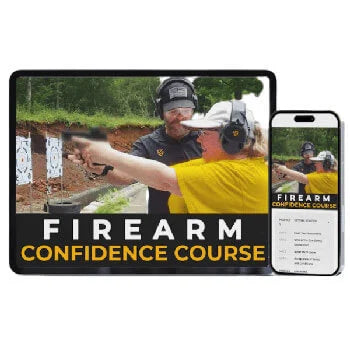
- Online foundational courses: The TradeSmart Safety Range Confidence Course provides an accessible starting point for building fundamental firearms knowledge, covering safety protocols, range procedures, and core shooting mechanics. It is included free with every TradeSmart Safety gear kit.
Regardless of your experience level, consistent practice is non-negotiable. Adhering to the four rules of gun safety every time you handle your firearm builds the habits that keep you and everyone around you safe.
Range Safety Gear: Protecting Your Hearing and Vision
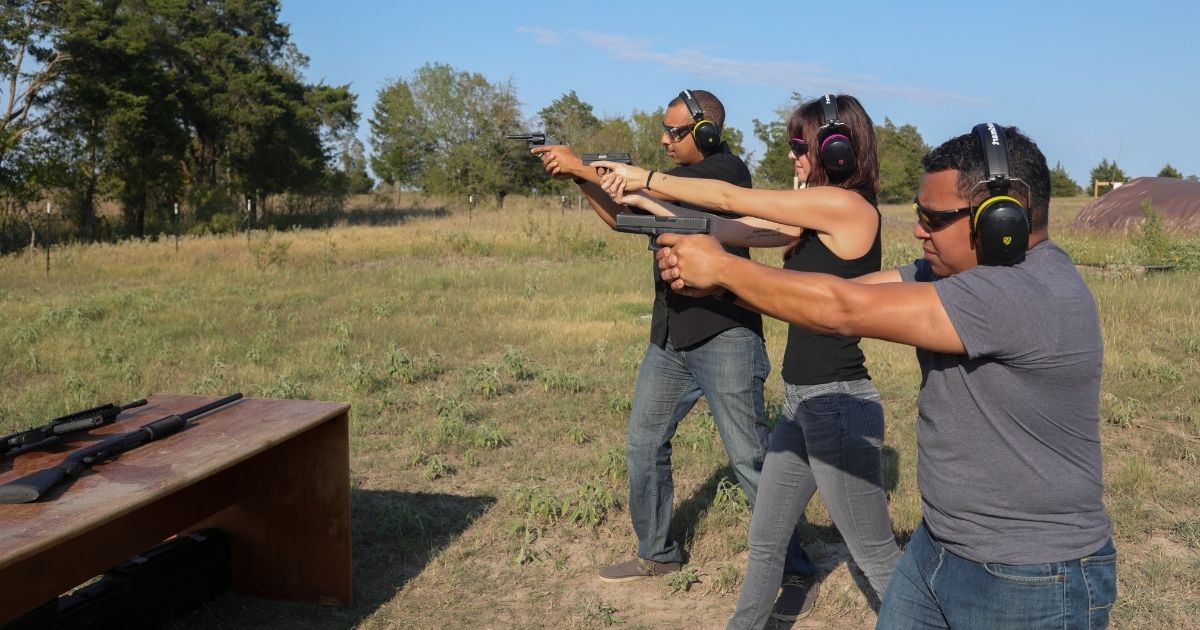
Every range session requires proper ear and eye protection, and this is not optional. A single gunshot produces between 140 and 175 dB depending on caliber, according to the National Institute for Occupational Safety and Health (NIOSH). For context, OSHA sets the permissible exposure limit at 85 dB over an eight-hour period. A single gunshot above 140 dB can cause immediate, permanent hearing damage.
Recreational shooters are four times more likely to develop noise-induced hearing loss than non-shooters, according to research published in the International Journal of Audiology. Approximately 40 million Americans aged 20 to 69 already have noise-induced hearing loss, per the National Institute on Deafness and Other Communication Disorders (NIDCD).
Eye protection is equally critical. Ejected brass casings, unburned powder, and fragmentation from targets or backstops all pose risks. ANSI Z87.1+ certified safety glasses are the standard, requiring lenses to withstand a quarter-inch steel ball impacting at 150 feet per second.
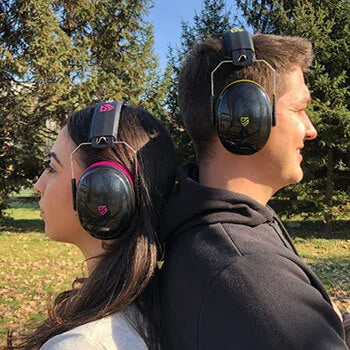
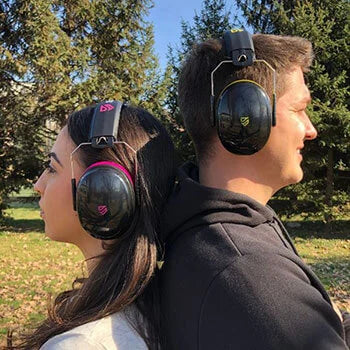
TradeSmart Safety shooting kits include NRR 28-rated earmuffs, ANSI Z87.1+ certified safety glasses, NRR 33 foam earplugs, a hard-shell carrying case, and the Range Confidence Course. Doubling up with both earmuffs and earplugs can achieve an effective NRR of approximately 36, which NIOSH recommends for maximum protection in high-noise environments. Every kit ships with free delivery and is backed by a 10-year warranty.
For women who want to maintain situational awareness at the range while still protecting their hearing, the TacticalEdge electronic earmuffs provide NRR 24 protection with sound amplification and directional microphones, allowing you to hear range commands and conversation while blocking harmful impulse noise.

Legal Considerations and Reciprocity for Women Concealed Carriers
Carrying a concealed firearm is governed by a patchwork of state laws that every carrier must understand before stepping out the door. As of 2025, 29 states have adopted constitutional carry (also called permitless carry) laws, meaning residents can carry a concealed firearm without a permit. However, the remaining states still require permits, and the requirements vary significantly.
Permit Requirements
In states that require a concealed carry permit, the typical process includes:
- Completing a firearms safety or concealed carry course
- Passing a background check
- Submitting an application with fees (ranging from $25 to over $200 depending on the state)
- In some states, demonstrating proficiency through a live-fire qualification
For a state-by-state breakdown of permit requirements, see our complete guide on how to get a concealed carry permit in every state.
Reciprocity: Carrying Across State Lines
Reciprocity refers to whether your home state's concealed carry permit is recognized by other states. There is no universal federal concealed carry reciprocity law, which means you must research each state you plan to visit or travel through.
Key points to understand:
- Reciprocity is not automatic. Some states recognize permits from all other states. Some recognize permits from only certain states. Some recognize no out-of-state permits at all.
- Constitutional carry does not always extend to non-residents. Even in states with permitless carry, the law may only apply to residents of that state.
- Restricted locations vary by state. Schools, government buildings, bars, churches, and other locations may be off-limits for concealed carry in certain states but not others.
- Vehicle carry laws differ. Some states allow loaded firearms in vehicles without a permit, while others require the firearm to be unloaded and stored separately from ammunition during transport.
Before traveling across state lines with a concealed firearm, check the USCCA reciprocity map or consult your state's attorney general website for current reciprocity agreements. Ignorance of the law is not a legal defense.

Situational Awareness and the Defensive Mindset
Carrying a concealed firearm changes your responsibility level in every interaction. The goal is not to seek confrontation but to have a last-resort option when facing a lethal threat that cannot be avoided. A defensive mindset means:
- Prioritizing avoidance: The best gunfight is the one that never happens. If you can leave a situation, leave it.
- Staying observant: Pay attention to who is around you, where exits are, and what feels out of place. This is not paranoia. It is simply paying attention.
- Understanding force escalation: Drawing a firearm is the last step in a series of escalation decisions. Verbal de-escalation, creating distance, and retreating are all preferable alternatives when they are available.
- Accepting the responsibility: If you carry, you accept that every round you fire has a legal, ethical, and practical consequence. Regular training and scenario-based thinking prepare you for that weight.
Putting It All Together: A Practical Checklist
Before you begin carrying concealed, work through this checklist:
- Firearm: Have you selected a firearm that fits your hand, matches your strength, and is chambered in a caliber you can control accurately?
- Holster: Have you tested multiple holster positions and types to find one that is comfortable for all-day wear and allows a clean, fast draw?
- Clothing: Have you identified outfits that conceal your firearm effectively while still allowing you to dress how you want?
- Training: Have you completed a concealed carry course and do you practice regularly, including draw-from-concealment drills?
- Legal compliance: Do you have the required permit (if applicable), and do you know the carry laws and reciprocity agreements for every state you will enter?
- Range gear: Do you have proper ear and eye protection for consistent practice sessions?
- Mindset: Are you prepared for the responsibility, including the legal and emotional aftermath of a defensive gun use?
Frequently Asked Questions
What is the best concealed carry gun for a woman with small hands?
Firearms with slim, compact grips and interchangeable backstraps are typically the best fit. The Sig Sauer P365, Smith & Wesson M&P Shield Plus, and Glock 43X are among the most popular choices, all chambered in 9mm with manageable recoil and weighing under 21 ounces unloaded. The most important step is to physically handle and test-fire several options before purchasing. Read our full guide on the best guns for women for detailed comparisons.
Is it better to carry in a purse or on the body?
On-body carry is generally recommended over purse carry for three reasons: faster draw speed, better weapon retention, and consistent firearm positioning. Drawing from a waistband holster is significantly quicker than accessing a firearm from a purse compartment, especially under the stress of a threat. However, purse carry may be the only practical option with certain outfits. If you choose purse carry, use a purpose-built concealed carry purse with a dedicated holster compartment and practice your draw regularly.
How do I prevent my concealed carry firearm from printing through my clothes?
Printing is best minimized through a combination of firearm size, holster design, and clothing choices. Select the most compact firearm you can shoot accurately. Use a holster with a claw or wing attachment that tucks the grip against your body. Choose clothing with heavier fabrics, busy patterns, or darker colors. Layering with a jacket, cardigan, or open button-down provides additional coverage. Practice moving in front of a mirror to identify which positions and outfits reveal the outline of your firearm.
Do I need a concealed carry permit in a constitutional carry state?
In states with constitutional carry laws, you can legally carry a concealed firearm without a permit as long as you are legally eligible to possess a firearm. However, obtaining a permit is still recommended for several reasons. A permit provides legal reciprocity when traveling to other states that require one. The training required for permit issuance builds fundamental skills. And a valid permit streamlines interactions with law enforcement. Check our guide on how to get a concealed carry permit for all states for specific requirements.
What ear and eye protection should I use when practicing at the range?
At minimum, you need NRR-rated earmuffs or earplugs and ANSI Z87.1+ certified safety glasses every time you shoot. Gunshots range from 140 to 175 dB depending on caliber, and a single unprotected exposure can cause permanent hearing damage. For maximum protection, double up with both earmuffs and earplugs simultaneously, which can achieve an effective NRR of approximately 36. TradeSmart Safety shooting kits include NRR 28 earmuffs, NRR 33 earplugs, ANSI Z87.1+ safety glasses, a protective case, and the free Range Confidence Course, all backed by a 10-year warranty with free shipping.
How often should I practice drawing from concealment?
Dry-fire draw practice should happen at minimum two to three times per week, for 10 to 15 minutes per session. Live-fire range practice should happen at least once or twice per month. Consistency matters more than duration. Short, focused practice sessions build muscle memory more effectively than infrequent marathon sessions. Always verify your firearm is unloaded before dry-fire practice, and always wear proper ear and eye protection during live-fire training.
Carry With Confidence
Concealed carry for women is not simply a scaled-down version of men's concealed carry. It requires its own approach to firearm selection, holster positioning, wardrobe strategy, and training. The women who carry most effectively invest time in finding gear that works with their body, practice their draw until it becomes second nature, and stay current on the legal landscape.
Whether you are just beginning to explore concealed carry or have been carrying for years, the fundamentals remain the same: choose gear that fits, train consistently, protect your hearing and vision at every range session, and never stop learning.
Ready to build your range kit? TradeSmart Safety shooting protection kits include everything you need for safe, effective practice: NRR 28 earmuffs, ANSI Z87.1+ safety glasses, NRR 33 earplugs, a hard-shell case, and the free Range Confidence Course. All products ship free and are backed by a 10-year warranty.



Leave a comment (all fields required)