



Knowing what to wear to a gun range is not a fashion question — it is a safety question. Every year, shooters show up in flip-flops, low-cut shirts, and loose clothing, only to learn the hard way that hot brass casings, powder burns, and ricocheting fragments do not care what looks good. The right clothing choices protect your skin, keep you comfortable, and let you focus entirely on what matters: safe, accurate shooting.
This head-to-toe guide covers exactly what to wear (and what to leave at home) so you arrive prepared, stay protected, and never get caught off guard at the firing line.
Why a Gun Range Dress Code Matters
A gun range is a controlled environment with real hazards. Understanding those hazards is the first step toward dressing correctly.
Hot Brass Ejection
Semi-automatic pistols and rifles eject spent casings at high speed. These brass casings exit the chamber at temperatures between 300°F and 600°F. When a casing lands on exposed skin — or worse, slides down an open collar — the instinctive flinch reaction creates a far more dangerous situation than the burn itself. A shooter flinching with a loaded firearm in hand is a risk to everyone on the line.
Ricochets and Fragments
Bullet fragments, jacket material, and small metal particles are a constant presence at any range. Indoor ranges concentrate these particles in an enclosed space, while outdoor ranges introduce additional variables like rock splatter from backstops. According to ANSI standards, safety-rated eyewear must withstand a quarter-inch steel ball traveling at 150 feet per second — which gives you a sense of the forces involved. Your clothing serves as one more layer of defense against these fragments.
Powder Burns and Residue
Gunpowder residue settles on everything near the firing line. Exposed skin absorbs lead particles and chemical residue more readily than covered skin. Wearing appropriate clothing minimizes direct skin contact with these byproducts, which is especially important during longer range sessions.
The bottom line: what you wear to the range is personal protective equipment. Treat it that way, and you will have a better, safer experience every time. For a deeper dive into range protocols, see our guide to gun range etiquette.
What to Wear to a Gun Range: Head to Toe
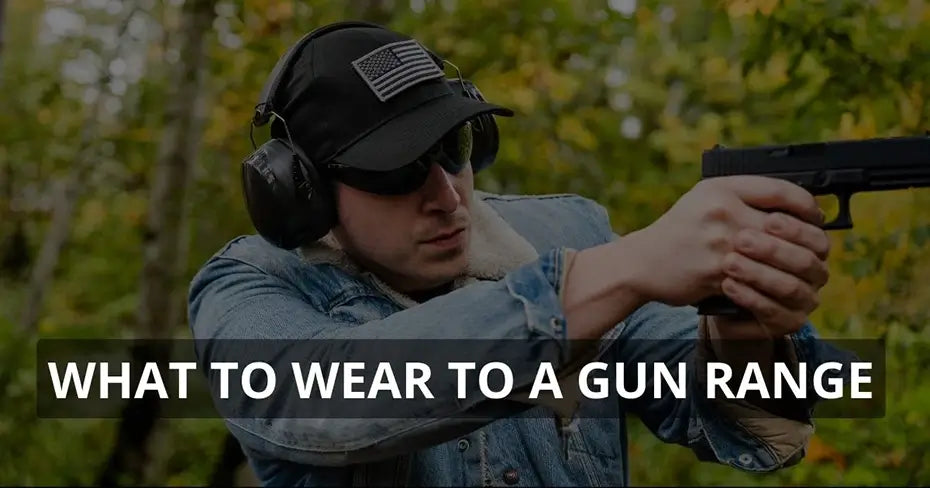
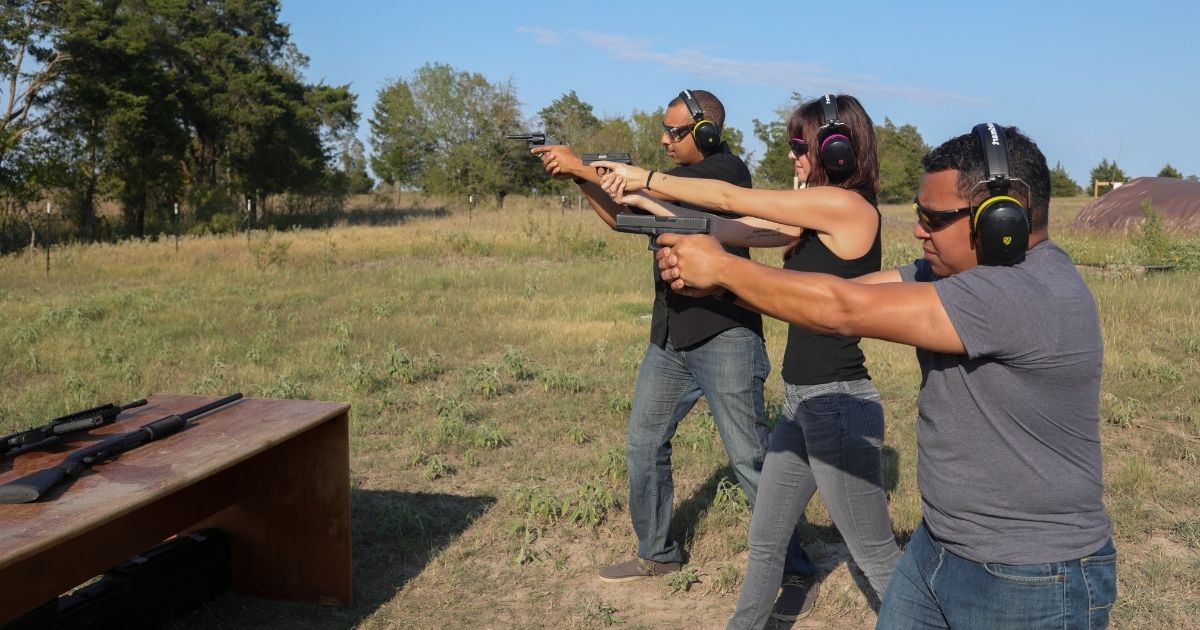
Think of range clothing as a system. Each piece works with the others to cover exposed skin, prevent brass from getting trapped, and keep you comfortable enough to shoot well. Here is the breakdown from top to bottom.
Hat or Baseball Cap
A hat with a forward-facing brim is one of the most overlooked pieces of range gear. It serves two critical functions:
- Deflects hot brass. Ejected casings that arc upward are redirected away from your face and forehead instead of landing on exposed skin or bouncing off your safety glasses.
- Reduces glare. At outdoor ranges, a brim keeps direct sunlight from interfering with your sight picture and reduces eye strain over long sessions.
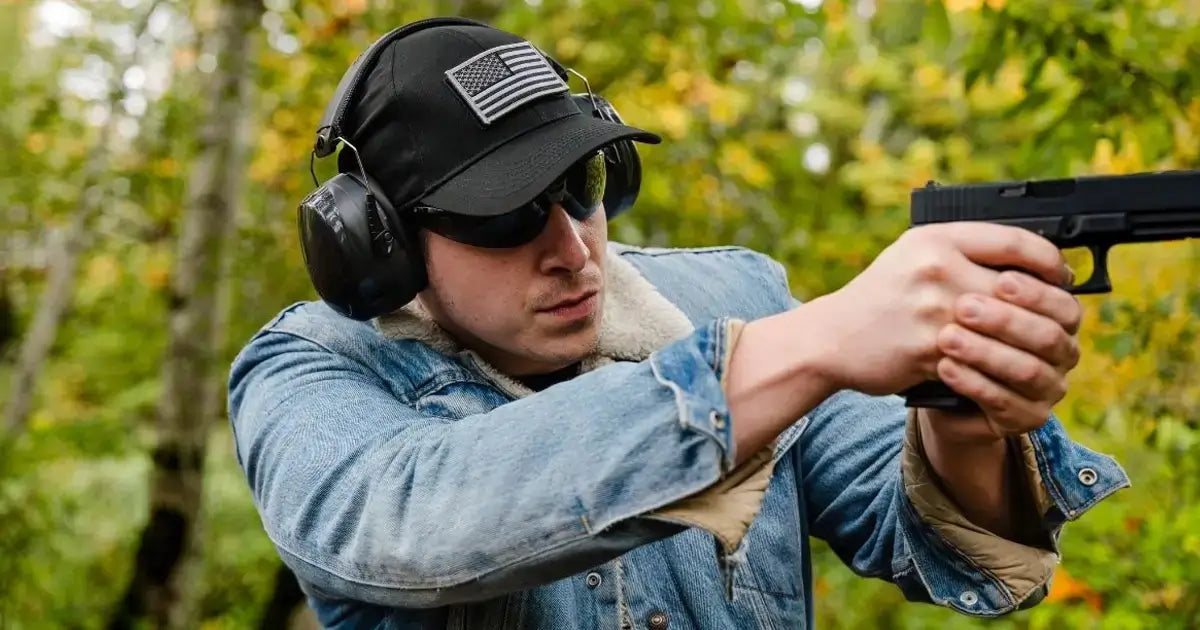
Avoid wide-brimmed hats or floppy sun hats — they can interfere with your cheek weld on a rifle or bump into your ear protection. A standard baseball-style cap is ideal. The TradeSmart American Flag Hat is designed specifically for range use, fitting comfortably under earmuffs without shifting your ear seals.
Eye Protection (ANSI Z87.1 Rated)
Eye protection is non-negotiable at every gun range in the country. But not all eyewear qualifies. You need safety glasses that meet the ANSI Z87.1+ standard, which requires impact-resistant polycarbonate lenses tested to withstand high-velocity projectile impacts.
Regular sunglasses — even expensive ones — do not meet this standard. They can shatter on impact, turning a fragment hazard into a far worse eye injury. According to ANSI testing protocols, Z87.1-rated lenses must survive a quarter-inch steel ball striking at 150 feet per second without cracking or penetrating.
What to look for in shooting glasses:
- ANSI Z87.1+ certification (the "+" indicates high-velocity impact resistance)
- Anti-fog coating — fogged lenses lead to removal, which means unprotected eyes on an active range
- Wraparound design — provides side protection against fragments approaching at angles
- Clear lenses for indoor ranges, tinted lenses for outdoor shooting in bright conditions
All TradeSmart shooting kits include ANSI Z87.1+ certified safety glasses with anti-fog polycarbonate lenses. For a complete breakdown of what to look for, read our guide on what type of eye protection you should wear when shooting a firearm.
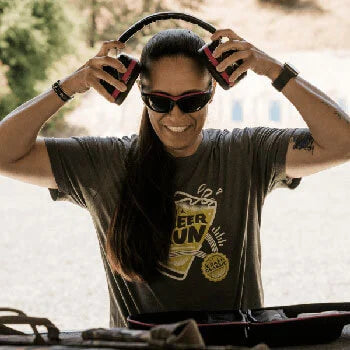
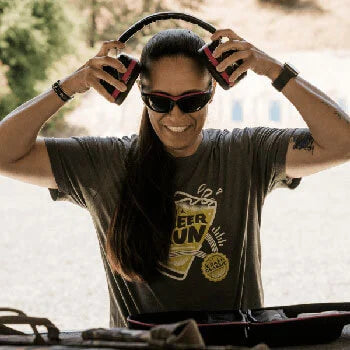
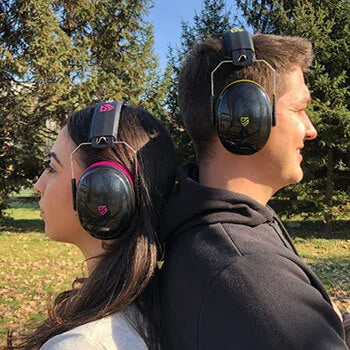
Ear Protection (NRR-Rated)
Gunshots produce between 140 and 175 decibels depending on caliber. A standard 9mm handgun generates roughly 160 dB. To put that in perspective, NIOSH recommends hearing protection for any exposure above 85 dB, and a single gunshot above 140 dB can cause immediate, permanent hearing damage. Recreational shooters are four times more likely to develop noise-induced hearing loss than non-shooters.
The Noise Reduction Rating (NRR) on your ear protection tells you how many decibels it reduces. For gun range use, you want:
- Earmuffs: NRR 20–30 (TradeSmart earmuffs are rated NRR 28)
- Foam earplugs: NRR 25–33 (TradeSmart earplugs are rated NRR 33)
- Dual protection (earmuffs + earplugs): The gold standard for indoor ranges and magnum calibers, reaching an effective NRR of approximately 36
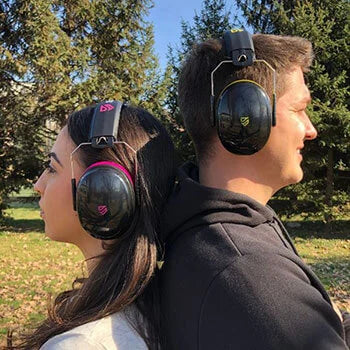
Electronic earmuffs, like the TradeSmart TacticalEdge Electronic Earmuffs, amplify normal conversation and range commands while instantly compressing harmful gunshot noise — giving you situational awareness without sacrificing protection. For a detailed comparison, see our article on the best ear protection for shooting.
Shirt: High-Collar or Crew-Neck, Close-Fitting
Your shirt choice is where most new shooters make their biggest mistake. The goal is simple: prevent hot brass from entering your clothing.
The best shirt for the range has:
- A crew-neck or high collar. This closes the gap between your neck and shirt where ejected casings love to fall. V-necks, scoop necks, and unbuttoned collars leave a direct path for brass to slide down your chest — and the resulting burn-and-flinch reaction while holding a firearm is genuinely dangerous.
- A close, comfortable fit. Loose, billowy shirts create pockets and folds where casings can get trapped against skin. You do not need compression gear — just a shirt that lies flat against your body without excess material.
- Long sleeves (optional but recommended). Sleeves protect your forearms from hot brass, powder residue, and the minor scrapes that come with handling firearms and gear. Roll them down during your session even if you normally wear them up.
Breathable, moisture-wicking fabrics work well for longer sessions, especially at indoor ranges where ventilation can be limited.
Pants: Long, Full Coverage
Long pants are recommended at every range and required at many. Shorts leave your legs exposed to:
- Hot brass that bounces off the shooting bench or the floor
- Powder residue and lead particles that settle at lower levels
- Minor scrapes from kneeling positions or moving between stations
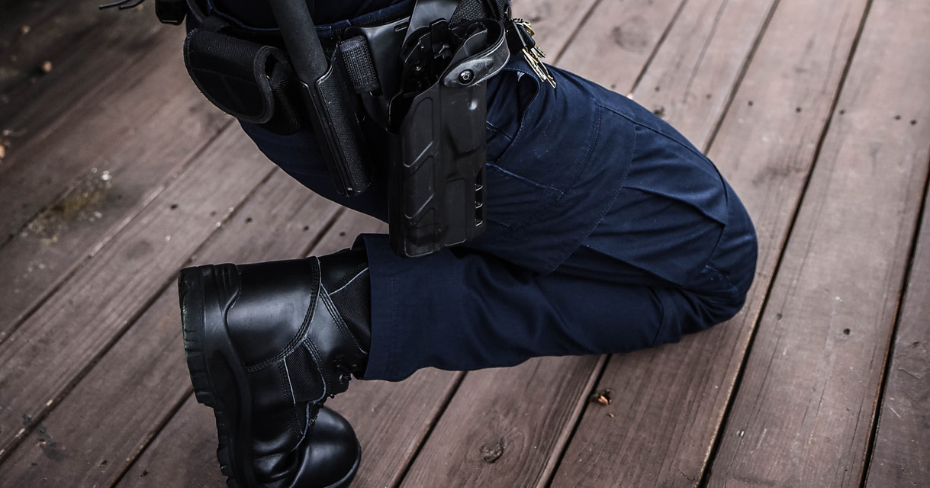
Jeans, cargo pants, or tactical pants all work well. Avoid thin leggings as your only layer — they provide minimal protection against a hot casing pressed against skin. Whatever you choose, make sure you can move freely. Shooting stances like isosceles and Weaver require a stable, athletic stance, and overly tight or restrictive pants work against you.
Footwear: Closed-Toe, Sturdy
Closed-toe shoes are required at virtually every gun range, indoor and outdoor. This is one of the most strictly enforced dress code rules, and for good reason: hot brass casings fall to the floor constantly, and sandals or open-toed shoes offer zero protection.
The best range footwear is:
- Closed-toe and closed-heel — sneakers, boots, or athletic shoes
- Flat or low-heeled — you need a stable platform for your shooting stance
- Comfortable for standing — range sessions often run 1–2 hours on concrete floors
Boots are the best option for outdoor ranges, where uneven terrain, mud, and gravel are common. For indoor ranges, any sturdy closed-toe shoe with good traction works well. Avoid heels, wedges, and slip-on shoes that could come off during movement.
What to Leave Behind
Just as important as what you wear is what you do not wear. These items create real safety risks at the range:
- Open-toed shoes or sandals. Most ranges will turn you away at the door. Hot brass on bare toes causes an instinctive jerk reaction — with a loaded firearm in hand, that is a serious hazard.
- Low-cut tops and V-necks. The open collar acts as a funnel for ejected casings. This is the single most common clothing-related injury at gun ranges.
- Loose scarves, hoodies with dangling strings, or flowing sleeves. Any loose fabric near the firing line risks getting caught on equipment, snagged by casings, or interfering with your grip and stance.
- Dangling jewelry. Necklaces, large earrings, and bracelets can catch on firearms, interfere with ear and eye protection, and trap hot brass against skin. Leave them in the car.
- High heels or platform shoes. Shooting requires a stable, balanced stance. Elevated or unstable footwear compromises your balance and control of the firearm.
A helpful rule of thumb: if it is loose, dangling, or leaves skin exposed, it does not belong on the firing line.
Seasonal Considerations: Dressing for Weather and Comfort
Range clothing needs change with the seasons, but the safety principles stay the same. Here is how to adapt without compromising protection.
Summer Range Sessions
Heat is the primary challenge. Indoor ranges with limited ventilation can feel stifling, and outdoor ranges under direct sun add another layer of discomfort. The temptation is to wear less — but resist the urge to ditch coverage.
- Choose moisture-wicking, breathable fabrics. Synthetic athletic shirts in light colors keep you cooler than cotton while still providing coverage.
- Stick with a crew-neck tee. It is the lightest option that still closes the collar gap.
- Lightweight long pants. Tactical pants in ripstop nylon breathe far better than jeans in hot weather.
- A baseball cap is essential. Sun protection plus brass deflection in one piece of gear.
- Stay hydrated. Bring water. Dehydration affects focus, and focus is safety.
Winter Range Sessions
Cold weather introduces its own set of challenges, especially for trigger feel and dexterity.
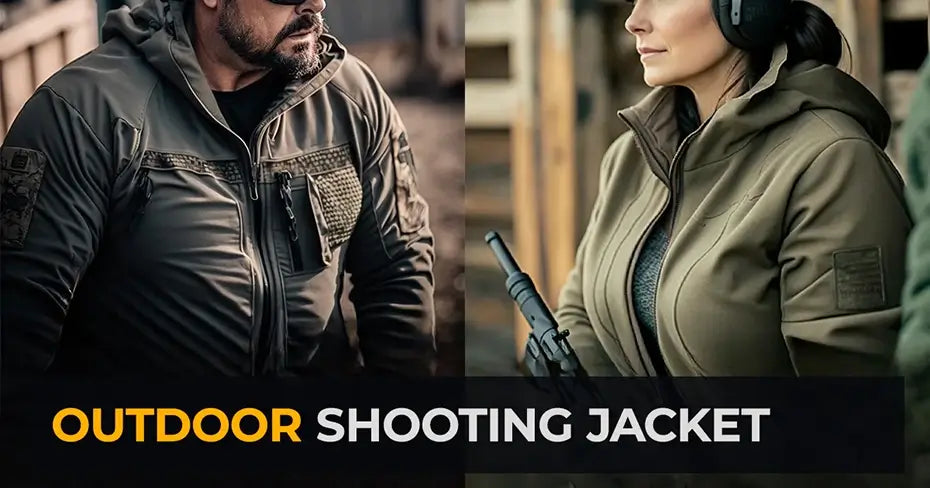
- Layer strategically. A base layer, mid-layer, and outer shell give you flexibility. Remove layers as you warm up from activity — but keep that collar closed.
- Zip up outer layers completely. An unzipped jacket is an open invitation for brass to enter from the top or the gap.
- Choose thin, tactile gloves. Thick winter gloves destroy trigger feel. Shooting-specific gloves or thin mechanics' gloves give you warmth without sacrificing control.
- Beware of bulky hoods and scarves. They interfere with ear protection seals, reducing your NRR and leaving gaps that let damaging noise through. If your earmuffs do not sit flush against your head, they are not doing their job.
- Watch for fogging. Transitioning from cold air to an indoor range fogs safety glasses instantly. Anti-fog coated lenses — like those included in TradeSmart Premium Kits — handle this far better than uncoated alternatives. For more solutions, read our tips on how to keep safety glasses from fogging up.
Gear Up Right: TradeSmart Safety Products for the Range
Proper clothing covers most of your body — but your ears, eyes, and head need purpose-built protective gear. That is where TradeSmart Safety comes in.
Shooting Ear and Eye Protection Kits
Every TradeSmart kit bundles the essentials into a single package: NRR 28-rated earmuffs, NRR 33-rated foam earplugs, ANSI Z87.1+ safety glasses, and a hard-shell carrying case. Everything meets or exceeds the relevant safety standards, and every kit ships with free access to the Range Confidence Course — an online firearms fundamentals program designed to complement your gear with knowledge.
Popular kits include:
- Shooting Range Kit 2 — Earmuffs, safety glasses, earplugs, and carrying case. Everything a range session demands.
- Premium Kit (Clear + Tinted) — Includes both clear and tinted safety glasses, so you are covered for indoor and outdoor shooting without buying separate pairs.
- Electronic Ear and Eye Protection Kit — For shooters who want to hear range commands and conversation clearly while still getting instant noise compression on gunshots.
All TradeSmart products come with a 10-year warranty and free shipping. Rated 4.6 stars on Trustpilot.
TradeSmart Tactical Backpack
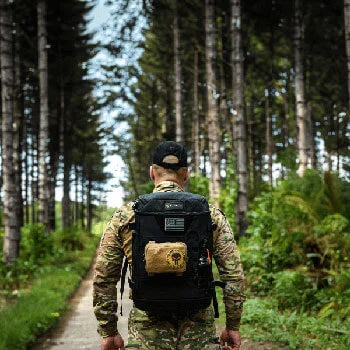
You need somewhere to carry all this gear. The TradeSmart Tactical Range Backpack is purpose-built for range trips — with dedicated compartments for ear protection, eye protection, ammunition, and accessories. It keeps your gear organized, protected, and ready to grab on the way out the door. For a full packing list, check out our guide on range bag essentials.
TradeSmart American Flag Hat
The TradeSmart American Flag Hat is built for the range: low-profile fit that sits comfortably under earmuffs, a stiff forward brim for brass deflection, and breathable construction for all-season wear.
Your Pre-Range Clothing Checklist
Before you head to the range, run through this quick checklist:
- Hat: Baseball-style cap with a forward brim
- Eye protection: ANSI Z87.1+ rated shooting glasses
- Ear protection: NRR-rated earmuffs, earplugs, or both
- Shirt: Crew-neck or high collar, close-fitting, no open neckline
- Pants: Long pants with full leg coverage
- Shoes: Closed-toe, closed-heel, flat or low-heeled
- No loose items: No scarves, dangling jewelry, or baggy clothing
If you check every box, you are dressed for a safe, comfortable, and focused range session.
Frequently Asked Questions
Can I wear shorts to a gun range?
Most gun ranges will allow shorts, but it is not recommended. Hot brass casings regularly fall to the floor and can land on exposed legs, causing burns and involuntary flinch reactions. Long pants provide a simple, effective barrier. Many indoor ranges and some outdoor facilities explicitly require long pants in their dress code, so check your range's rules before arriving.
Do I need to buy special shooting clothes?
No. You do not need tactical clothing or specialized shooting apparel. Standard everyday clothing works perfectly — the key principles are closed-toe shoes, long pants, a crew-neck or high-collar shirt that fits closely, and a hat. Avoid anything loose, dangling, or open at the collar. Most shooters already own everything they need.
Why do ranges require closed-toe shoes?
Spent brass casings ejected from semi-automatic firearms land on the ground continuously during a range session. These casings are extremely hot — between 300°F and 600°F — and present a burn risk to exposed feet. Closed-toe shoes also protect against dropped magazines, dropped firearms, and stepping on debris. This is one of the most universally enforced rules at gun ranges across the country.
What kind of eye protection do I need for the shooting range?
You need safety glasses rated to the ANSI Z87.1+ standard. This certification means the lenses are made from impact-resistant polycarbonate and have been tested to withstand high-velocity impacts — specifically, a quarter-inch steel ball at 150 feet per second. Regular sunglasses and prescription glasses do not meet this standard and can shatter on impact, making the injury worse. Look for wraparound designs with anti-fog coating for the best all-around protection. Learn more in our detailed guide on eye protection for shooting.
Should I wear earplugs, earmuffs, or both at the range?
For maximum protection, wear both. Gunshots produce 140–175 dB depending on caliber, and a single unprotected exposure above 140 dB can cause permanent hearing damage. Earmuffs alone (NRR 28) provide solid protection for outdoor ranges with lower-caliber firearms. For indoor ranges, magnum calibers, or extended sessions, doubling up with earmuffs and foam earplugs (combined effective NRR of approximately 36) is the safest approach. According to NIDCD data, about 40 million Americans aged 20–69 already have noise-induced hearing loss — prevention is far easier than treatment. See our full breakdown on the best ear protection for shooting.
What should a woman wear to the gun range?
The same principles apply regardless of gender: closed-toe shoes, long pants, and a high-collar or crew-neck shirt that fits closely. The most important consideration is avoiding low-cut or V-neck tops, as the open neckline creates a direct path for hot brass casings to fall into clothing. A crew-neck athletic shirt or a buttoned-up collared shirt both work well. Tie back long hair so it does not interfere with eye or ear protection, and skip dangling earrings or necklaces that could catch on gear.
Dress Smart, Shoot Safe
What you wear to the gun range is a safety decision. The right clothing — closed-toe shoes, long pants, a close-fitting crew-neck shirt, and a hat — works alongside proper ear and eye protection to keep you focused on marksmanship instead of reacting to hot brass and debris.
If you are building your range gear kit, start with the essentials. TradeSmart Safety's shooting protection kits bundle NRR 28 earmuffs, NRR 33 earplugs, ANSI Z87.1+ safety glasses, a hard-shell case, and free access to the Range Confidence Course — everything you need to walk onto the firing line prepared and protected. Backed by a 10-year warranty and free shipping.
Before your next range trip, review the 4 rules of gun safety — because the best-dressed shooter on the line is the one who takes every aspect of safety seriously.



Leave a comment (all fields required)