



Why a Tactical Hat Belongs in Your Range Bag
Walk into any well-run shooting range and you will notice something the experienced shooters all have in common: they are wearing hats. Not as a fashion statement, but as a genuine piece of safety equipment. A quality tactical hat does far more than keep the sun out of your eyes. It deflects hot brass casings away from your face and neck, reduces glare so you can focus on your target, and works with the rest of your safety gear rather than against it.
Yet not all hats perform equally at the range. A standard department-store cap can actually create problems, from interfering with your earmuff seal to losing its shape after a single wash. A purpose-built tactical hat, on the other hand, is engineered for exactly the conditions you face when you are shooting: heat, sweat, flying brass, and hours of sustained focus.
This guide breaks down everything you need to know to find the best tactical hat for your needs in 2026, from hat styles and materials to must-have features and compatibility with ear protection. Whether you are a weekend range-goer or a seasoned competitor, the right hat makes a measurable difference in comfort, safety, and performance.
Three Reasons Your Hat Matters More Than You Think
1. Hot Brass Deflection
Semi-automatic firearms eject spent brass casings at high speed and unpredictable angles. Without a brim, those casings can land on your scalp, slip behind your safety glasses, or drop inside your collar, any of which can cause burns, flinching, or a dangerous loss of muzzle control. A hat with a properly shaped brim acts as a physical barrier, redirecting brass away from exposed skin. This is not a theoretical concern. Ask anyone who has had a .223 casing bounce off a lane divider and land on the back of their neck.
2. Sun Protection and Glare Reduction
Outdoor ranges expose you to direct sunlight for hours at a time. Squinting against glare is not just uncomfortable. It degrades your sight picture, causes eye fatigue, and can lead to headaches that cut a session short. A brimmed hat shades your eyes and reduces the amount of ambient light entering from above, giving your shooting glasses a better environment to work in. This is especially important if you shoot with clear or lightly-tinted lenses.
3. Recoil Pad for Cheek Weld
When you shoulder a rifle or shotgun, your cheek presses against the stock to establish a consistent cheek weld, which is critical for repeatable accuracy. A thin, low-profile hat can act as a subtle cushion between your cheek and the stock, reducing friction and making it easier to maintain a steady position through multiple rounds. Hats with thick seams, bulky crowns, or rigid top buttons work against you here, which is why tactical hats are specifically designed to stay thin and unobtrusive.
Tactical Hat Styles: Which One Fits Your Shooting
Not every tactical hat is shaped the same way, and the best choice depends on how and where you shoot. Here are the four main styles you will encounter.
Tactical Baseball Cap
The tactical baseball cap is the most popular choice for range shooters, and for good reason. Built with a six-panel construction and a curved front brim, it provides reliable sun shade for your eyes while keeping a low enough profile to work with over-ear hearing protection. The best tactical caps use unstructured or semi-structured front panels that sit close to the head without adding unnecessary bulk.
Look for caps without a top button, which eliminates the painful pressure point created when earmuff headbands press a button into your scalp. This single design choice separates a range-ready cap from a standard ball cap.
Best for: Indoor and outdoor range sessions, competitions, everyday carry.
Boonie Hat
The boonie hat features a wide, all-around brim that provides 360-degree sun coverage, including the back of your neck and ears. Originally designed for jungle warfare, boonie hats are built from lightweight, quick-drying fabrics and typically include ventilation grommets in the crown and an adjustable chin strap to keep the hat secure in wind.
On the range, a boonie hat excels at outdoor and long-duration sessions where sun exposure is significant. The wider brim does require some consideration when shouldering a rifle, as a stiff brim can bump against a scope or your support hand. Opt for soft-brimmed versions if you shoot rifles frequently.
Best for: Outdoor ranges, hunting, extended field sessions in direct sunlight.
Shemagh or Tactical Wrap
The shemagh is a large, woven cotton scarf that can be wrapped around the head and neck in multiple configurations. Used extensively by military forces operating in desert and arid environments, it provides sun protection, wind shielding, and dust filtration all in one piece of fabric. For shooters, a shemagh is versatile but requires practice to wrap securely, and it does not provide the same brim-based glare reduction as a cap or boonie.
Best for: Desert or high-heat environments, neck and face coverage, layering under other headwear.
Tactical Beanie or Watch Cap
In cold weather, a tactical beanie keeps your head warm without adding bulk. The best shooting beanies are made from merino wool or synthetic fleece blends that wick moisture, and they sit close enough to the head to work under earmuffs without breaking the seal. Since beanies have no brim, they do not provide sun or brass protection, so they are strictly a cold-weather option.
Best for: Cold-weather range sessions, winter hunting, low-light shooting.
Tactical Hat Materials: What to Look For
The fabric your hat is made from determines how it handles sweat, rain, UV exposure, and repeated washing. Here are the materials you will see most often in tactical headwear.
Ripstop Nylon
Ripstop nylon uses a reinforced grid weave pattern that prevents small tears from spreading across the fabric. It is lightweight, quick-drying, and naturally water-resistant, making it an excellent choice for tactical hats used in wet or rugged environments. Many military-spec boonie hats and patrol caps are made from ripstop nylon for exactly these reasons. The trade-off is that nylon does not breathe as well as natural fibers, which can become noticeable during hot-weather sessions.
Moisture-Wicking Polyester
Polyester blends engineered with moisture-wicking properties pull sweat away from your skin and distribute it across the fabric surface, where it evaporates faster. This keeps your head drier and cooler, which directly impacts comfort and focus during extended shooting. Many modern tactical caps combine polyester with a small percentage of spandex for stretch and with mesh panels for additional ventilation. If you shoot primarily at indoor ranges or in humid climates, moisture-wicking polyester is often the best fabric choice.
Cotton and Cotton Blends
Cotton is breathable, soft, and comfortable against the skin, making it a natural choice for all-day wear. Pure cotton tactical hats feel the best out of the box but can retain moisture longer than synthetic alternatives. A cotton hat also tends to sit thinner and closer to the head, which is a real advantage when you are wearing earmuffs because a thinner material creates less gap between the earmuff cushion and your skull, resulting in a better noise seal.
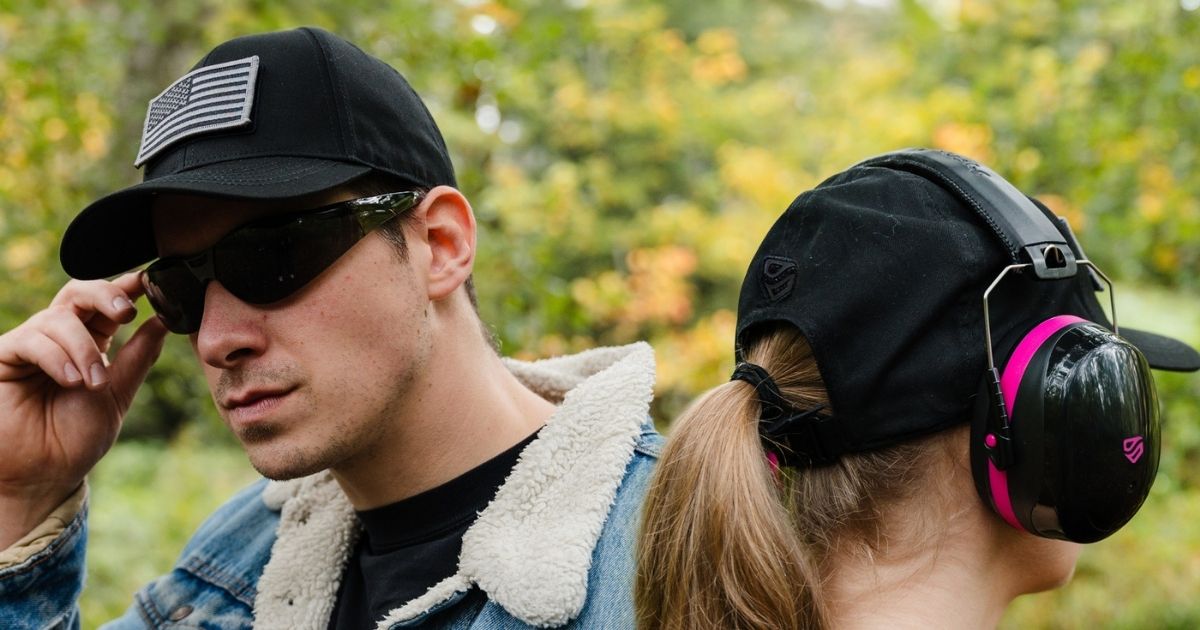
High-quality cotton tactical hats, like the TradeSmart American Flag Hat, use ultra-thin but durable cotton construction specifically to maximize earmuff compatibility without sacrificing comfort.
Canvas and Cotton-Poly Blends
Canvas and cotton-polyester blends offer a middle ground between the breathability of cotton and the durability of synthetics. These blends hold their shape well after repeated washing, resist fading from UV exposure, and dry faster than pure cotton. They are common in mid-range tactical caps and provide solid all-around performance.
Must-Have Features in a Tactical Hat
Beyond material selection, several specific design features separate a true tactical hat from a standard cap. Prioritize these when making your choice.
Velcro Loop Panels for Patches
A generous front-facing Velcro loop panel lets you attach and swap morale patches, unit identifiers, flag patches, or reflective markers. For recreational shooters, this is a way to personalize your gear. For professionals and competition shooters, it serves a practical identification purpose. Look for hats with a full-width loop panel rather than a small strip, as this gives you more flexibility in patch size and placement.
Mesh Ventilation Panels
Mesh panels, typically on the sides or rear of the crown, allow hot air to escape and cooler air to circulate. This is critical for warm-weather shooting. The best designs use a structured mesh that holds its shape while still allowing significant airflow. Trucker-style tactical caps feature an entirely mesh rear section, which maximizes breathability but offers less sun protection on the sides of the head.
Adjustable Closure System
A secure, adjustable closure at the back of the hat ensures a custom fit regardless of head size. You will find three common types:
- Velcro strap: Infinitely adjustable, quick to use, but can wear out over time and snag on fabrics.
- Snapback: Durable and consistent, but limited to fixed positions that may not provide a perfect fit.
- Clip or slider closure: A clip-style closure offers adjustability and durability. Some designs also allow you to clip the hat to a belt, bag, or tactical backpack when not in use.
Moisture-Wicking Sweatband
An interior sweatband absorbs perspiration before it runs into your eyes, which is more than a comfort feature when you are handling a firearm. Sweat dripping into your eyes mid-string can cause you to break your grip or lose your sight picture, neither of which is acceptable. Quality tactical hats use a padded, moisture-wicking sweatband that dries quickly between wearings.
Low-Profile Construction
A low-profile crown keeps the hat close to your head, reducing the chance of it catching on obstacles, interfering with vehicle headliners, or creating excess space under your earmuffs. Structured crowns with tall front panels may look sharp, but they add bulk where you do not want it. Unstructured or semi-structured designs provide a cleaner fit for shooting applications.
No Top Button
This is a small detail that makes an enormous difference. The standard button at the top of a baseball cap creates a concentrated pressure point when earmuffs or headsets press down on it. Over the course of a one- or two-hour range session, this pressure can cause significant discomfort and even headaches. Purpose-built tactical range hats eliminate this button entirely, creating a smooth, flat crown that sits comfortably under any over-ear protection.
Hat and Ear Protection Compatibility: The Most Overlooked Factor
Here is a truth most tactical hat guides skip over: the best hat in the world is worthless if it compromises your hearing protection. And this happens far more often than most shooters realize.
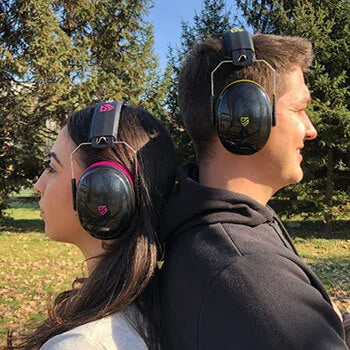
Gunshots produce between 140 and 175 decibels depending on caliber, according to the National Institute for Occupational Safety and Health (NIOSH). A single gunshot above 140 dB can cause immediate, permanent hearing damage. Your earmuffs are one of your most important pieces of safety equipment, and anything that breaks their seal against your head reduces their effectiveness.
A thick hat creates a gap between the earmuff cushion and your skin. Even a small gap can reduce the Noise Reduction Rating (NRR) by several decibels, which matters when you are dealing with impulse noise levels that can cause irreversible harm. According to the National Institute on Deafness and Other Communication Disorders (NIDCD), approximately 40 million Americans aged 20 to 69 already have noise-induced hearing loss, and recreational shooters are four times more likely to develop hearing loss than non-shooters.
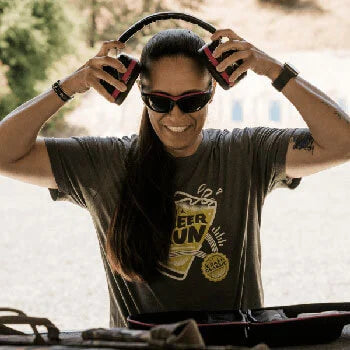
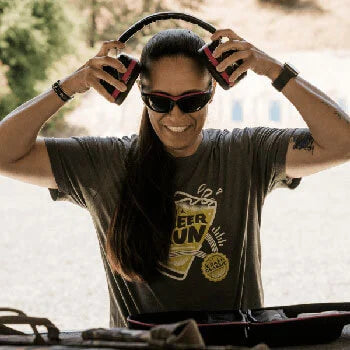
When evaluating a tactical hat for range use, test it with your specific earmuffs before committing. Put the hat on, then put on your earmuffs, and check for:
- Seal integrity: Run your fingers around the earmuff cushion. If you feel gaps where the hat fabric bunches, the seal is compromised.
- Pressure comfort: Wear the combination for at least 10 minutes. Pressure points from a top button or thick crown seam will become painful quickly.
- Stability: Shoulder your firearm and move through your natural shooting positions. The hat should not shift or push the earmuffs out of alignment.
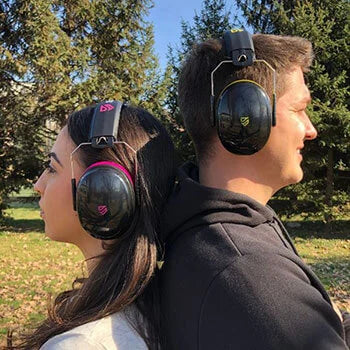
This is exactly the problem the TradeSmart Tactical Hat was designed to solve. With its top button completely removed and ultra-thin cotton construction that minimizes the gap under earmuff cushions, it was engineered specifically for shooters who refuse to compromise between comfort and hearing protection. It pairs particularly well with NRR-rated shooting earmuffs for a complete, interference-free setup.
For more on choosing the right hearing protection, see our complete guide to the best ear protection for shooting.
Top Tactical Hat Picks for Shooters in 2026
With the criteria above in mind, here are the styles and features that define the top-performing tactical hats for range and field use this year.
Best for Earmuff Compatibility: TradeSmart American Flag Hat
Designed from the ground up to integrate with over-ear hearing protection, the TradeSmart American Flag Hat eliminates the top button entirely and uses ultra-thin, durable cotton to minimize the gap between your head and your earmuff cushions. The result is zero-pain earmuff integration and a better, safer noise seal.
It features a generous front loop panel ready for morale patches, with a removable American flag patch included out of the box. The rear clip closure adjusts for a perfect fit, accommodates ponytails, and lets you clip the hat to a belt or bag when it is not on your head. Made from 100% breathable cotton, it stays lightweight and itch-free through long sessions.
Pair it with a TradeSmart Shooting Range Kit for a complete ear and eye protection setup that works together rather than against each other, and you will also get access to the free Range Confidence Course to sharpen your fundamentals.
Best for All-Around Range Use: Unstructured Tactical Cap with Mesh Back
An unstructured six-panel cap with a mesh rear section provides the best combination of breathability and low-profile fit for indoor and outdoor range sessions. Look for models with a Velcro front panel, no top button, a moisture-wicking sweatband, and a Velcro or clip rear closure. This style works with virtually every earmuff on the market and handles heat and humidity well.
Best for Outdoor and Extended Sessions: Tactical Boonie Hat
For all-day outdoor shooting where sun exposure is significant, a ripstop nylon boonie hat with ventilation grommets, an adjustable chin strap, and a soft brim provides unmatched coverage. Choose a soft-brimmed version if you shoot rifles, and look for models with a low crown that keeps the hat stable during position changes. In-ear hearing protection such as NRR 33 earplugs pairs best with boonie hats since the wide brim can sometimes interfere with over-ear earmuff headbands.
Best for Cold Weather: Merino Wool Tactical Beanie
When temperatures drop, a thin merino wool or synthetic fleece beanie keeps your head warm without adding bulk under earmuffs. The key is thickness: choose the thinnest material that provides adequate warmth, and test the fit with your earmuffs before heading to the range. Anything thicker than about 2mm will start to degrade your earmuff seal.
How to Care for Your Tactical Hat
A good tactical hat should last for years if you maintain it properly. Here are the essentials:
- Washing: Machine wash on a gentle cycle with cold water. Avoid hot water, which can cause shrinking and color fade. Skip the dryer and air dry on a flat surface or over a rounded form to preserve the hat's shape.
- Stain removal: Treat sweat stains and powder residue with a mild detergent or baking soda paste before washing. For stubborn stains, a soft brush and cold water work better than aggressive scrubbing.
- Storage: Store hats in a cool, dry place away from direct sunlight. Hanging hats by the brim can cause warping over time. A shelf or hat form is ideal.
- Velcro maintenance: Pick lint, thread, and debris out of Velcro loop panels regularly with a fine-tooth comb or the hook side of another Velcro strip. This keeps patches sticking securely.
- Rotation: If you shoot frequently, rotating between two hats extends the life of both and ensures you always have a dry, clean hat ready.
What to Wear With Your Tactical Hat
A hat is just one part of a complete range outfit. For a full breakdown of what to wear from head to toe, including footwear, pants, and layering strategies, check out our guide on what to wear to a gun range. And if you need something to carry all your gear in, our guide to the best tactical backpack covers what to look for in a range bag that can handle everything from earmuffs and ammo to your hat and hydration. You may also want to read our guide on comfortable tactical pants that give you the mobility you need on the firing line.
Frequently Asked Questions
What makes a tactical hat different from a regular baseball cap?
Tactical hats are built from more durable, performance-oriented fabrics like ripstop nylon, moisture-wicking polyester, or purpose-selected cotton. They typically include features not found on standard caps: Velcro loop panels for morale patches, mesh ventilation panels for airflow, reinforced stitching for longevity, and, in range-specific designs, the removal of the top button to eliminate pressure points under earmuffs. The materials and construction are selected to withstand harsh environments, frequent washing, and extended use.
Can I wear a hat with over-ear earmuffs at the shooting range?
Yes, but the hat must be thin enough that it does not compromise the earmuff seal against your head. Thick hats create gaps under the earmuff cushions, which reduces their Noise Reduction Rating and can expose you to dangerous sound levels. Gunshots range from 140 to 175 dB, and NIOSH research confirms a single exposure above 140 dB can cause permanent hearing damage. Choose a hat made from thin material, without a top button, and always test the fit with your specific earmuffs before use. The TradeSmart Tactical Hat was specifically engineered for this purpose.
What is the best tactical hat material for hot weather?
Moisture-wicking polyester blends with mesh ventilation panels provide the best hot-weather performance. The polyester wicks sweat away from your skin, while the mesh allows hot air to escape and cooler air to circulate. If you prioritize comfort and a natural feel, thin 100% cotton is also an excellent choice for warm conditions, as it breathes well and sits close to the head. Avoid heavy canvas or thick nylon in high heat, as these materials trap heat and moisture.
Why do some tactical hats not have a top button?
The top button on a standard baseball cap creates a painful pressure point when earmuffs, headsets, or helmets press down on it. Over a one- to two-hour range session, this pressure causes discomfort, headaches, and can even make shooters remove their hearing protection prematurely, which is a serious safety risk. Tactical hats designed for range use eliminate the button entirely, creating a smooth, flat crown that sits comfortably under any over-ear protection for extended periods.
Is a boonie hat or a baseball cap better for the shooting range?
It depends on your environment. A tactical baseball cap is the better all-around choice for most range sessions because of its low profile, earmuff compatibility, and ease of use. A boonie hat is superior for extended outdoor sessions where 360-degree sun coverage is needed, such as hunting or all-day training courses. However, a boonie hat's wide brim can interfere with rifle scopes and over-ear earmuffs, so if you choose a boonie, opt for a soft-brimmed version and consider using in-ear hearing protection instead of earmuffs.
How do I keep my tactical hat from interfering with my cheek weld?
Choose a hat with a low-profile, unstructured crown and thin fabric. When shouldering a rifle, the hat's brim should clear your scope or sights without requiring you to adjust your head position. If the brim bumps your scope or support hand, try wearing the hat slightly higher on your head or switching to a hat with a shorter, more flexible brim. A thin cotton cap with no top button provides the least interference with cheek weld and is the preferred choice for precision rifle shooters.
Gear Up With Confidence
The right tactical hat is a piece of safety equipment that earns its place in your range bag every session. It protects you from hot brass and sun exposure, works with your earmuffs instead of against them, and helps you maintain focus when it counts.
If earmuff compatibility is your priority, and it should be, the TradeSmart American Flag Hat was purpose-built for exactly this. No top button, ultra-thin construction, and a front Velcro panel ready for your patches. Pair it with a TradeSmart Shooting Range Kit for certified ear and eye protection that includes a free Range Confidence Course, a 10-year warranty, and free shipping on every order.



Leave a comment (all fields required)